
增强循环肿瘤细胞的检测与监测:液体活检进展中的综合方法
Enhancing detection and monitoring of circulating tumor cells: Integrative approaches in liquid biopsy advances.
作者信息
Velpula Thanmayi, Buddolla Viswanath
机构信息
Dr. Buddolla's Institute of Life Sciences (A Unit of Dr. Buddolla's Research and Educational Society), Tirupati, 517506, India.
出版信息
J Liq Biopsy. 2025 Apr 29;8:100297. doi: 10.1016/j.jlb.2025.100297. eCollection 2025 Jun.
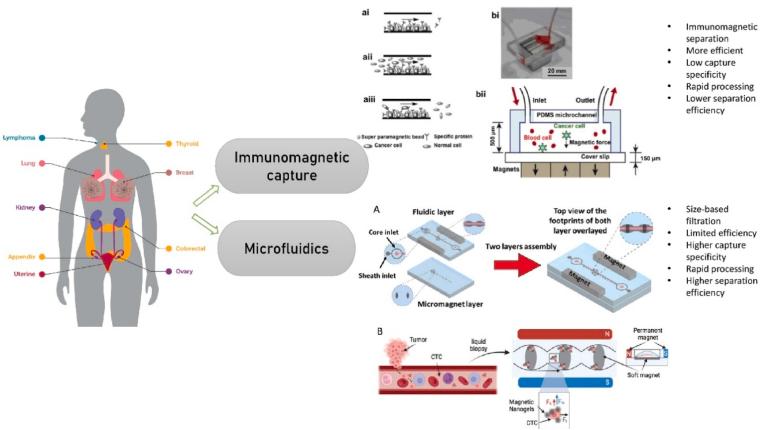
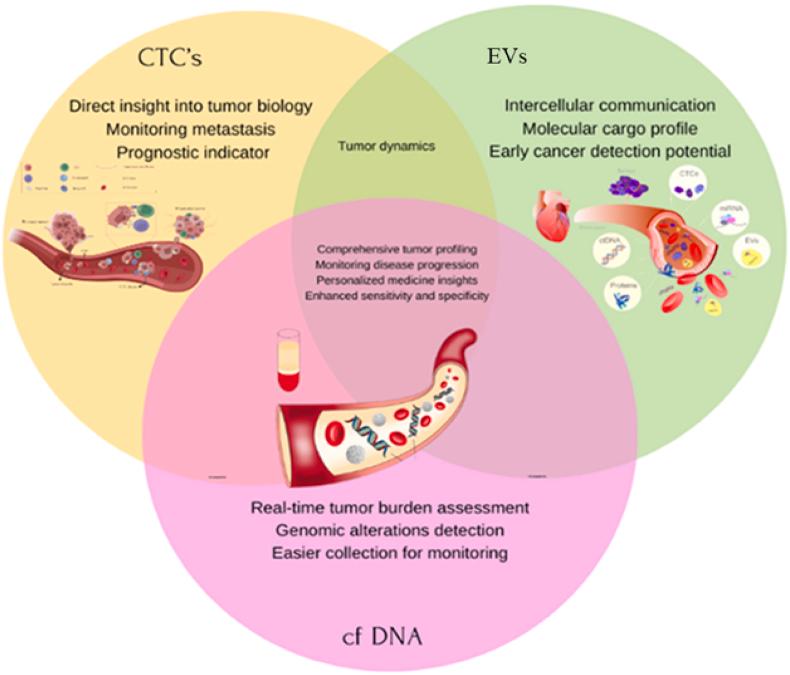
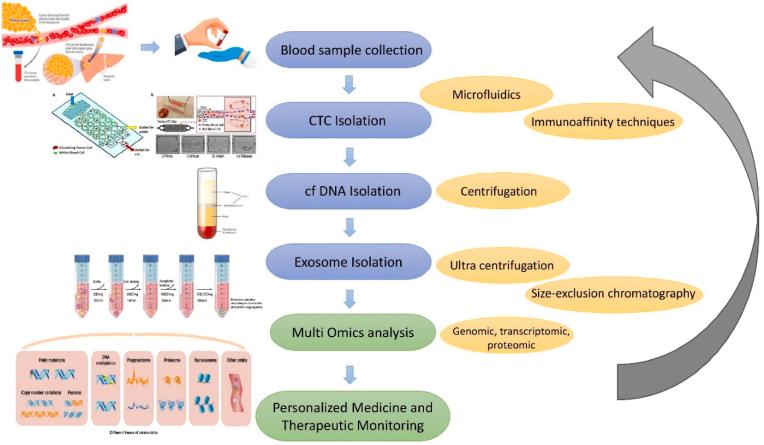
Liquid biopsy offers a minimally invasive method for detecting and monitoring cancer, with key biomarkers including circulating tumor cells (CTCs), cell-free DNA (cfDNA), and extracellular vesicles (EVs). Among these, CTCs provide dynamic insights into tumor heterogeneity, metastatic potential, and therapeutic resistance through molecular profiling and single-cell analysis. This review examines recent advancements in technologies such as microfluidics, nanotechnology, and next-generation sequencing (NGS), which have improved the accuracy and clinical use of CTC detection. A comparative analysis of liquid biopsy techniques highlights the strengths and limitations of key platforms, including NGS, digital PCR (ddPCR), and quantitative PCR (qPCR), providing insights into diagnostic accuracy and clinical significance. Combining genomic, transcriptomic, and proteomic analyses with artificial intelligence (AI) tools has enhanced tumor profiling and supports personalized treatment decisions in precision oncology. Despite notable progress, issues like assay standardization, sample variability, regulatory complexity, and data integration still limit widespread clinical use. Future directions emphasize interdisciplinary innovation, clinical validation, and robust bioinformatics frameworks to facilitate the seamless incorporation of CTC-based liquid biopsy into standard oncology practice. Overcoming these challenges may allow liquid biopsy to become a standard tool for early cancer detection, ongoing monitoring, and individualized treatment.
液体活检为癌症的检测和监测提供了一种微创方法,关键生物标志物包括循环肿瘤细胞(CTC)、游离DNA(cfDNA)和细胞外囊泡(EV)。其中,循环肿瘤细胞通过分子谱分析和单细胞分析,为肿瘤异质性、转移潜能和治疗耐药性提供动态见解。本综述探讨了微流控技术、纳米技术和下一代测序(NGS)等技术的最新进展,这些进展提高了循环肿瘤细胞检测的准确性和临床应用价值。对液体活检技术的比较分析突出了关键平台(包括NGS、数字PCR(ddPCR)和定量PCR(qPCR))的优势和局限性,为诊断准确性和临床意义提供了见解。将基因组、转录组和蛋白质组分析与人工智能(AI)工具相结合,增强了肿瘤分析,并支持精准肿瘤学中的个性化治疗决策。尽管取得了显著进展,但检测标准化、样本变异性、监管复杂性和数据整合等问题仍然限制了其在临床中的广泛应用。未来的发展方向强调跨学科创新、临床验证和强大的生物信息学框架,以促进基于循环肿瘤细胞的液体活检无缝纳入标准肿瘤学实践。克服这些挑战可能会使液体活检成为早期癌症检测、持续监测和个体化治疗的标准工具。
 Zotero 插件