
放射治疗可改善接受免疫治疗的复发性或转移性头颈癌的临床疗效。
Radiotherapy improves the clinical outcomes of recurrent or metastatic head and neck cancers treated with immunotherapy.
作者信息
Cheng Yanshuang, Wang Juan, Sun Ji, Zhong Yahua, Wu Qiuji
机构信息
Department of Radiation and Medical Oncology, Zhongnan Hospital of Wuhan University, Wuhan, 430071, China.
Hubei Key Laboratory of Tumour Biological Behaviors, Zhongnan Hospital of Wuhan University, Wuhan, 430071, China.
出版信息
Discov Oncol. 2025 Jun 2;16(1):988. doi: 10.1007/s12672-025-02801-y.
BACKGROUND
It is uncertain whether the combination of immunotherapy and radiotherapy can provide survival benefits for recurrent/metastatic head and neck squamous cell carcinoma (R/M HNSCC).
METHODS
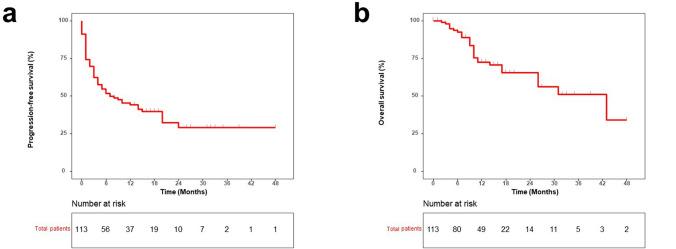
We retrospectively analyzed the impact of radiotherapy on the efficacy of immunotherapy and prognostic analysis in 113 patients with R/M HNSCC in our institution from 2018 to 2022. The Kaplan-Meier method was utilized for survival analysis, and Cox regression analysis was conducted to identify prognostic factors.
RESULTS
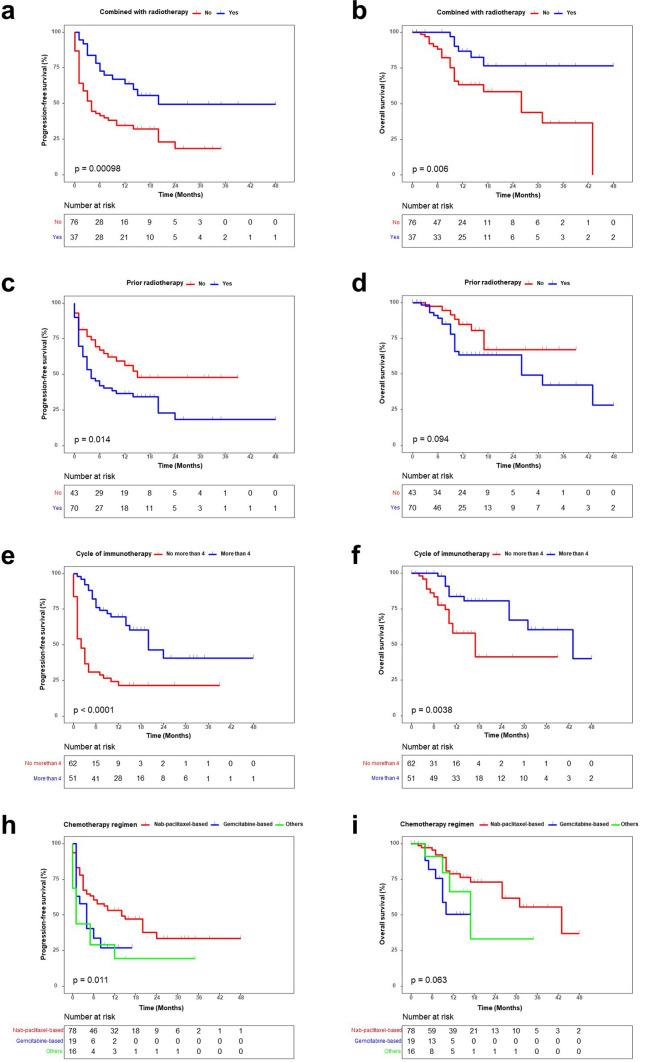
The median follow-up time was 14.0 months. During immunotherapy, 37 patients received radiotherapy, targeting primary tumors, lymph nodes, metastasis in liver, lung, bone, and other sites. We found that the group receiving immunotherapy combined with radiotherapy had higher objective response rate (67.6% vs 39.5%, p = 0.009) and disease control rate (94.6% vs 61.8%, p = 0.001) than those without radiotherapy. The median progression-free survival (20.0 months vs 4.0 months, p = 0.00098) and overall survival (not reached vs 26.0 months, p = 0.006) were improved in patients receiving radiotherapy compared to those not.
CONCLUSIONS
The combination of immunotherapy and radiotherapy demonstrates improved clinical outcomes in R/M HNSCC.
背景
免疫疗法与放射疗法联合应用能否为复发/转移性头颈部鳞状细胞癌(R/M HNSCC)患者带来生存获益尚不确定。
方法
我们回顾性分析了2018年至2022年在我院接受治疗的113例R/M HNSCC患者中放射疗法对免疫疗法疗效的影响及预后分析。采用Kaplan-Meier法进行生存分析,并进行Cox回归分析以确定预后因素。
结果
中位随访时间为14.0个月。在免疫治疗期间,37例患者接受了放射治疗,靶部位包括原发肿瘤、淋巴结、肝、肺、骨等部位的转移灶。我们发现,接受免疫疗法联合放射疗法的患者组的客观缓解率(67.6%对39.5%,p = 0.009)和疾病控制率(94.6%对61.8%,p = 0.001)高于未接受放射治疗的患者组。与未接受放射治疗的患者相比,接受放射治疗的患者的中位无进展生存期(20.0个月对4.0个月,p = 0.00098)和总生存期(未达到对26.0个月,p = 0.006)均得到改善。
结论
免疫疗法与放射疗法联合应用在R/M HNSCC患者中显示出更好的临床疗效。
 Zotero 插件