
撒哈拉以南非洲消除疟疾前环境下,影响常规监测系统中抗疟药物耐药性早期预警系统整合的因素。
Factors affecting integration of an early warning system for antimalarial drug resistance within a routine surveillance system in a pre-elimination setting in Sub-Saharan Africa.
作者信息
Kagoro Frank M, Allen Elizabeth, Raman Jaishree, Mabuza Aaron, Magagula Ray, Kok Gerdalize, Malatje Gillian, Guerin Philippe J, Dhorda Mehul, Maude Richard J, Barnes Karen I
机构信息
Collaborating Centre for Optimising Antimalarial Therapy (CCOAT), Division of Clinical Pharmacology, Department of Medicine, University of Cape Town (UCT), Cape Town, South Africa.
Mahidol Oxford Tropical Medicine Research Unit (MORU), Faculty of Tropical Medicine, Mahidol University, Bangkok, Thailand.
出版信息
PLoS One. 2025 Jun 3;20(6):e0305885. doi: 10.1371/journal.pone.0305885. eCollection 2025.
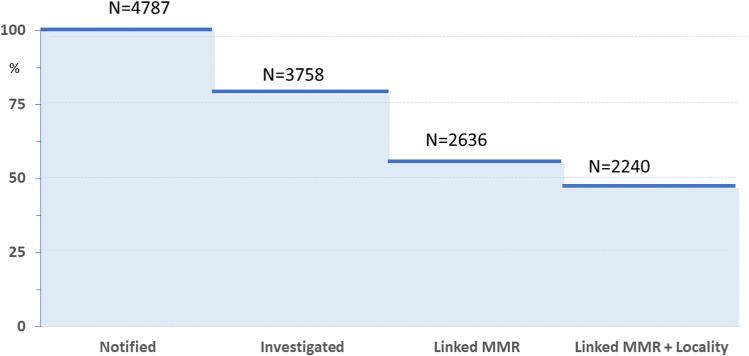
To address the current threat of antimalarial resistance, countries need innovative solutions for timely and informed decision-making. Integrating molecular surveillance for drug-resistant malaria into routine malaria surveillance in pre-elimination contexts offers a potential early warning mechanism for further investigation and response. However, there is limited evidence on what influences the performance of such a system in resource-limited settings. From March 2018 to February 2020, a sequential mixed-methods study was conducted in primary healthcare facilities in a South African pre-elimination setting to explore factors influencing the flow, quality and linkage of malaria case notification and molecular resistance marker data. Using a process-oriented framework, we undertook monthly and quarterly data linkage and consistency analyses at different levels of the health system, as well as a survey, focus group discussions and interviews to identify potential barriers to, and enhancers of, the roll-out and uptake of this integrated information system. Over two years, 4,787 confirmed malaria cases were notified from 42 primary healthcare facilities in the Nkomazi sub-district, Mpumalanga, South Africa. Of the notified cases, 78.5% (n = 3,758) were investigated, and 55.1% (n = 2,636) were successfully linked to their Plasmodium falciparum molecular resistance marker profiles. Five tangible processes-malaria case detection and notification, sample collection, case investigation, analysis and reporting-were identified within the process-oriented logic model. Workload, training, ease of use, supervision, leadership, and resources were recognized as cross-cutting influencers affecting the program's performance. Approaching malaria elimination, linking molecular markers of antimalarial resistance to routine malaria surveillance is feasible. However, cross-cutting barriers inherent in the healthcare system can influence its success in a resource-limited setting.
为应对当前抗疟药物耐药性的威胁,各国需要创新解决方案,以便及时做出明智决策。在疟疾消除前期背景下,将耐药性疟疾的分子监测纳入常规疟疾监测,可为进一步调查和应对提供潜在的早期预警机制。然而,关于在资源有限的环境中影响此类系统性能的因素,证据有限。2018年3月至2020年2月,在南非一个疟疾消除前期地区的基层医疗机构开展了一项序贯混合方法研究,以探讨影响疟疾病例通报和分子耐药标记数据的流程、质量及关联的因素。我们采用面向过程的框架,在卫生系统的不同层面进行月度和季度的数据关联及一致性分析,同时开展一项调查、焦点小组讨论和访谈,以确定推广和采用这一综合信息系统的潜在障碍及促进因素。在两年多的时间里,南非姆普马兰加省恩科马齐分区的42家基层医疗机构通报了4787例确诊疟疾病例。在通报的病例中,78.5%(n = 3758)接受了调查,55.1%(n = 2636)成功与其恶性疟原虫分子耐药标记谱相关联。在面向过程的逻辑模型中确定了五个具体过程——疟疾病例检测与通报、样本采集、病例调查、分析和报告。工作量、培训、易用性、监督、领导力和资源被认为是影响该项目绩效的贯穿各领域的因素。在接近疟疾消除阶段,将抗疟药物耐药性的分子标记与常规疟疾监测相联系是可行的。然而,卫生系统中固有的贯穿各领域的障碍可能会影响其在资源有限环境中的成功实施。

 Zotero 插件