
包含血管生成相关基因突变作为接受经动脉化疗栓塞术(TACE)治疗的肝癌患者风险因素的列线图的开发与验证。
Development and validation of nomogram including mutations in angiogenesis-related genes as risk factors for HCC patients treated with TACE.
作者信息
Shen Wanqing, Li Zhi, Huang Jinyi, Zhang Guixiong, Tang Yiyang, Fan Wenzhe, Li Jiaping
机构信息
Department of Interventional Oncology, The First Affiliated Hospital of Sun Yat-sen University, Guangzhou, 510080, China.
School of Public Health, Guangzhou Medical University, Guangzhou, 511436, China.
出版信息
Transl Oncol. 2025 Aug;58:102437. doi: 10.1016/j.tranon.2025.102437. Epub 2025 Jun 5.
BACKGROUND
As a vascular-rich solid tumor, hepatocellular carcinoma (HCC) patients with poor transarterial chemoembolization (TACE) respone or treatment failure may correlate with tumor angiogenesis in residual disease. However, their relationship remains unclear. This study aims to explore the relationship between angiogenesis-related genes and TACE failure in patients with HCC and to develop a predictive model for assessing treatment outcomes.
MATERIALS AND METHODS
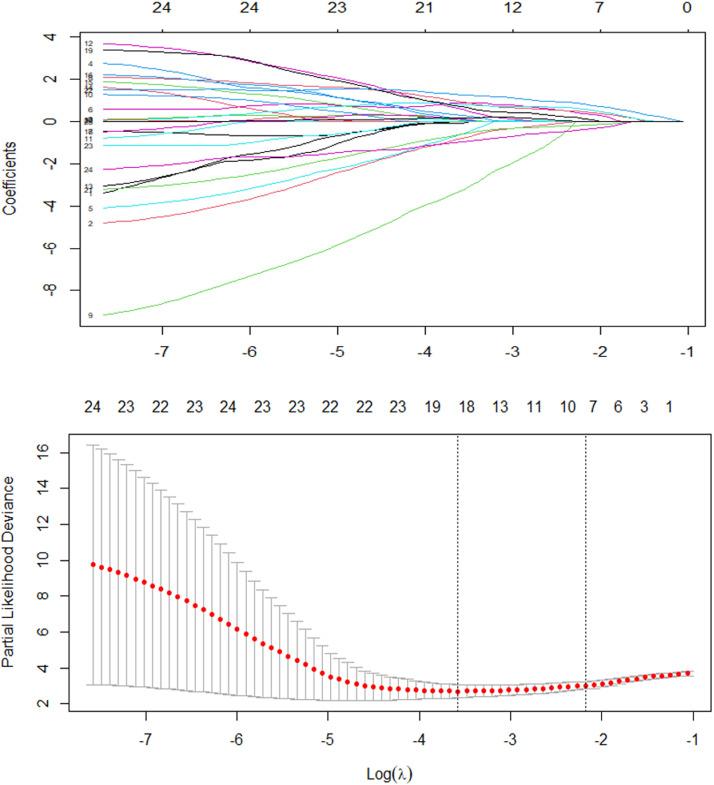
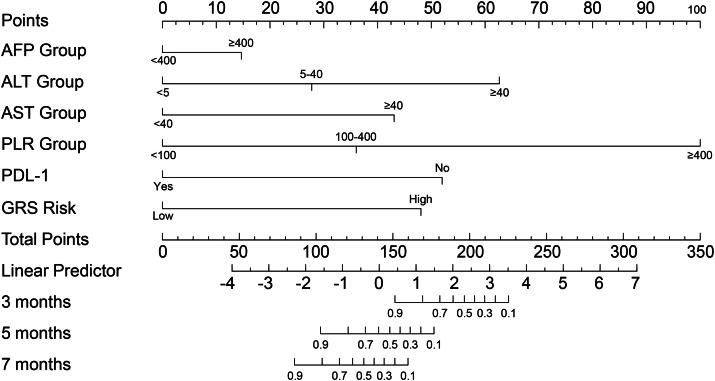
Somatic mutation profiles of 165 patients with HCC treated with TACE were analyzed using whole-exome sequencing (WES). Multivariate Cox regression analysis was performed to calculate the genetic risk score (GRS) for angiogenesis-related gene mutations. The participants were randomly divided into training and validation groups. In the training set, independent prognostic factors of TACE-treated patients with HCC were screened using univariate Cox-LASSO-stepwise Cox regression, and a nomogram was established and evaluated using the receiver operating characteristic curve, calibration curve, and decision curve analysis of the two sets.
RESULTS
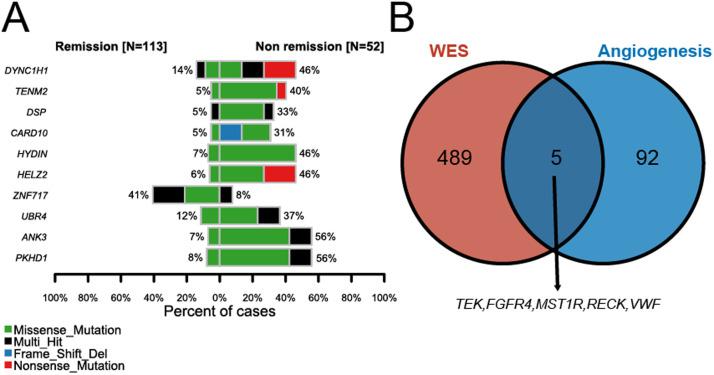
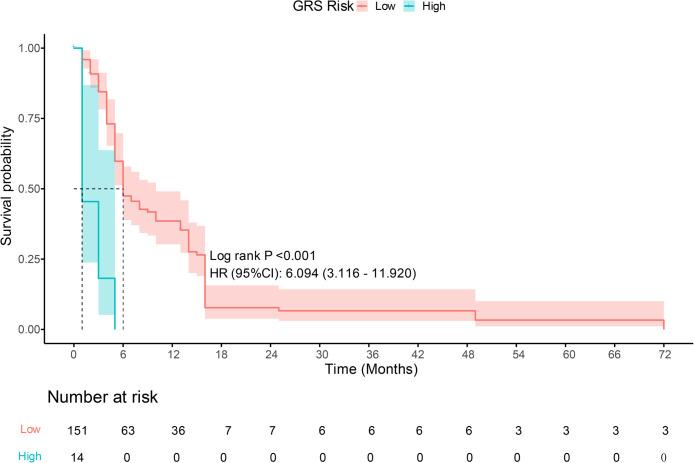
Among 165 patients, significant genetic alterations were identified, with TP53 being the most frequently mutated gene. Mutations in FGFR4, MST1R, and RECK were associated with the treatment efficacy of patients receiving TACE treatment, and the constructed GRS was associated with poor prognosis. Furthermore, AFP, ALT, AST, PLR, PD-L1 immune drug treatment, and GRS were confirmed as independent factors affecting the prognosis of patients with HCC treated with TACE. A nomogram was constructed, which demonstrated excellent discrimination, calibration, and clinical benefits in both the training and validation sets.
CONCLUSION
These findings highlight the critical role of angiogenesis-related genes in predicting TACE outcomes in patients with HCC and indicate that the developed prognostic model and nomogram can serve as valuable tools to predict prognosis based on the GRS of angiogenesis-associated gene mutations.
IMPLICATIONS FOR PRACTICE
Our findings highlight the critical role of angiogenesis-related genes in predicting TACE outcomes in HCC patients. The developed prognostic model and nomogram can serve as valuable tools for clinicians, enhancing decision-making and treatment strategies for HCC management.
背景
作为一种血管丰富的实体瘤,经动脉化疗栓塞术(TACE)反应不佳或治疗失败的肝细胞癌(HCC)患者可能与残留病灶中的肿瘤血管生成有关。然而,它们之间的关系仍不清楚。本研究旨在探讨HCC患者血管生成相关基因与TACE失败之间的关系,并建立一个评估治疗效果的预测模型。
材料与方法
采用全外显子测序(WES)分析165例接受TACE治疗的HCC患者的体细胞突变谱。进行多变量Cox回归分析以计算血管生成相关基因突变的遗传风险评分(GRS)。参与者被随机分为训练组和验证组。在训练集中,使用单变量Cox-LASSO-逐步Cox回归筛选TACE治疗的HCC患者的独立预后因素,并使用两组的受试者工作特征曲线、校准曲线和决策曲线分析建立并评估列线图。
结果
在165例患者中,发现了显著的基因改变,其中TP53是最常发生突变的基因。FGFR4、MST1R和RECK的突变与接受TACE治疗患者的治疗效果相关,构建的GRS与预后不良相关。此外,甲胎蛋白(AFP)、谷丙转氨酶(ALT)、谷草转氨酶(AST)、血小板与淋巴细胞比率(PLR)、程序性死亡受体1配体(PD-L1)免疫药物治疗和GRS被确认为影响TACE治疗的HCC患者预后的独立因素。构建了一个列线图,该列线图在训练集和验证集中均显示出优异的辨别力、校准度和临床效益。
结论
这些发现突出了血管生成相关基因在预测HCC患者TACE治疗结果中的关键作用,并表明所开发的预后模型和列线图可作为基于血管生成相关基因突变的GRS预测预后的有价值工具。
对实践的启示
我们的发现突出了血管生成相关基因在预测HCC患者TACE治疗结果中的关键作用。所开发的预后模型和列线图可为临床医生提供有价值的工具,加强HCC管理的决策制定和治疗策略。

 Zotero 插件