
内质网-线粒体连接及其信号传导:乳腺癌中的一个新治疗靶点。
ER-mitochondria tethering and its signaling: A novel therapeutic target in breast cancer.
作者信息
Paidi Chamanthi, Nuthalapati Yerusha, Samudrala Anuveda Sree, Bhamidipati Priyamvada, Mangam Charanteja, Welch Danny R, Nagaraju Ganji Purnachandra, Malla RamaRao
机构信息
Cancer Biology Group, Cancer Biology Laboratory, Department of Life Sciences, GITAM School of Science, GITAM (Deemed to be University), Visakhapatnam 530045, Andhra Pradesh, India.
Department of Cancer Biology and University of Kansas Cancer Center, The University of Kansas Medical Center, Kansas City, KS, USA.
出版信息
Mol Ther Oncol. 2025 May 14;33(2):200995. doi: 10.1016/j.omton.2025.200995. eCollection 2025 Jun 18.
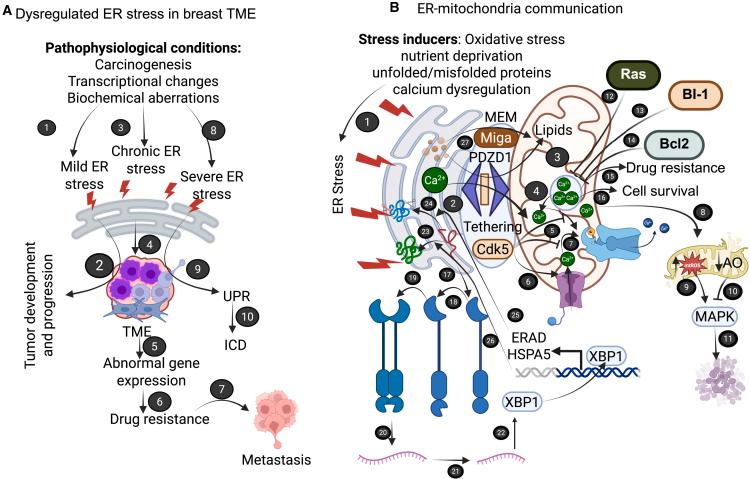
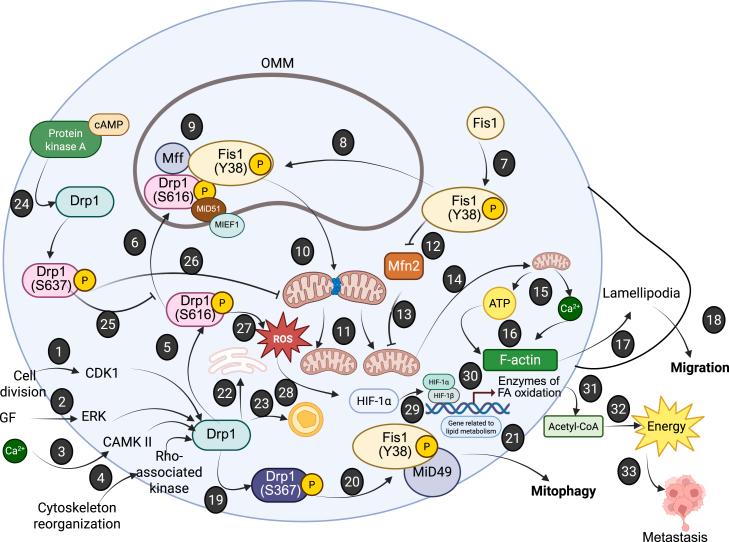
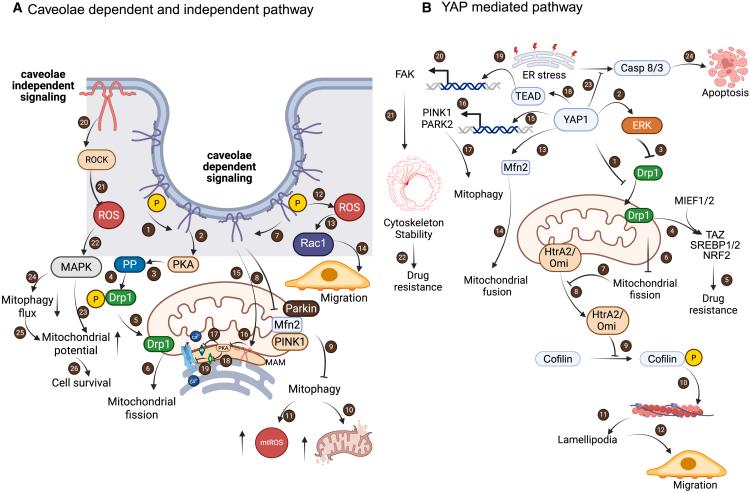
Communication between the endoplasmic reticulum (ER) and mitochondria through mitochondria-associated ER membranes (MAMs) is assisted by tethering proteins and signaling pathways, manifesting the dynamic exchange of lipids, calcium, and signaling molecules. However, dysregulation of tethering and signaling proteins contributes to the progression of breast cancer (BC). Abnormal MAM structures and altered ER-mitochondrial tethering impair mitochondrial functions and thereby drive BC progression. Altered mitochondrial dynamics, often characterized by dysregulated dynamin-related protein 1 (Drp1) and mitofusin-2 (Mfn2) activity, enhances BC cell survival. Similarly, ER stress and the unfolded protein response, both modulated by dysregulated ER-mitochondrial contacts, promote drug resistance. In BC, caveolae-dependent and -independent caveolin-1 signaling alongside Yes-associated protein (YAP) signaling pathway alters organelle dynamics by interacting with Drp1 and Mfn2, underscoring their therapeutic potential. This review explores potential therapeutic strategies targeting ER-mitochondrial communications and their potential for hindering BC progression. These strategies include modulating mitochondrial dynamics and promoting controlled ER stress by disrupting aberrant ER-mitochondrial tethering using chemotherapeutics, clinical inhibitors, and natural compounds, alone or in combination. Ultimately, targeting dysregulated ER-mitochondrial tethering has significant potential to improve patient outcomes in BC.
内质网(ER)与线粒体之间通过线粒体相关内质网膜(MAMs)进行的通讯由系链蛋白和信号通路辅助,表现为脂质、钙和信号分子的动态交换。然而,系链蛋白和信号蛋白的失调会促进乳腺癌(BC)的进展。异常的MAM结构和内质网 - 线粒体系链的改变会损害线粒体功能,从而推动BC进展。线粒体动力学改变,通常表现为动力相关蛋白1(Drp1)和线粒体融合蛋白2(Mfn2)活性失调,会增强BC细胞的存活能力。同样,内质网应激和未折叠蛋白反应,均由失调的内质网 - 线粒体接触所调节,会促进耐药性。在BC中,小窝依赖和非依赖的小窝蛋白 - 1信号以及Yes相关蛋白(YAP)信号通路通过与Drp1和Mfn2相互作用改变细胞器动力学,突出了它们的治疗潜力。本综述探讨了针对内质网 - 线粒体通讯的潜在治疗策略及其阻碍BC进展的潜力。这些策略包括通过单独或联合使用化疗药物、临床抑制剂和天然化合物破坏异常的内质网 - 线粒体系链来调节线粒体动力学并促进可控的内质网应激。最终,针对失调的内质网 - 线粒体系链具有显著潜力来改善BC患者的预后。



 Zotero 插件