
解偶联蛋白1辅助脂肪酸阴离子转运的一种推定新机制的分子动力学模拟
Molecular Dynamics Simulations of a Putative Novel Mechanism for UCP1-Assisted FA Anion Transport.
作者信息
Vojvodić Sanja, Roticiani Giorgia, Vazdar Mario, Pohl Elena E
机构信息
Physiology and Biophysics, Department of Biological Sciences and Pathobiology, University of Veterinary Medicine, Vienna, Austria.
Department of Mathematics, Informatics, and Cybernetics, Faculty of Chemical Engineering, University of Chemistry and Technology, Prague, Czech Republic.
出版信息
Acta Physiol (Oxf). 2025 Jul;241(7):e70068. doi: 10.1111/apha.70068.
BACKGROUND
Mitochondrial energy can be stored as ATP or released as heat by uncoupling protein 1 (UCP1) during non-shivering thermogenesis in brown adipose tissue. UCP1, located in the inner mitochondrial membrane, reduces the proton gradient in the presence of long-chain fatty acids (FA). FA act as weak, protein-independent uncouplers, with the transport of the FA anion across the membrane being the rate-limiting step. According to the fatty acid cycling hypothesis, UCP1 catalyzes this step through an as-yet-undefined mechanism.
METHODS
We used computational and experimental techniques, including all-atom molecular dynamics (MD) simulations, membrane conductance measurements, and site-directed mutagenesis.
RESULTS
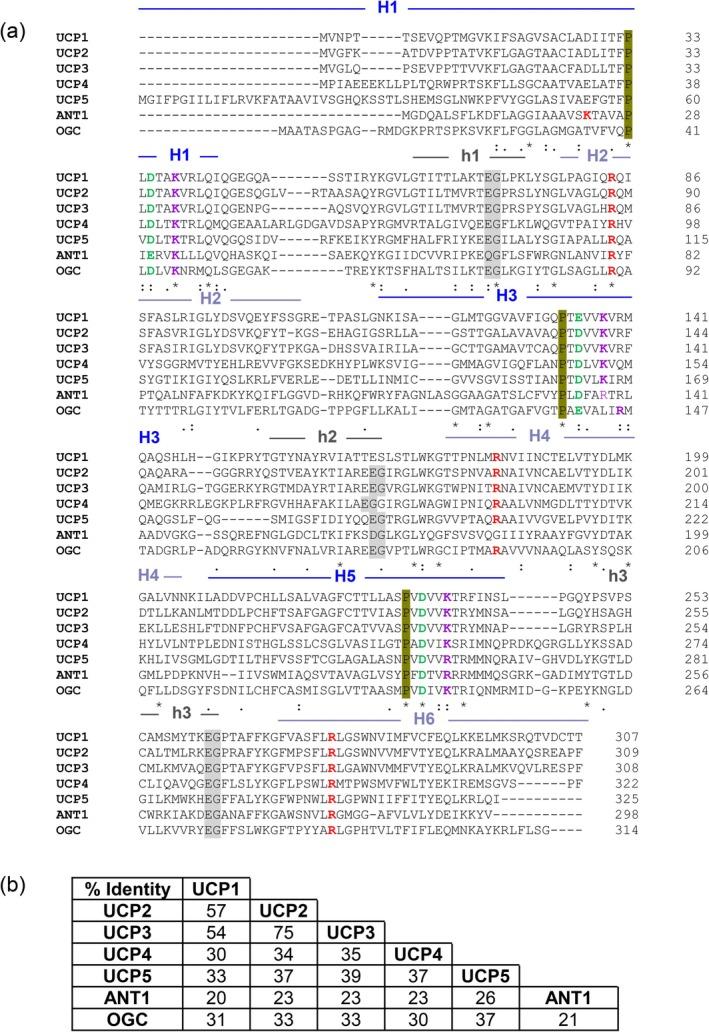
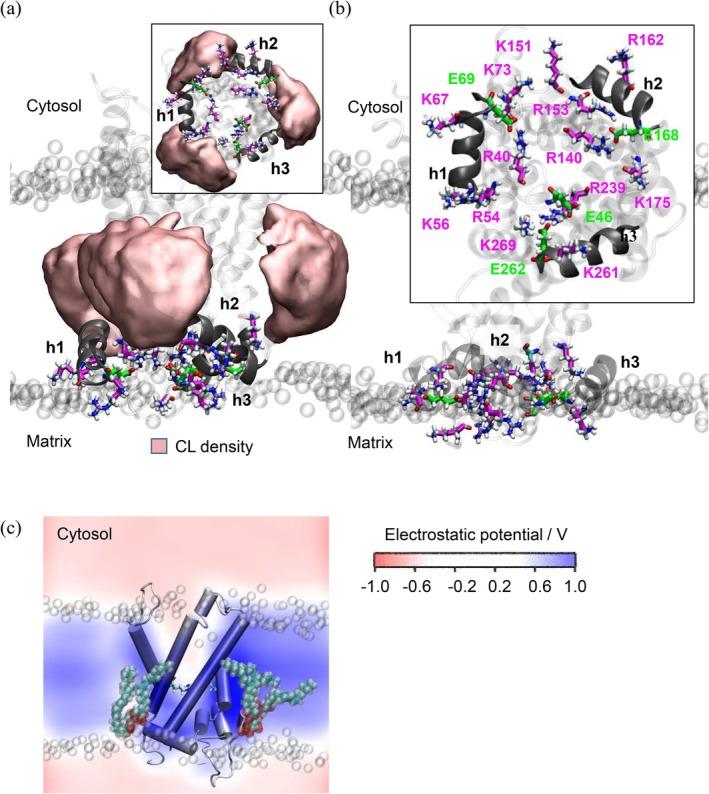
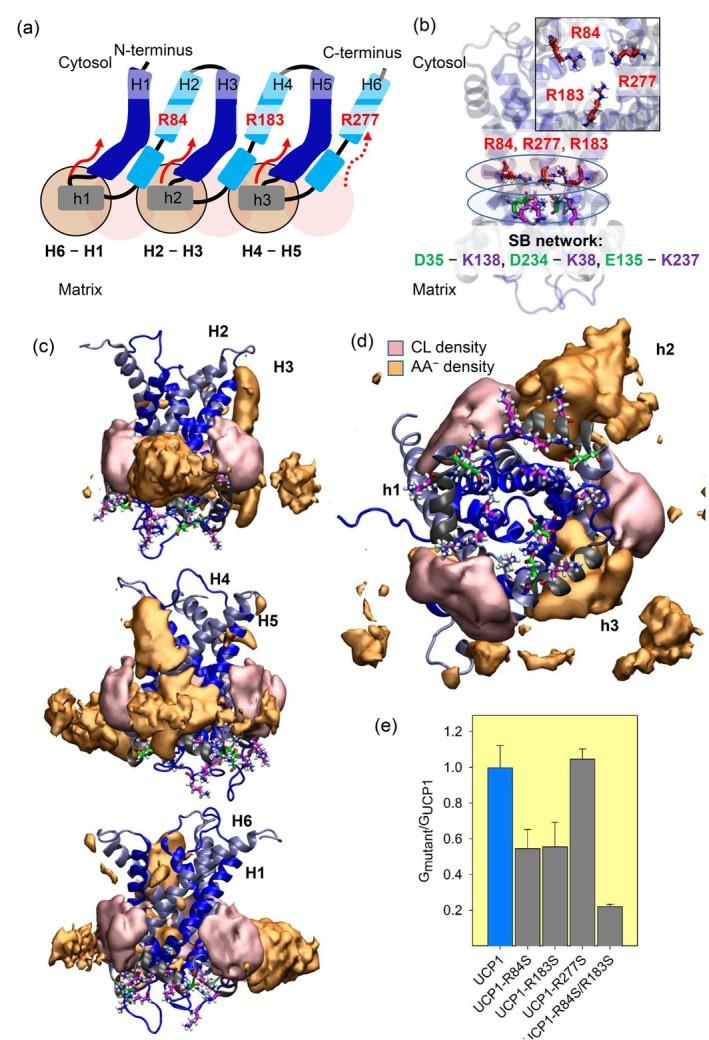
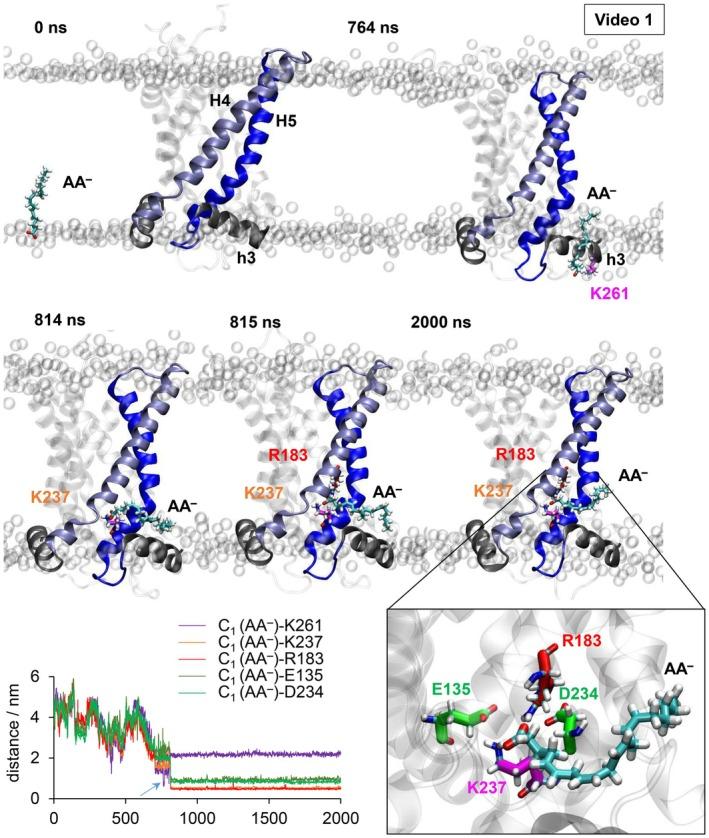
We identified two novel pathways for fatty acid anion translocation (sliding) at the UCP1 protein-lipid interface, ending at key arginine residues R84 and R183 in a nucleotide-binding region. This region forms a stable complex with fatty acid anion, which is crucial for anion transport. Mutations of these two arginines reduced membrane conductance, consistent with the MD simulation prediction that the arachidonic acid anion slides between helices H2-H3 and H4-H5, terminating at R84 and R183. Protonation of the arachidonic acid anion predicts its release from the protein-lipid interface, allowing it to move to either cytosolic or matrix leaflets of the membrane.
CONCLUSION
We provide a novel, detailed mechanism by which UCP1 facilitates fatty acid anion transport, as part of the fatty acid cycling process originally proposed by Skulachev. The residues involved in this transport are conserved in other SLC25 proteins, suggesting the mechanism may extend beyond UCP1 to other members of the superfamily.
背景
在棕色脂肪组织的非颤抖性产热过程中,线粒体能量可以以三磷酸腺苷(ATP)的形式储存,或者通过解偶联蛋白1(UCP1)以热量的形式释放。UCP1位于线粒体内膜,在长链脂肪酸(FA)存在的情况下会降低质子梯度。脂肪酸作为弱的、不依赖蛋白质的解偶联剂,脂肪酸阴离子跨膜运输是限速步骤。根据脂肪酸循环假说,UCP1通过一种尚未明确的机制催化这一步骤。
方法
我们使用了计算和实验技术,包括全原子分子动力学(MD)模拟、膜电导测量和定点诱变。
结果
我们在UCP1蛋白-脂质界面确定了两条脂肪酸阴离子转运(滑动)的新途径,终止于核苷酸结合区域的关键精氨酸残基R84和R183。该区域与脂肪酸阴离子形成稳定复合物,这对阴离子运输至关重要。这两个精氨酸的突变降低了膜电导,这与MD模拟预测一致,即花生四烯酸阴离子在螺旋H2-H3和H4-H5之间滑动,终止于R84和R183。花生四烯酸阴离子的质子化预示着它从蛋白-脂质界面释放,使其能够移动到膜的胞质或基质小叶。
结论
我们提供了一种新的、详细的机制,通过该机制UCP1促进脂肪酸阴离子运输,这是Skulachev最初提出的脂肪酸循环过程的一部分。参与这种运输的残基在其他SLC25蛋白中是保守的,这表明该机制可能不仅适用于UCP1,还适用于该超家族的其他成员。


 Zotero 插件