
USP5诱导的P4HB去泛素化减轻肠道缺血/再灌注中内质网应激介导的细胞凋亡。
USP5-induced deubiquitination of P4HB alleviates ER stress-mediated apoptosis in intestinal ischemia/reperfusion.
作者信息
Ning Shili, Zhong Peiyan, Zhao Xuzi, Zhao Yan, Yang Fengyuan, Chen Zhao, Zhang Feng, Guo Shanshan, Wu Yuanhui, Yao Jihong, Tian Xiaofeng
机构信息
Department of General Surgery, The Second Affiliated Hospital of Dalian Medical University, Dalian, China.
Department of Pharmacology, Dalian Medical University, Dalian, 116044, China.
出版信息
Cell Mol Life Sci. 2025 Jun 13;82(1):231. doi: 10.1007/s00018-025-05752-3.
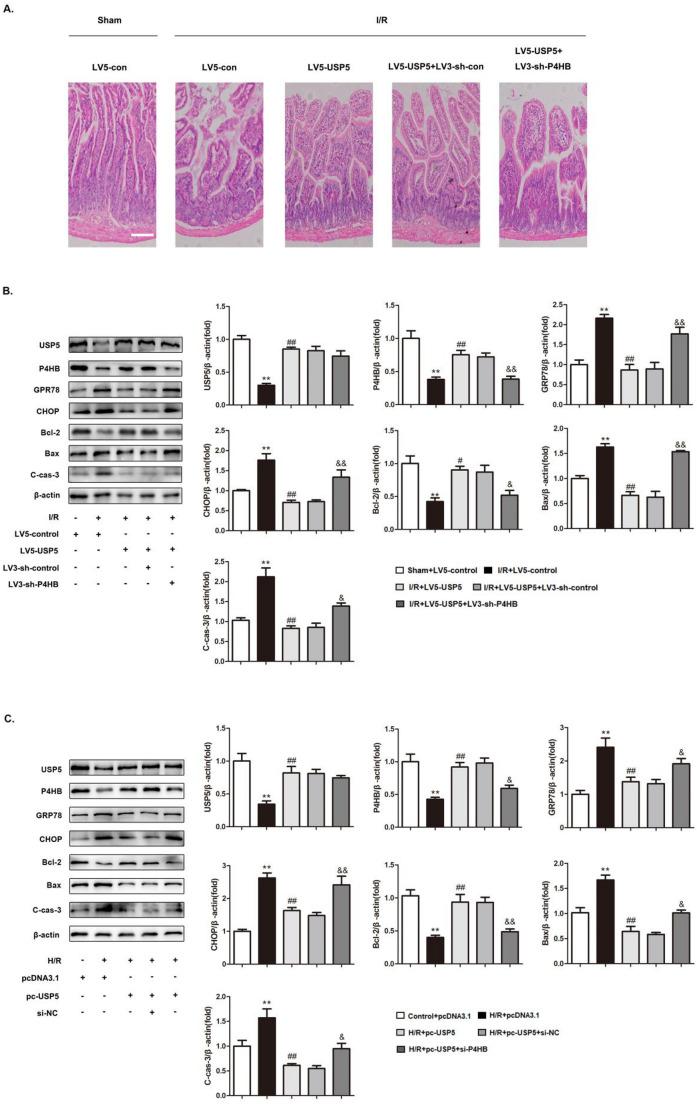
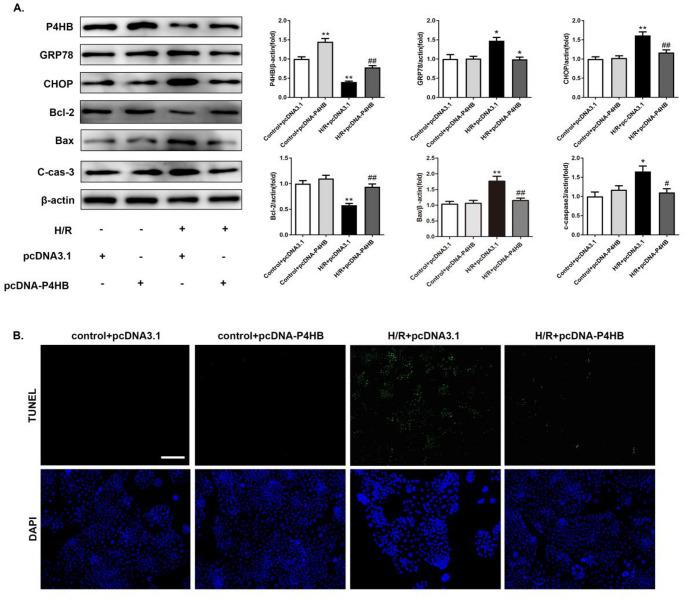
Intestinal ischemia/reperfusion (I/R) is a severe pathophysiological process that occurs in a variety of clinical conditions and can trigger multiple life-threatening syndromes. Intestinal I/R is associated endoplasmic reticulum (ER) stress. Prolyl 4-hydroxylase subunit beta (P4HB) contributes significantly to maintaining ER redox homeostasis, which is affected by I/R injury. Nevertheless, the molecular mechanism of P4HB expression and function in intestinal I/R is still unknown. In our study, we discovered that the expression of P4HB was clearly downregulated in the intestine of mice at the reperfusion stage and in Caco2 cells at the reoxygenation stage. In addition, P4HB-knockdown mice exhibited clearly enhanced ER stress-mediated apoptosis of intestinal tissue under intestinal I/R, whereas P4HB overexpression in Caco2 cells alleviated ER stress-mediated apoptosis under HR. Furthermore, via bioinformatics screening of proteins that interact with P4HB, ubiquitin-specific protease 5 (USP5) was identified as a critical factor in the abnormal expression of P4HB. USP5 interacts with P4HB and remains stable by removing ubiquitin. In vivo, P4HB knockdown counteracted the effect of USP5 overexpression on alleviating ER stress-mediated apoptosis in response to intestinal I/R. In summary, this study revealed that P4HB plays a crucial role in regulating ER stress-mediated apoptosis and identified USP5, which is a novel mediator of P4HB, as a prospective target for the treatment of intestinal I/R.
肠道缺血/再灌注(I/R)是一种严重的病理生理过程,发生于多种临床情况,可引发多种危及生命的综合征。肠道I/R与内质网(ER)应激相关。脯氨酰4-羟化酶亚基β(P4HB)对维持ER氧化还原稳态有重要作用,而该稳态受I/R损伤影响。然而,P4HB在肠道I/R中的表达及功能的分子机制仍不清楚。在我们的研究中,我们发现P4HB的表达在再灌注阶段的小鼠肠道及复氧阶段的Caco2细胞中明显下调。此外,P4HB基因敲除小鼠在肠道I/R时肠道组织中ER应激介导的细胞凋亡明显增强,而在Caco2细胞中过表达P4HB可减轻低氧复氧(HR)时ER应激介导的细胞凋亡。此外,通过对与P4HB相互作用的蛋白质进行生物信息学筛选,泛素特异性蛋白酶5(USP5)被确定为P4HB异常表达的关键因素。USP5与P4HB相互作用,并通过去除泛素来保持稳定。在体内,敲低P4HB可抵消USP5过表达对减轻肠道I/R时ER应激介导的细胞凋亡的作用。总之,本研究揭示P4HB在调节ER应激介导的细胞凋亡中起关键作用,并确定USP5作为P4HB的一种新型介质,是治疗肠道I/R的一个潜在靶点。



 Zotero 插件