
一项前瞻性队列研究方案,旨在确定老年急性病后谵妄和新发痴呆的多模态生物标志物:ORCHARD-PS研究。
Protocol for a prospective cohort study to determine the multimodal biomarkers of delirium and new dementia after acute illness in older adults: ORCHARD-PS.
作者信息
Gan Jasmine Ming, Elderton Lily, Vijayakumar Sheela Meenu, Knight Jessica, Louca John, Evans Sarah, Shahab Kinza, Lovett Nicola G, Sneade Mary, Muchenje Nycola, Fenchyn Mariya, Simonato Davide, McColl Aubretia, Pendlebury Sarah Tamsin
机构信息
Wolfson Centre for Prevention of Stroke and Dementia, Nuffield Department of Clinical Neurosciences, University of Oxford, Oxford, UK.
Neurosciences Research Delivery Team (DENDRON), Oxford University Hospitals NHS Foundation Trust, Oxford, UK.
出版信息
BMJ Open. 2025 Jun 13;15(6):e102028. doi: 10.1136/bmjopen-2025-102028.
INTRODUCTION
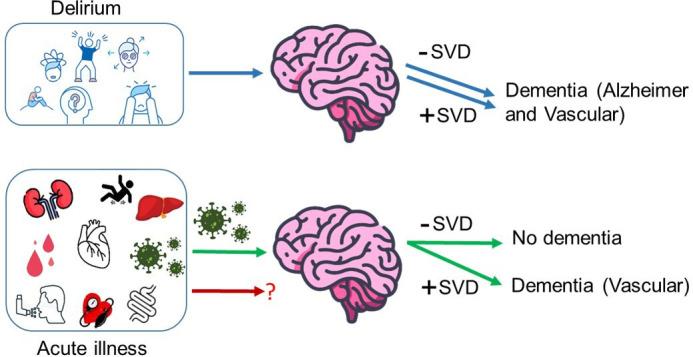
Delirium is common in the older hospital population and is often precipitated by acute illness. Delirium is associated with poor outcomes including subsequent cognitive decline and dementia and may therefore be a modifiable risk factor for dementia. However, the mechanisms underpinning the delirium-dementia relationship and the role of coexisting acute illness factors remain uncertain. Current biomarker studies of delirium have limitations including lack of detailed delirium characterisation with few studies on neurodegenerative or neuroimaging biomarkers especially in the acute setting. The Oxford and Reading Cognitive Health After Recovery from acute illness and Delirium-Prospective Study (ORCHARD-PS) aims to elucidate the pathophysiology of delirium and subsequent cognitive decline after acute illness in older adults, through acquisition of multimodal biomarkers for deep phenotyping of delirium and acute illness, and follow-up for incident dementia.
METHODS AND ANALYSIS
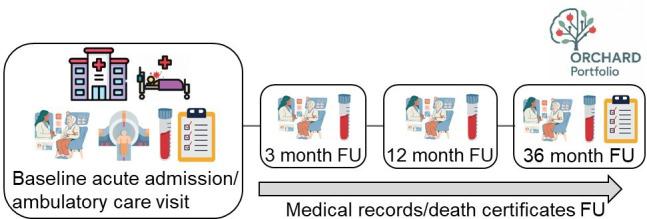
ORCHARD-PS is a bi-centre, prospective cohort study. Consecutive eligible patients requiring acute hospital admission or assessment are identified by the relevant acute clinical care team. All patients age 65 years without advanced dementia, nursing home residence, end-stage frailty or terminal illness are eligible. Details of potential participants are communicated to the research team and written informed consent or consultee agreement is obtained. Participants are interviewed as soon as possible after admission/assessment using a structured proforma.Data are collected on demographics, diagnosis and comorbidities, social and functional background. Delirium is assessed using the 4A's test, Confusion Assessment Method (long-form), Observational Scale of Level of Arousal, Richmond Agitation-Sedation Scale and Memorial Delirium Assessment Scale and diagnosed using the Diagnostic and Statistical Manual of Mental Disorders, Fifth Edition criteria. Delirium is categorised by time of onset (prevalent vs incident), dementia status, motoric subtype, severity and duration. Cognitive tests include the 10-point Abbreviated Mental Test and Montreal Cognitive Assessment. Participants are reassessed every 48-72 hours if remaining in hospital. Informant questionnaire data and interview are supplemented by hand searching of medical records and linkage to electronic patient records for nursing risk assessments, vital observations, laboratory results and International Classification of Diseases, Tenth Revision diagnostic and procedure codes.In-person follow-up with more detailed cognitive testing and informant interview is undertaken at 3 months, and 1 and 3 years supplemented with indirect follow-up using medical records. Blood banking is performed at baseline and all follow-ups for future biomarker analyses. CT-brain and MRI-brain imaging acquired as part of standard care is obtained for quantification of brain atrophy and white matter disease/stroke supplemented by research CT-brain imaging. Outcomes include length of hospitalisation, change in care needs, institutionalisation, mortality, readmission, longitudinal changes in cognitive and functional status and incident dementia. Biomarker associations with delirium, and with incident dementia on follow-up, will be determined using logistic or Cox regression as appropriate, unadjusted and adjusted for covariates including demographics, baseline cognition, frailty, comorbidity and apolipoprotein E genotype.
ETHICS AND DISSEMINATION
ORCHARD-PS is approved by the South Central-Berkshire Research Ethics Committee (REC Reference: 23/SC/0199). Results will be disseminated through peer-reviewed publications and conference presentations.
TRIAL REGISTRATION NUMBER
ISRCTN24171810.
引言
谵妄在老年住院患者中很常见,通常由急性疾病引发。谵妄与包括随后的认知衰退和痴呆在内的不良预后相关,因此可能是痴呆的一个可改变的风险因素。然而,谵妄与痴呆之间关系的潜在机制以及并存的急性疾病因素的作用仍不确定。目前关于谵妄的生物标志物研究存在局限性,包括缺乏对谵妄的详细特征描述,关于神经退行性或神经影像学生物标志物的研究很少,尤其是在急性情况下。牛津和雷丁急性疾病康复后认知健康与谵妄前瞻性研究(ORCHARD-PS)旨在通过获取用于谵妄和急性疾病深度表型分析的多模态生物标志物,并对新发痴呆进行随访,阐明老年人急性疾病后谵妄及随后认知衰退的病理生理学。
方法与分析
ORCHARD-PS是一项双中心前瞻性队列研究。相关急性临床护理团队识别出需要急性住院治疗或评估的连续合格患者。所有年龄在65岁且无晚期痴呆、居住在养老院、处于终末期衰弱或患有绝症的患者均符合条件。潜在参与者的详细信息会传达给研究团队,并获得书面知情同意或咨询者协议。参与者在入院/评估后尽快使用结构化表格进行访谈。收集人口统计学、诊断和合并症、社会和功能背景等数据。使用4A测试、谵妄评定方法(完整版)、觉醒水平观察量表、里士满躁动镇静量表和纪念谵妄评估量表评估谵妄,并根据《精神疾病诊断与统计手册》第五版标准进行诊断。谵妄按发病时间(现患与新发)、痴呆状态、运动亚型、严重程度和持续时间进行分类。认知测试包括10分简易精神状态检查表和蒙特利尔认知评估。如果患者仍住院,每48 - 72小时重新评估一次。通过人工查阅病历以及与电子病历关联以获取护理风险评估、生命体征观察、实验室结果和国际疾病分类第十版诊断及程序编码,来补充 informant 问卷数据和访谈。在3个月、1年和3年进行面对面随访,进行更详细的认知测试和 informant 访谈,并辅以使用病历进行的间接随访。在基线和所有随访时进行血样采集,用于未来的生物标志物分析。作为标准护理的一部分获取脑部CT和MRI成像,以量化脑萎缩和白质疾病/中风,并辅以研究性脑部CT成像。结局包括住院时间、护理需求变化、机构化、死亡率、再入院率、认知和功能状态的纵向变化以及新发痴呆。将使用逻辑回归或Cox回归(视情况而定),在未调整和调整协变量(包括人口统计学、基线认知、衰弱、合并症和载脂蛋白E基因型)的情况下,确定生物标志物与谵妄以及随访时新发痴呆的关联。
伦理与传播
ORCHARD-PS已获得中南伯克希尔研究伦理委员会批准(REC编号:23/SC/0199)。研究结果将通过同行评审出版物和会议报告进行传播。
试验注册号
ISRCTN24171810
 Zotero 插件