
外泌体:一种用于脊髓损伤治疗的有前景的微环境调节剂。
Exosomes: a promising microenvironment modulator for spinal cord injury treatment.
作者信息
Ma Yanming, Yu Xiaojun, Pan Jingxin, Wang Yingguang, Li Ruoyu, Wang Xiaodong, Hu Huimin, Hao Dingjun
机构信息
Department of Spine Surgery, Honghui Hospital, Xi'an Jiaotong University, Xi'an, Youyidong Road, Shaanxi, 710054, China.
出版信息
Int J Biol Sci. 2025 Jun 5;21(8):3791-3824. doi: 10.7150/ijbs.115242. eCollection 2025.
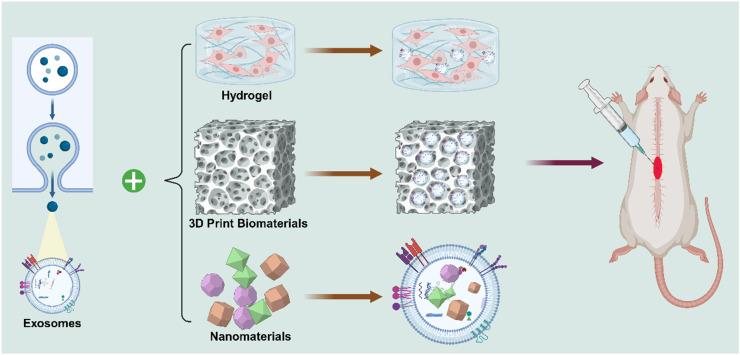
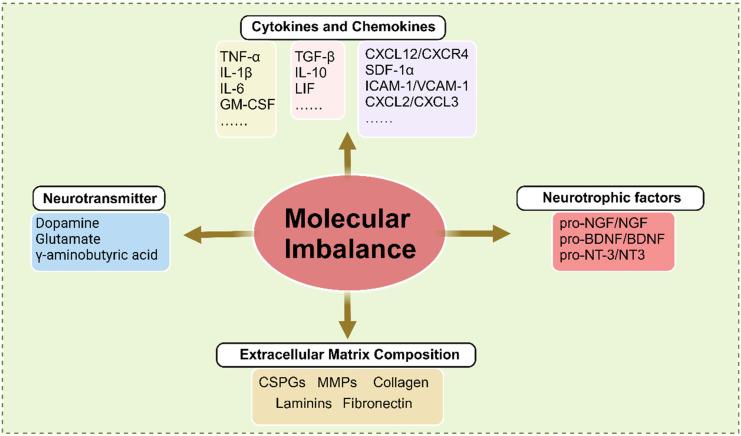
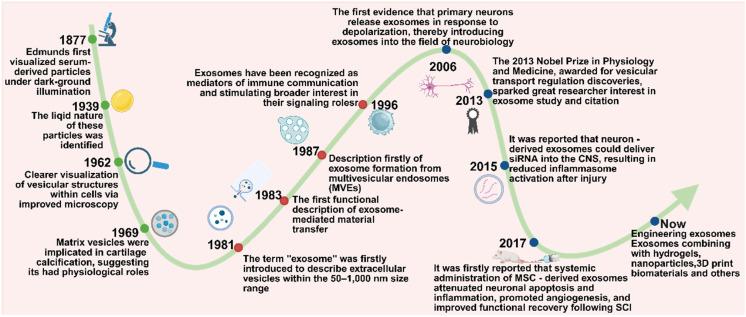
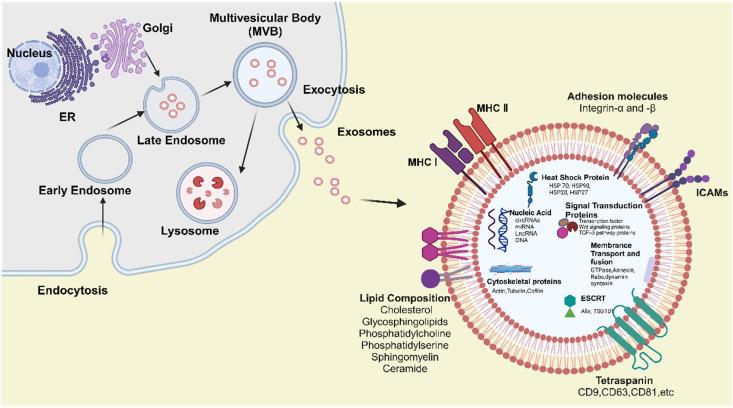
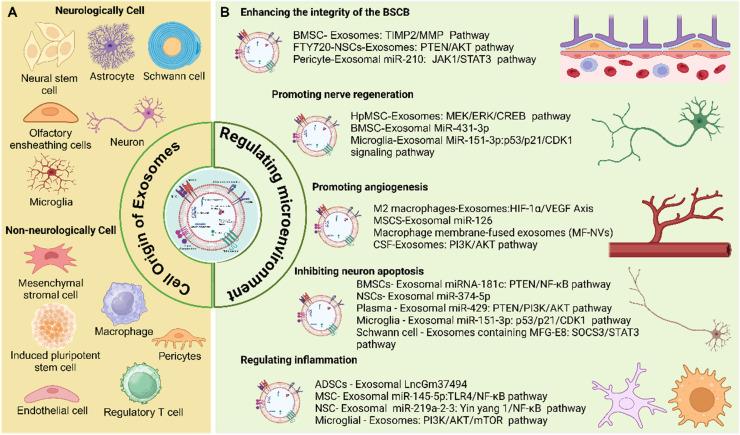
Spinal cord injury (SCI) remains a severely disabling disorder that impacts millions globally by causing irreversible damage to the nervous system. Although cell - based therapies have shown notable progress, the post - injury microenvironment presents significant obstacles that hinder the survival and effectiveness of implanted cells, ultimately limiting sustained functional restoration. Exosomes have emerged as a promising cell - free therapeutic alternative due to their stability, low immunogenicity, and ability to carry bioactive molecules such as proteins, microRNAs, and lipids. These vesicles can modulate the injured microenvironment, support neuroprotection, and facilitate repair. This review begins by discussing the pathological alterations that disrupt the microenvironment following SCI. The review then outlines the process of exosome formation and highlights their structural features. Furthermore, the review delves into the diverse cellular sources of exosomes and evaluates their therapeutic relevance in the context of SCI. Special attention is given to the multifaceted roles exosomes play in neuroprotection, such as reinforcing the blood - spinal cord barrier, stimulating axonal regeneration, promoting new blood vessel formation, suppressing programmed cell death in neurons, and modulating inflammatory responses. The synergistic use of exosomes in combination with biomaterials is also explored, with the aim of optimizing their therapeutic potential. Lastly, the review addresses the key obstacles that must be overcome to bring exosome - based treatments into clinical application and offers perspectives on future advancements in this evolving field. In summary, exosomes offer a novel and promising avenue for SCI intervention, holding considerable promise as an alternative to traditional therapeutic approaches.
脊髓损伤(SCI)仍然是一种严重致残的疾病,通过对神经系统造成不可逆转的损害,影响着全球数百万人。尽管基于细胞的疗法已取得显著进展,但损伤后的微环境存在重大障碍,阻碍了植入细胞的存活和有效性,最终限制了持续的功能恢复。由于外泌体具有稳定性、低免疫原性以及携带蛋白质、微小RNA和脂质等生物活性分子的能力,它们已成为一种有前景的无细胞治疗选择。这些囊泡可以调节受损的微环境,支持神经保护并促进修复。本综述首先讨论脊髓损伤后破坏微环境的病理改变。然后概述外泌体的形成过程并突出其结构特征。此外,本综述深入探讨外泌体的多种细胞来源,并评估它们在脊髓损伤背景下的治疗相关性。特别关注外泌体在神经保护中发挥的多方面作用,例如加强血脊髓屏障、刺激轴突再生、促进新血管形成、抑制神经元程序性细胞死亡以及调节炎症反应。还探讨了外泌体与生物材料联合使用的协同作用,以优化其治疗潜力。最后,本综述阐述了将基于外泌体的治疗方法应用于临床必须克服的关键障碍,并对这一不断发展的领域的未来进展提供了展望。总之,外泌体为脊髓损伤干预提供了一条新颖且有前景的途径,作为传统治疗方法的替代方案具有相当大的潜力。


 Zotero 插件