
水分和施肥对杨树种植土壤的生态效应
Ecological effects of water and fertilizer addition on poplar-planting soil.
作者信息
You Yimin, Li Shitong, Li Xiao, Wang Liran, Wang Hongxing, Jiang Luping, Peng Yanhui, Pang Zhongyi, Zhao Xiyang
机构信息
Jilin Provincial Key Laboratory of Tree and Grass Genetics and Breeding, College of Forestry and Grassland Science, Jilin Agricultural University, Changchun, China.
State-owned Xinmin Mechanical Forest Farm, Xinmin, China.
出版信息
mSystems. 2025 Jul 22;10(7):e0050125. doi: 10.1128/msystems.00501-25. Epub 2025 Jun 18.
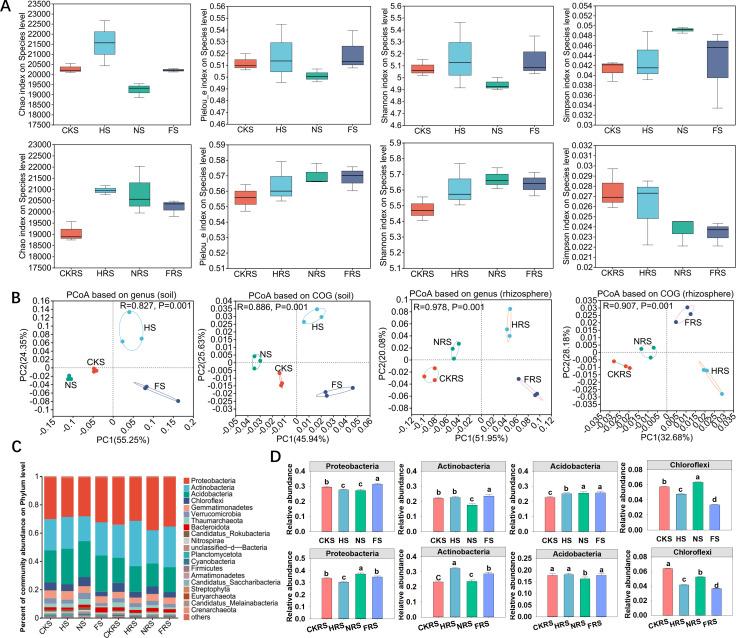
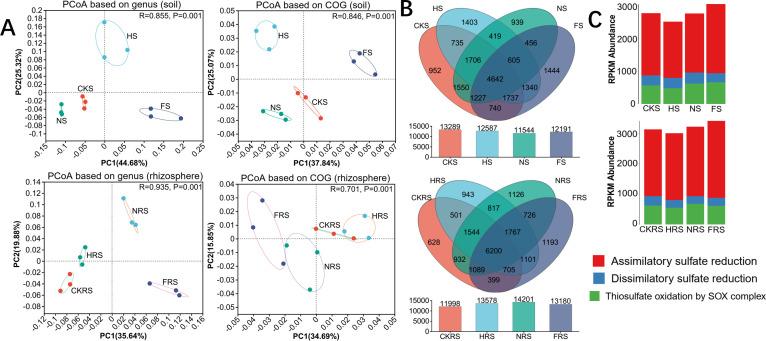
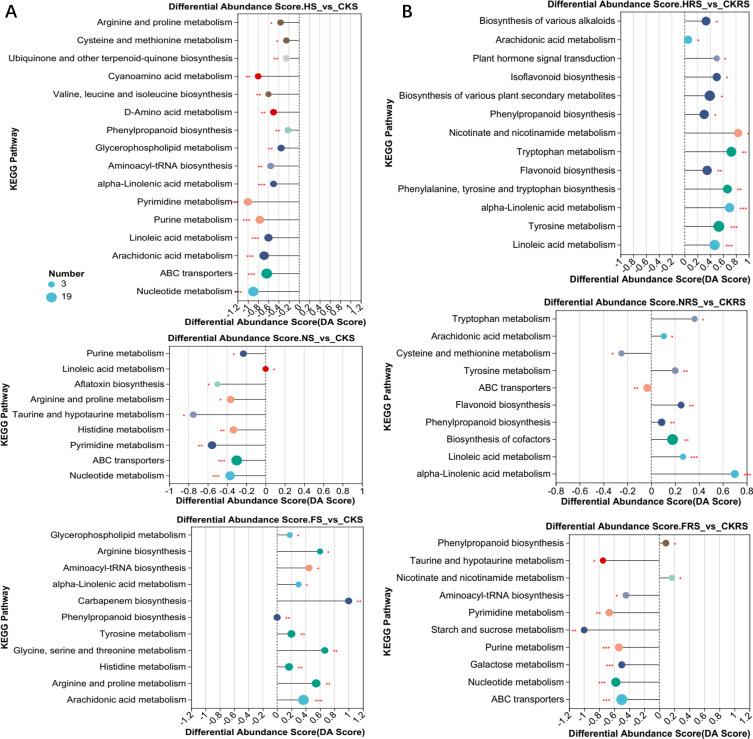
While irrigation and fertilization are basic cultivation practices in poplar plantations on a global scale, the impact of these practices on the environment is not well understood. Here, we demonstrate that water-urea addition and water-compound fertilizer addition differentially impact soil ecosystems. We report that water-fertilizer addition did not significantly alter taxonomic diversity indices, but it did drive significant shifts in microbial community composition, reflected by changes in the relative abundance of specific taxa and their functional profiles. Water-urea addition reduced Proteobacteria and Actinobacteria in non-rhizosphere soils while increasing Acidobacteria and Chloroflexi. In contrast, water-compound fertilizer additions increased Proteobacteria and Actinobacteria dominance in rhizosphere soils. Water-fertilizer addition changed microbial composition and functional gene abundance linked to nitrogen and sulfur cycling. Water-urea treatment enriched denitrification genes and dissimilatory nitrate reduction genes () in rhizosphere soil, while water-compound fertilizer treatment enhanced nitrification (, ) and denitrification gene abundance in both soils. For sulfur (S) cycling, water-urea treatment favored thiosulfate oxidation genes, whereas water-compound fertilizer treatment increased assimilatory sulfate reduction genes. Multi-omics integration linked these microbial dynamics to metabolic reshaping-water-urea increased lipid and secondary metabolites in rhizosphere soils, while water-compound fertilizer additions elevated amino acid-associated metabolites in non-rhizosphere soils. Crucially, water-compound fertilizer addition reduced the gene abundance for the conversion of NO to N () and altered sulfur partitioning, whereas water-urea addition elevated soil NO and NH but depleted available K. These results highlight trade-offs between nutrient management and microbial-mediated environmental potential, guiding optimized irrigation-fertilizer strategies for sustainable poplar silviculture.IMPORTANCECombined irrigation and fertilizer application affect microbial community composition, and soil nitrogen and sulfur cycles (by regulating microbial composition and the abundance of genes related to nitrogen and sulfur cycles). Water-urea reduced Proteobacteria, increased Acidobacteria, and enriched denitrification genes, elevating soil NO/NH. Water-compound fertilizer boosted Proteobacteria and nitrification genes. Water-urea increased rhizosphere lipids/secondary metabolites; compound fertilizer elevated non-rhizosphere amino acids. These trade-offs between nutrient gains and environmental risks guide optimized poplar plantation management.
虽然灌溉和施肥是全球范围内杨树人工林的基本栽培措施,但这些措施对环境的影响尚未得到充分了解。在此,我们证明添加水-尿素和添加水-复合肥对土壤生态系统有不同影响。我们报告称,添加水肥并没有显著改变分类多样性指数,但确实推动了微生物群落组成的显著变化,这体现在特定分类群的相对丰度及其功能谱的变化上。添加水-尿素减少了非根际土壤中的变形菌门和放线菌门,同时增加了酸杆菌门和绿弯菌门。相反,添加水-复合肥增加了根际土壤中变形菌门和放线菌门的优势。添加水肥改变了与氮和硫循环相关的微生物组成和功能基因丰度。水-尿素处理使根际土壤中的反硝化基因和异化硝酸盐还原基因()富集,而水-复合肥处理增强了两种土壤中的硝化作用(,)和反硝化基因丰度。对于硫(S)循环,水-尿素处理有利于硫代硫酸盐氧化基因,而水-复合肥处理增加了同化硫酸盐还原基因。多组学整合将这些微生物动态与代谢重塑联系起来——水-尿素增加了根际土壤中的脂质和次生代谢物,而添加水-复合肥提高了非根际土壤中与氨基酸相关的代谢物。至关重要的是,添加水-复合肥降低了将NO转化为N()的基因丰度并改变了硫的分配,而添加水-尿素提高了土壤中的NO和NH,但消耗了有效钾。这些结果突出了养分管理与微生物介导的环境潜力之间的权衡,为可持续杨树造林的优化灌溉施肥策略提供了指导。重要性灌溉和施肥相结合会影响微生物群落组成以及土壤氮和硫循环(通过调节微生物组成以及与氮和硫循环相关的基因丰度)。水-尿素减少了变形菌门,增加了酸杆菌门,并富集了反硝化基因,提高了土壤中的NO/NH。水-复合肥增加了变形菌门和硝化基因。水-尿素增加了根际脂质/次生代谢物;复合肥提高了非根际氨基酸含量。这些养分获取与环境风险之间的权衡为优化杨树人工林管理提供了指导。



 Zotero 插件