
儿科急诊科诊断为细支气管炎的儿童肠道通透性评估:一项横断面研究。
Evaluation of Intestinal Permeability in Children Diagnosed With Bronchiolitis in Pediatric Emergency Department: A Cross-Sectional Study.
作者信息
Akkuş Abdullah, Kiliç Ahmet Osman, Ercan Fatih, Yücel Mehtap, Yazar Abdullah, Akin Fatih, Pekcan Sevgi, Çetin Hasan, Çağlar Hanife Tuğçe
机构信息
Department of Pediatrics, Necmettin Erbakan University Faculty of Medicine, Konya, Türkiye.
Department of Pediatrics, Division of Pediatric Pulmonology, Necmettin Erbakan University Faculty of Medicine, Konya, Türkiye.
出版信息
Pediatr Pulmonol. 2025 Jun;60(6):e71171. doi: 10.1002/ppul.71171.
BACKGROUND
Bronchiolitis is the most common lower respiratory tract infection, with the most commonly isolated organism being respiratory syncytial virus (RSV). Despite several studies on intestinal permeability in various acute and chronic pulmonary diseases, studies examining these molecules in patients diagnosed with bronchiolitis are very limited. This study was conducted to examine zonulin and claudin-3 levels to evaluate intestinal permeability in children diagnosed with bronchiolitis.
MATERIALS AND METHODS
A total of 98 children, 60 patients with bronchiolitis and 38 healthy controls were included in this study. After informed consent of patients and their parents were obtained, 5 mL of blood serum samples were collected upon admission, after confirmation of the diagnosis, which were kept frozen until being analyzed for zonulin and claudin-3 levels and subsequently analyzed and compared between the groups.
RESULTS
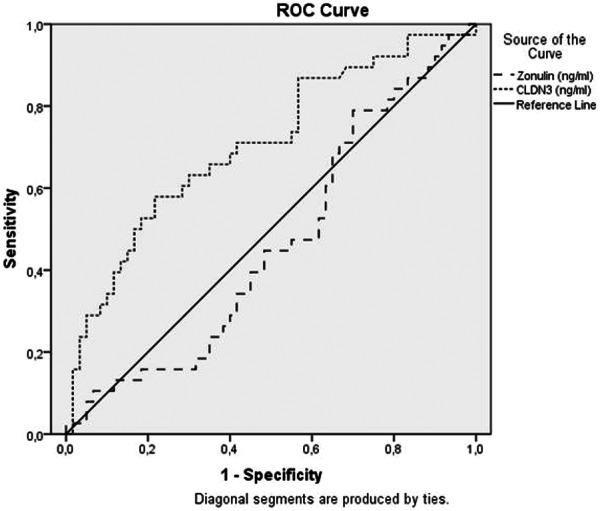
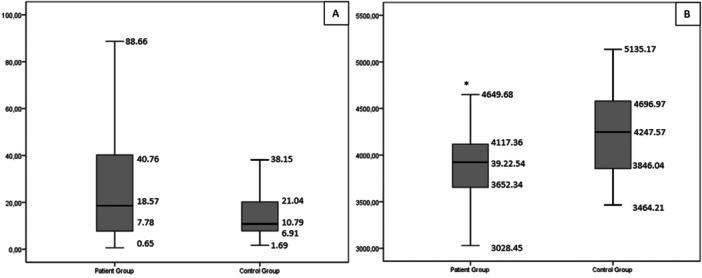
The median value of zonulin was 18.57 ng/mL in the patient group and 12.41 ng/mL in the control group. There was no significant difference in zonulin levels between the patient and control groups (p = 0.540). The mean claudin-3 (CLDN3) level was significantly lower in the patient group (3889.56) than the control group 4216.77 (p < 0.001). In the patient group, zonulin and claudin levels did not significantly differ by the need of mechanical ventilation and ICU administration (p > 0.05).
CONCLUSION
In conclusion, CLDN3 levels were found to be significantly lower in patients with bronchiolitis than in the control group. This finding may indicate that low CLDN3 levels may be involved in pathogenesis of bronchiolitis, by impairing airway permeability Further studies with larger number of participants, investigating the effect of airway permeability on the pathogenesis of bronchiolitis, which compare zonulin and CLDN3 levels according to disease severity, are warranted.
背景
细支气管炎是最常见的下呼吸道感染,最常分离出的病原体是呼吸道合胞病毒(RSV)。尽管已有多项关于各种急慢性肺部疾病肠道通透性的研究,但针对诊断为细支气管炎的患者进行这些分子检测的研究非常有限。本研究旨在检测闭合蛋白和紧密连接蛋白-3水平,以评估诊断为细支气管炎的儿童的肠道通透性。
材料与方法
本研究共纳入98名儿童,其中60例细支气管炎患者和38名健康对照。在获得患者及其家长的知情同意后,确诊后入院时采集5mL血清样本,冷冻保存直至分析闭合蛋白和紧密连接蛋白-3水平,随后进行组间分析和比较。
结果
患者组闭合蛋白的中位数为18.57ng/mL,对照组为12.41ng/mL。患者组和对照组之间的闭合蛋白水平无显著差异(p = 0.540)。患者组紧密连接蛋白-3(CLDN3)的平均水平(3889.56)显著低于对照组(4216.77)(p < 0.001)。在患者组中,根据机械通气需求和入住重症监护病房情况,闭合蛋白和紧密连接蛋白水平无显著差异(p > 0.05)。
结论
总之,发现细支气管炎患者的CLDN3水平显著低于对照组。这一发现可能表明,低CLDN3水平可能通过损害气道通透性参与细支气管炎的发病机制。有必要开展更多参与者的进一步研究,调查气道通透性对细支气管炎发病机制的影响,并根据疾病严重程度比较闭合蛋白和CLDN3水平。
 Zotero 插件