
与转移性上皮癌肿瘤浸润淋巴细胞的生长和新抗原反应性相关的临床因素。
Clinical factors associated with growth and neoantigen reactivity of tumor infiltrating lymphocytes from metastatic epithelial cancers.
作者信息
Gustafson Alexandra M, Dinerman Aaron J, Hitscherich Kyle J, Parkhurst Maria R, Halas Hyunmi, White Donald E, Hoang Chuong D, Hernandez Jonathan M, Kwong Mei Li M, Klemen Nicholas D, Rosenberg Steven A, Goff Stephanie L, Yang James C
机构信息
Surgery Branch, National Cancer Institute, National Institutes of Health, Bethesda, MD, USA.
Thoracic Surgery Branch, National Cancer Institute, National Institutes of Health, Bethesda, MD, USA.
出版信息
Cancer Immunol Immunother. 2025 Jun 19;74(8):244. doi: 10.1007/s00262-025-04091-3.
BACKGROUND
Adoptive cell therapy with tumor infiltrating lymphocytes is FDA approved for metastatic melanoma. TIL from patients with melanoma and factors relating to growth and reactivity have been studied; however, this has not been explored in patients with epithelial cancers.
PATIENTS AND METHODS
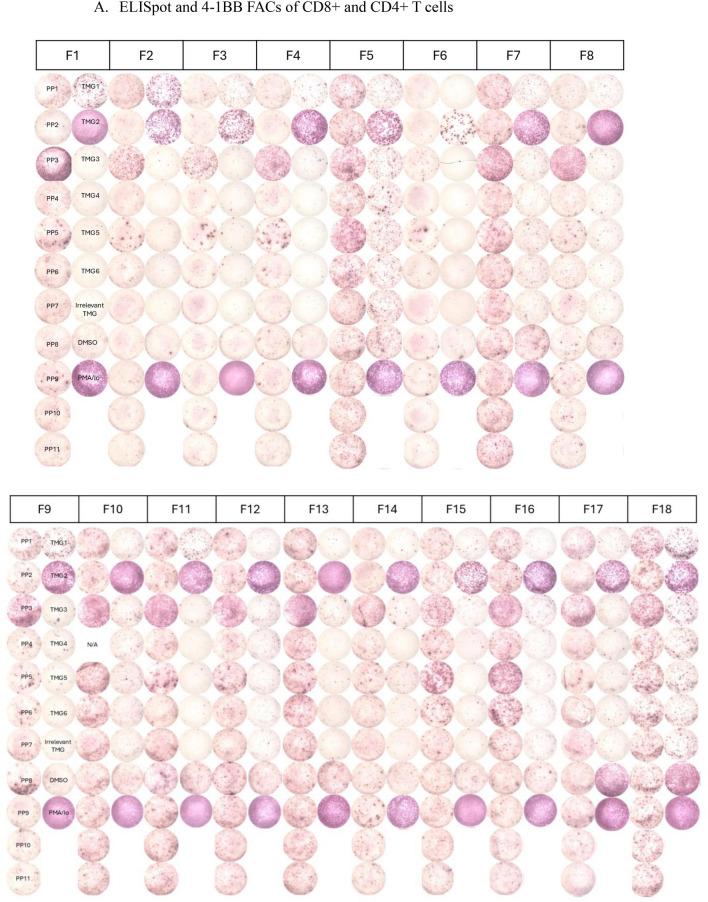
Metastatic epithelial tumors resected for TIL growth from 2014 to 2023 were analyzed. Two hundred and ninety-one operations were performed to collect TIL for potential treatment. Of these, 263 harvests were each processed for up to 24 individual fragment cultures and screened for neoantigen recognition of the expressed products of cancer mutations. Patient and tumor characteristics were collected. Endpoints were growth (defined as more than half of all fragment cultures expanded for viable cryopreservation) and patient-specific neoantigen reactivity (release of interferon-γ in cocultures measured by ELISpot and 4-1BB upregulation on flow cytometry).
RESULTS
TIL fragments reached adequate growth for screening by 21 days. Metastatic resections from lung were more likely to grow TIL than all other resection sites combined (95%, p = 0.0011), while hepatic resections were less likely to grow (69%, p < 0.0001). One hundred and thirty-five patients (51%) had highly reactive TIL, 68 (26%) had weakly reactive TIL, and 60 (23%) had TIL with no neoantigen reactivity. Patients with prior exposure to immune checkpoint blockade therapy were less likely to have highly reactive TIL (p = 0.0325). Metastatic resection site impacted TIL reactivity against neoantigens, with those harvested from the lung more likely to show any reactivity (83%, p = 0.0180), as well as high reactivity (59%, p = 0.0066).
CONCLUSIONS
Prior immune checkpoint therapies reduced the likelihood of having highly reactive TIL. Neoantigen reactivity was more common in TIL from thoracic resections versus other sites. Conversely, hepatic lesions yielded TIL less likely to grow and with less reactivity. These results contribute to improved strategies for sequencing TIL with other therapies and planning TIL harvests for patients with epithelial cancers.
背景
肿瘤浸润淋巴细胞过继性细胞疗法已获美国食品药品监督管理局批准用于转移性黑色素瘤的治疗。黑色素瘤患者的肿瘤浸润淋巴细胞以及与生长和反应性相关的因素已得到研究;然而,上皮癌患者的这方面情况尚未得到探索。
患者与方法
对2014年至2023年期间为获取肿瘤浸润淋巴细胞生长而切除的转移性上皮肿瘤进行分析。共进行了291例手术以采集肿瘤浸润淋巴细胞用于潜在治疗。其中,263例采集样本分别进行了多达24个单独片段培养,并筛选对癌症突变表达产物的新抗原识别情况。收集了患者和肿瘤的特征。观察终点为生长情况(定义为所有片段培养物中超过一半得以扩增用于可行的冷冻保存)以及患者特异性新抗原反应性(通过酶联免疫斑点法检测共培养中干扰素-γ的释放以及通过流式细胞术检测4-1BB上调情况)。
结果
肿瘤浸润淋巴细胞片段在21天内达到足以进行筛选的生长状态。与所有其他切除部位的总和相比,来自肺部的转移性切除术更有可能培养出肿瘤浸润淋巴细胞(95%,p = 0.0011),而肝脏切除术培养出肿瘤浸润淋巴细胞的可能性较小(69%,p < 0.0001)。135例患者(51%)的肿瘤浸润淋巴细胞具有高反应性,68例(26%)具有弱反应性,60例(23%)的肿瘤浸润淋巴细胞无新抗原反应性。既往接受过免疫检查点阻断治疗的患者,其肿瘤浸润淋巴细胞具有高反应性的可能性较小(p = 0.0325)。转移性切除部位影响肿瘤浸润淋巴细胞对新抗原的反应性,从肺部采集的肿瘤浸润淋巴细胞更有可能表现出任何反应性(83%,p = 0.0180)以及高反应性(59%,p = 0.0066)。
结论
既往免疫检查点治疗降低了肿瘤浸润淋巴细胞具有高反应性的可能性。与其他部位相比,胸部切除术采集的肿瘤浸润淋巴细胞中新抗原反应性更为常见。相反,肝脏病变产生的肿瘤浸润淋巴细胞生长可能性较小且反应性较低。这些结果有助于改进将肿瘤浸润淋巴细胞与其他疗法进行排序以及为上皮癌患者规划肿瘤浸润淋巴细胞采集的策略。

 Zotero 插件