
与TNM分期系统相比,C反应蛋白-白蛋白-淋巴细胞指数在肝癌中具有更高的预后价值。
The CRP-albumin-lymphocyte index provides enhanced prognostic value in liver cancer compared to the TNM staging system.
作者信息
Zhao Hong, Yin Bing, Li Xiang-Rui, Liu Xiao-Yue, Bu Zhao-Ting, Shi Han-Ping
机构信息
Department of Gastrointestinal Surgery, Department of Clinical Nutrition, Beijing Shijitan Hospital, Capital Medical University, Beijing, 100038, China.
Key Laboratory of Cancer FSMP for State Market Regulation, Beijing, China.
出版信息
Sci Rep. 2025 Jun 19;15(1):20090. doi: 10.1038/s41598-025-03985-7.
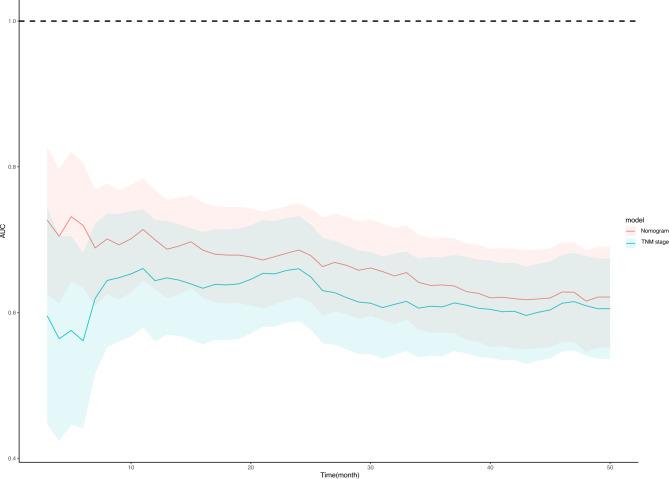
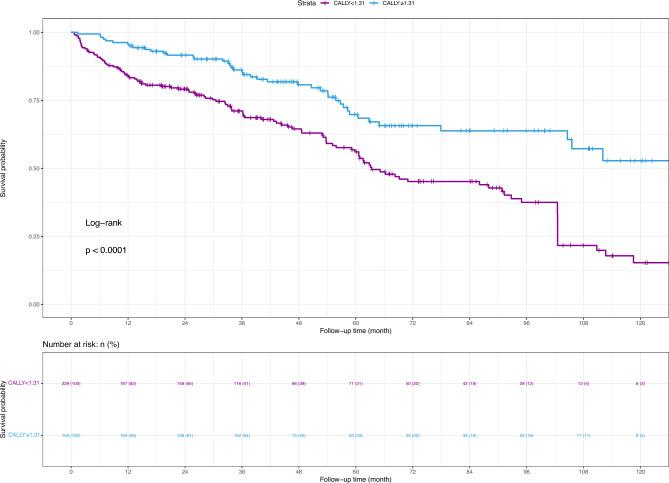
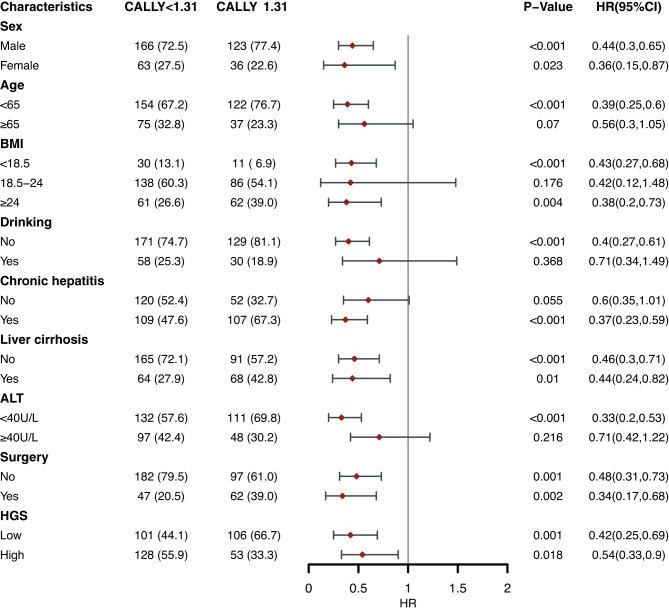
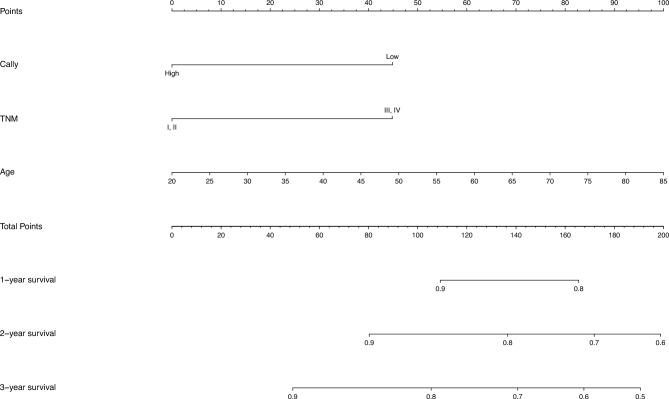
Reliable biomarkers are critical for improving overall survival (OS) and guiding therapeutic strategies in liver cancer. This study evaluated the CRP-albumin-lymphocyte (CALLY) index-a composite indicator of systemic inflammation, nutritional status, and immune function-as a prognostic tool for liver cancer, comparing its predictive utility to the established TNM staging system. A retrospective cohort of 388 patients with histologically confirmed liver cancer was analyzed using data from the Investigation on Nutrition Status and Clinical Outcome of Common Cancers (INSCOC) database. Kaplan-Meier survival analysis, restricted cubic spline (RCS) functions, and multivariate Cox regression models were utilized to determine the prognostic significance of the CALLY index. A nomogram was constructed incorporating the CALLY index, age, and TNM stage to estimate 1-, 2-, 3-year OS. The model's performance was benchmarked against the TNM staging system using time-dependent receiver operating characteristic (ROC) curves and Decision curve analysis (DCA). Multivariate Cox regression analysis demonstrated that the CALLY index was independently associated with OS in patients with liver cancer [Hazard ratio (HR) = 0.57, 95% confidence interval (CI) 0.39-0.83, P =0.003]. The prognostic value of the CALLY index was superior to that of the TNM staging system (C-index = 0.621, 95% CI 0.572-0.669, P < 0.001). Compared with the traditional TNM staging system, the prognostic nomogram incorporating the CALLY index, age, and TNM stage demonstrated higher accuracy in predicting 1-, 2-, and 3-year OS in patients with liver cancer (1-year: 0.705 vs. 0.644; 2-year: 0.698 vs. 0.66; 3-year: 0.6499 vs. 0.6079). The CALLY index is a robust prognostic biomarker for liver cancer, offering enhanced predictive accuracy over traditional staging methods. Its incorporation into a predictive nomogram may facilitate personalized treatment strategies, ultimately improving patient outcomes.
可靠的生物标志物对于改善肝癌患者的总生存期(OS)和指导治疗策略至关重要。本研究评估了CRP-白蛋白-淋巴细胞(CALLY)指数——一种反映全身炎症、营养状况和免疫功能的综合指标——作为肝癌的预后工具,并将其预测效用与既定的TNM分期系统进行比较。利用常见癌症营养状况与临床结局调查(INSCOC)数据库中的数据,对388例经组织学确诊的肝癌患者进行回顾性队列分析。采用Kaplan-Meier生存分析、受限立方样条(RCS)函数和多变量Cox回归模型来确定CALLY指数的预后意义。构建了一个包含CALLY指数、年龄和TNM分期的列线图,以估计1年、2年、3年的总生存期。使用时间依赖性受试者工作特征(ROC)曲线和决策曲线分析(DCA),将该模型的性能与TNM分期系统进行比较。多变量Cox回归分析表明,CALLY指数与肝癌患者的总生存期独立相关[风险比(HR)=0.57,95%置信区间(CI)0.39-0.83,P=0.003]。CALLY指数的预后价值优于TNM分期系统(C指数=0.621,95%CI 0.572-0.669,P<0.001)。与传统的TNM分期系统相比,包含CALLY指数、年龄和TNM分期的预后列线图在预测肝癌患者1年、2年和3年总生存期方面具有更高的准确性(1年:0.705对0.644;2年:0.698对0.66;3年:0.6499对0.6079)。CALLY指数是一种强大的肝癌预后生物标志物,比传统分期方法具有更高的预测准确性。将其纳入预测列线图可能有助于制定个性化治疗策略,最终改善患者预后。
 Zotero 插件