
水田芥衍生的硫代葡萄糖苷作为潜在的变构蛋白酪氨酸磷酸酶1B抑制剂:一项关于胰岛素信号调节的计算机模拟和体外双重研究。
Watercress-derived glucosinolates as potential allosteric PTP1B inhibitors: a dual in silico and in vitro study on insulin signaling modulation.
作者信息
Ahmed Noha A, Allam Ahmed A, Rudayni Hassan A, Alshabrmi Fahad M, Alkhayl Faris F Aba, Abdelrheem Doaa A, Lamsabhi Al Mokhtar, Othman Sarah I, Kamel Emadeldin M
机构信息
Physiology Division, Zoology Department, Faculty of Science, Beni-Suef University, P.O. Box 62521, Beni-Suef, Egypt.
Department of Biology, College of Science, Imam Mohammad Ibn Saud Islamic University (IMSIU), 11623, Riyadh, Saudi Arabia.
出版信息
BMC Chem. 2025 Jun 19;19(1):169. doi: 10.1186/s13065-025-01544-9.
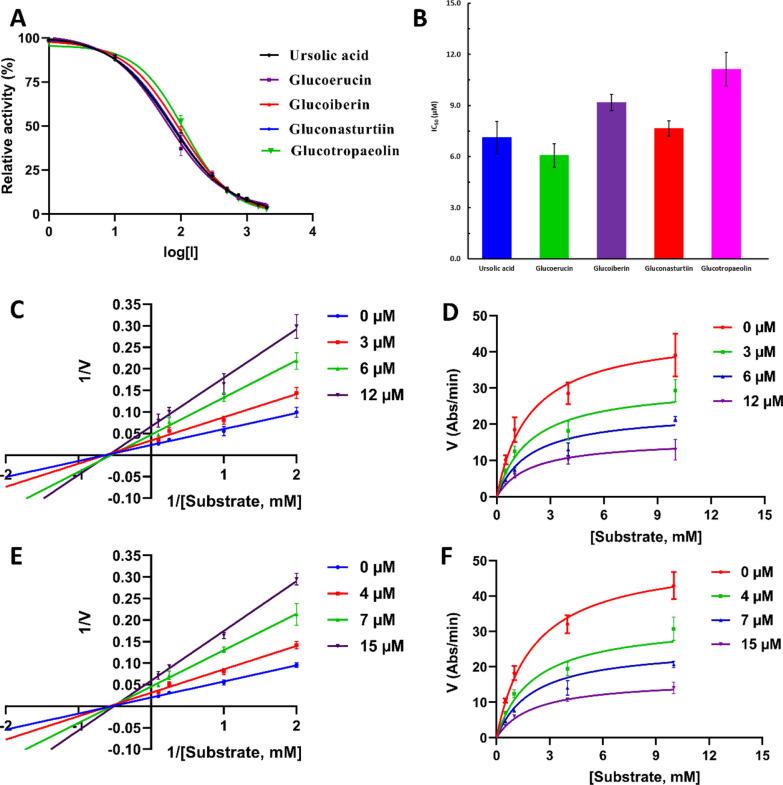
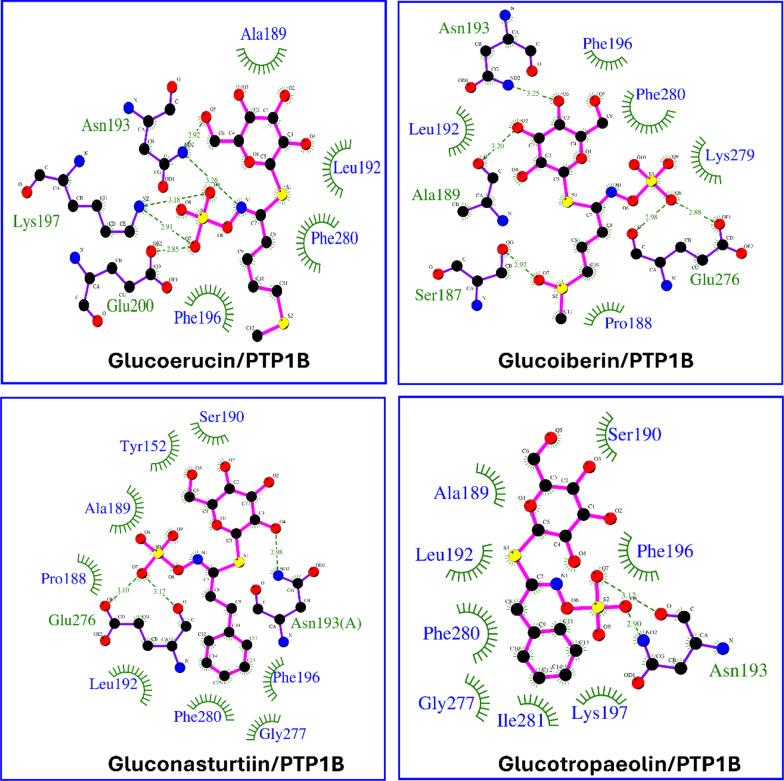
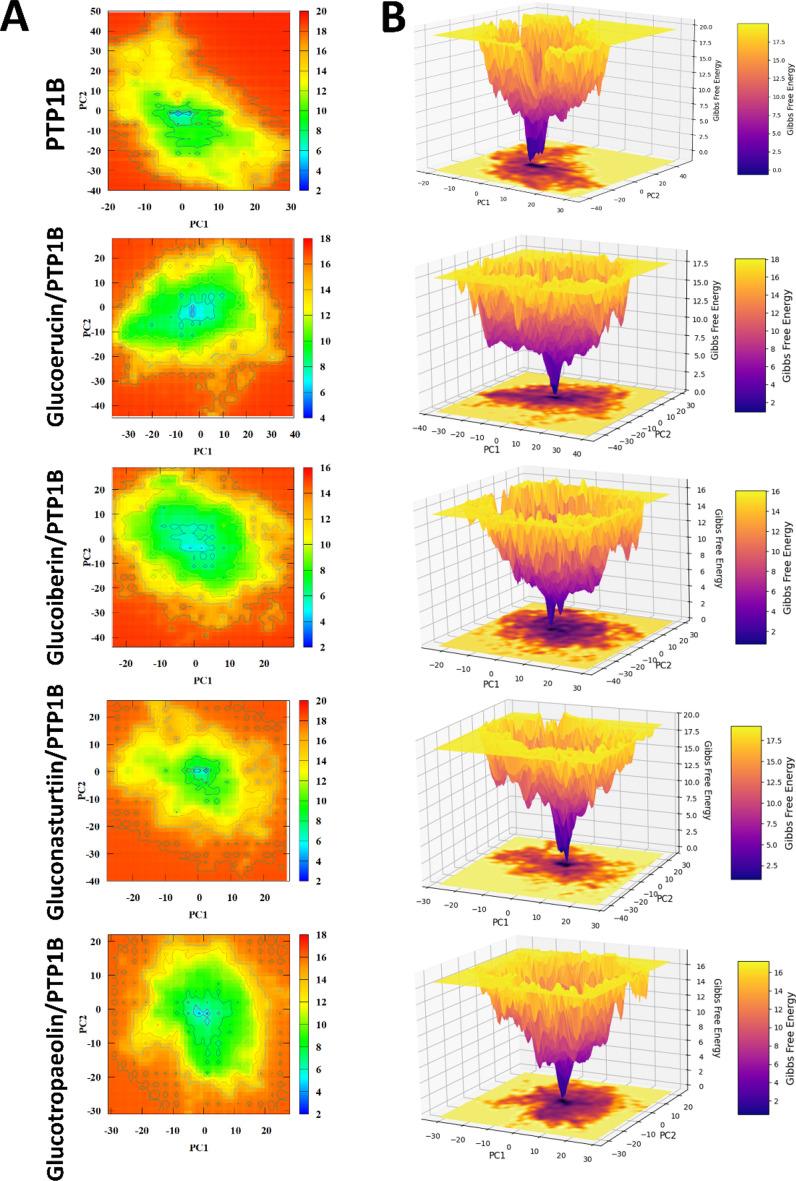
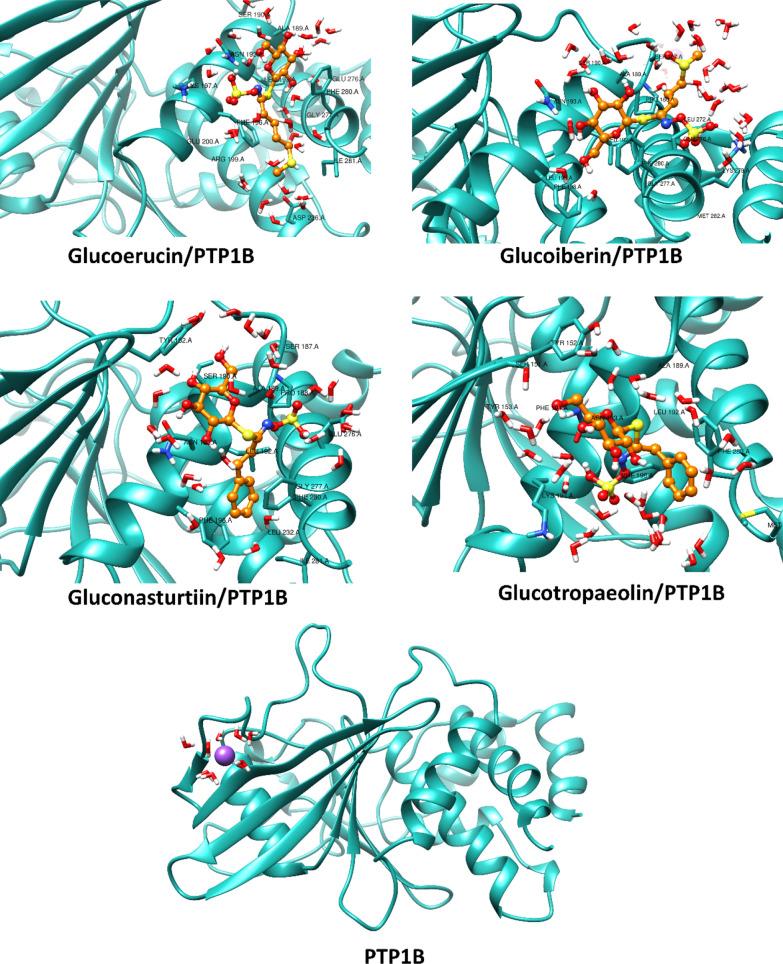
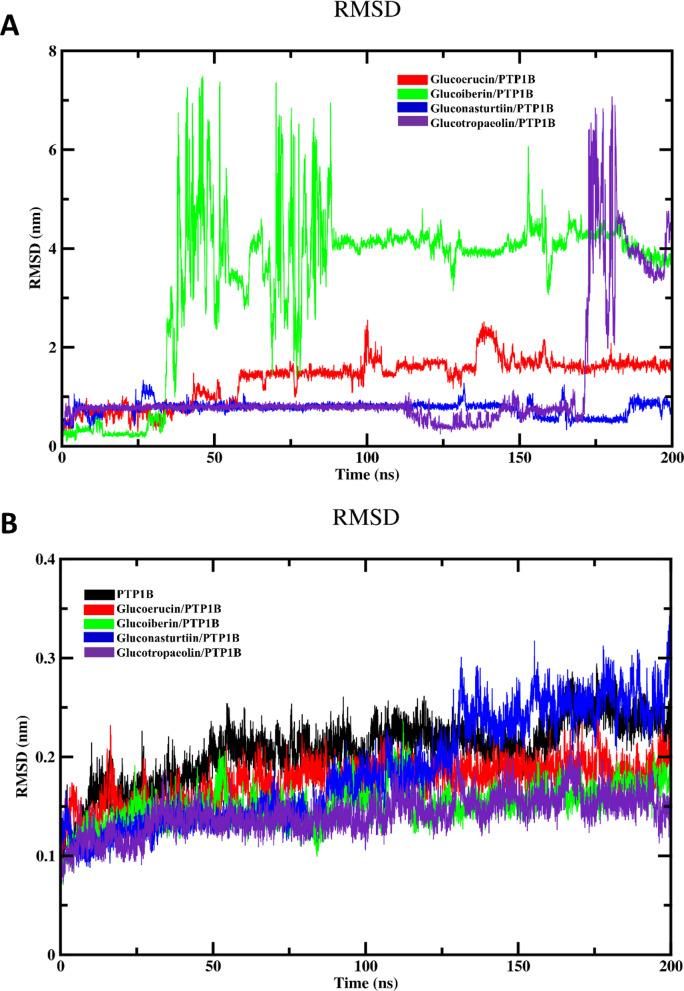
This study investigates the inhibitory potential of four glucosinolates-glucoerucin, glucoiberin, gluconasturtiin, and glucotropaeolin-isolated from watercress (Nasturtium officinale) against Protein Tyrosine Phosphatase 1B (PTP1B), a key regulator of insulin signaling. Molecular docking, molecular dynamics (MD) simulations, and MM/PBSA free energy calculations identified glucoerucin (-17.18 ± 3.51 kcal/mol) and gluconasturtiin (-13.54 ± 1.79 kcal/mol) as the strongest binders, with stable interactions involving Phe280 and Phe196 through π-π stacking. Potential Energy Landscape (PEL) analysis further confirmed that these two compounds occupied the most stable low-energy conformational states, reinforcing their favorable binding to PTP1B. In vitro enzyme inhibition assays provided experimental validation that glucoerucin (IC₅₀ = 6.07 ± 0.69 µM) and gluconasturtiin (IC₅₀ = 7.65 ± 0.45 µM) demonstrated the strongest inhibitory effects, comparable to ursolic acid (IC₅₀ = 7.11 ± 0.95 µM). Enzyme kinetics revealed a non-competitive inhibition mechanism, with K values of 6.29 µM and 7.02 µM, suggesting allosteric regulation. ADMET analysis indicated good solubility and metabolic stability but limited oral bioavailability due to low gastrointestinal (GI) absorption. These findings highlight glucoerucin and gluconasturtiin as promising natural PTP1B inhibitors, warranting further optimization for therapeutic applications in type 2 diabetes management.
本研究调查了从西洋菜(水田芥)中分离出的四种硫代葡萄糖苷——异硫氰酸烯丙酯、葡萄糖异硫氰酸酯、葡萄糖芫菁素和葡萄糖托品碱——对胰岛素信号关键调节因子蛋白酪氨酸磷酸酶1B(PTP1B)的抑制潜力。分子对接、分子动力学(MD)模拟和MM/PBSA自由能计算确定异硫氰酸烯丙酯(-17.18±3.51千卡/摩尔)和葡萄糖芫菁素(-13.54±1.79千卡/摩尔)为最强结合剂,通过π-π堆积与苯丙氨酸280和苯丙氨酸196形成稳定相互作用。势能景观(PEL)分析进一步证实这两种化合物占据了最稳定的低能量构象状态,加强了它们与PTP1B的有利结合。体外酶抑制试验提供了实验验证,异硫氰酸烯丙酯(IC₅₀ = 6.07±0.69微摩尔)和葡萄糖芫菁素(IC₅₀ = 7.65±0.45微摩尔)表现出最强的抑制作用,与熊果酸(IC₅₀ = 7.11±0.95微摩尔)相当。酶动力学揭示了一种非竞争性抑制机制,K值分别为6.29微摩尔和7.02微摩尔,表明存在变构调节。ADMET分析表明其具有良好的溶解性和代谢稳定性,但由于胃肠道(GI)吸收低,口服生物利用度有限。这些发现突出了异硫氰酸烯丙酯和葡萄糖芫菁素作为有前景的天然PTP1B抑制剂,值得进一步优化以用于2型糖尿病管理的治疗应用。




 Zotero 插件