
衰老与阿尔茨海默病中的DNA甲基化
DNA Methylation in Aging and Alzheimer's Disease.
作者信息
Cheng Raymond, Shu Jingmin, Chen Hai, Li Ming, Cheng Xiaodong, Liu Li
机构信息
Case Western Reserve University, Cleveland, OH 44106, USA.
College of Health Solutions, Arizona State University, Phoenix, AZ 85004, USA. Center for Personalized Diagnostics, Biodesign Institute, Arizona State University, Tempe, AZ 85281, USA.
出版信息
Hum Brain. 2024;3(3). doi: 10.37819/hb.3.2027. Epub 2024 Dec 1.
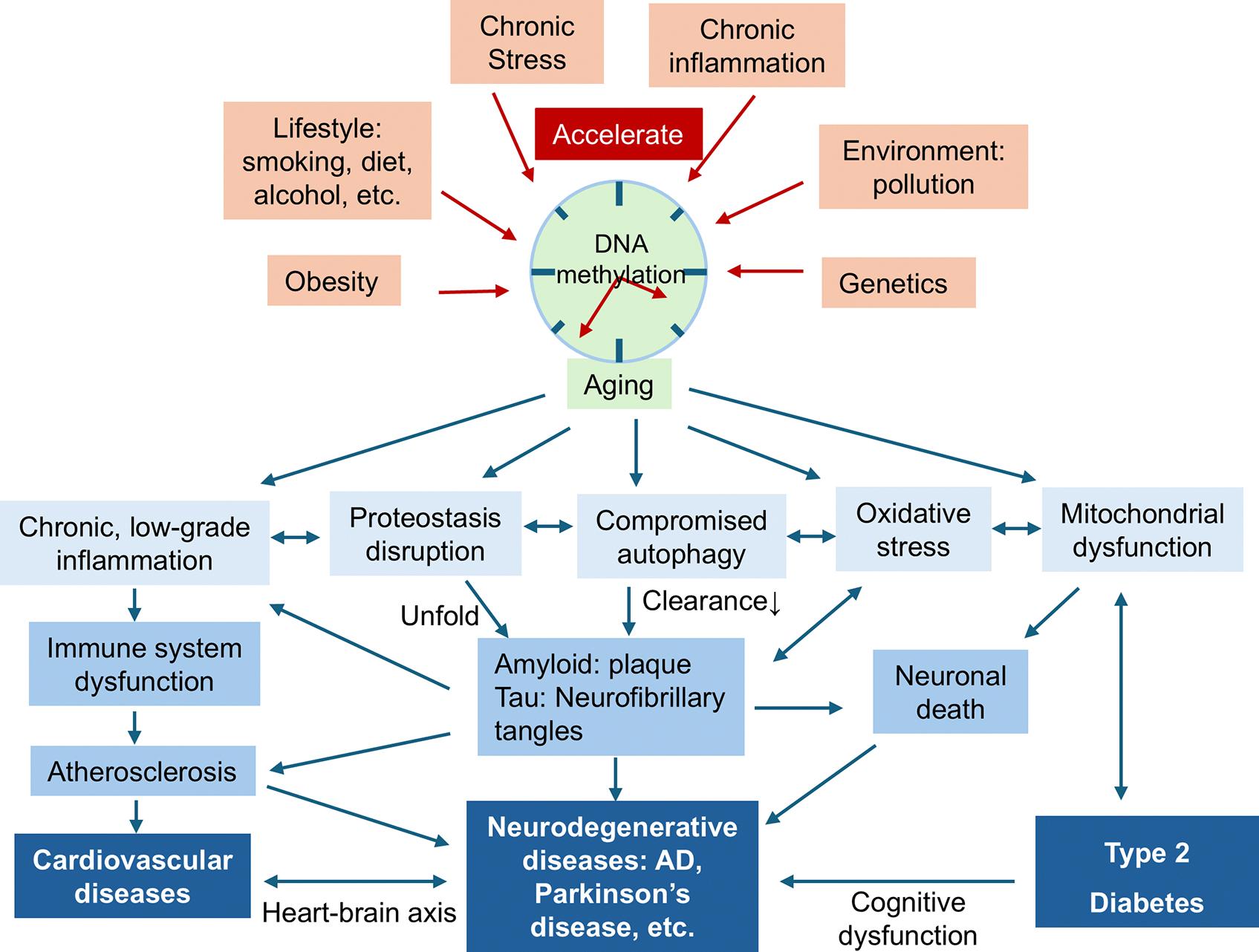
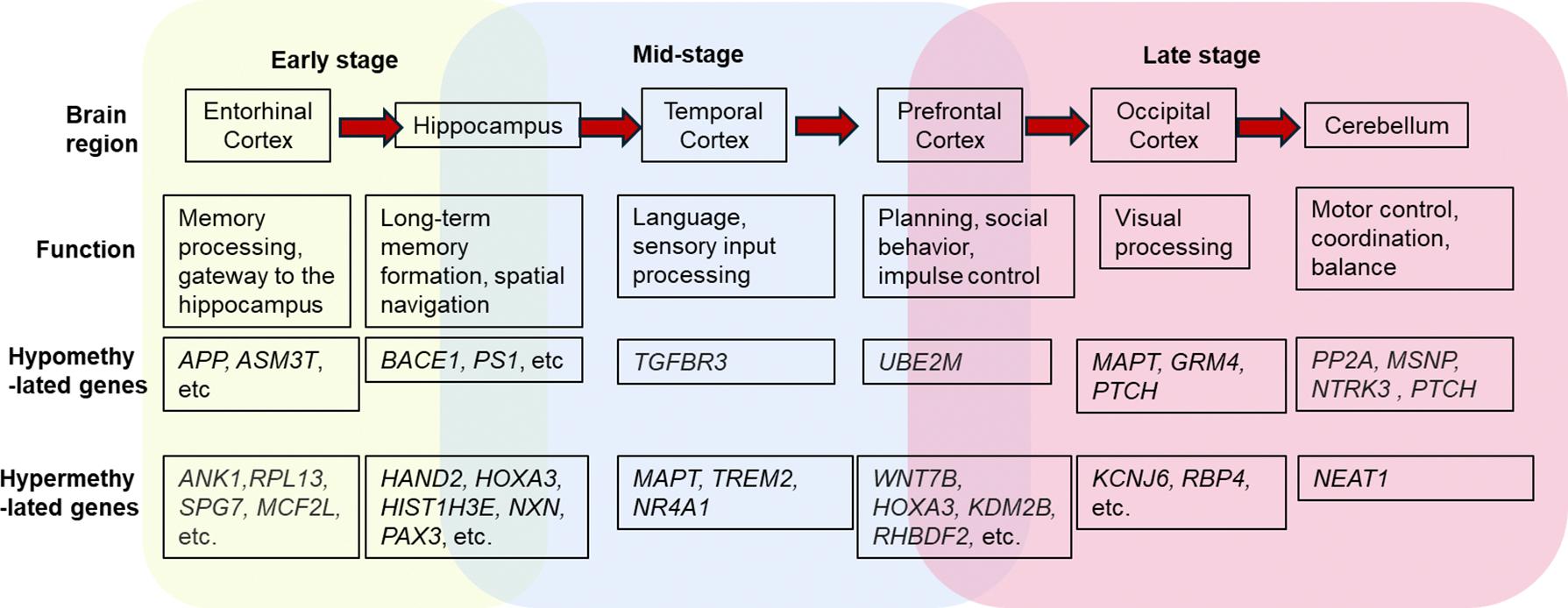
DNA methylation undergoes significant changes with age. These alterations play a pivotal role in the development of age-related diseases, including Alzheimer's disease (AD). Recent advancements in DNA methylome profiling have revealed global hypomethylation patterns, particularly within repetitive elements, as well as gene-specific changes that are associated with neurodegeneration. Age-related alterations in DNA methylation have been implicated in the disruption of key cellular processes, such as inflammation and proteostasis, both central to AD pathology. However, several challenges persist in this field. One major issue is the inconsistency of findings across different brain regions and tissue types, which complicates result interpretation. Furthermore, the limited understanding of cell-type specificity raises concerns about the generalizability of findings from bulk tissue analyses. Key questions remain in DNA methylation research related to aging and AD, including elucidating the precise mechanisms driving methylation changes, exploring cell-type specificity, determining the functional consequences of these alterations, and investigating cross-tissue correlations. A deeper understanding of the spatiotemporal dynamics of methylation changes, the underlying mechanisms, and their therapeutic implications is essential to the development of novel prevention and treatment strategies. This review will delve into these findings and challenges, offering insights into future research directions.
DNA甲基化会随着年龄的增长发生显著变化。这些改变在包括阿尔茨海默病(AD)在内的与年龄相关疾病的发展中起着关键作用。DNA甲基化组分析的最新进展揭示了整体低甲基化模式,尤其是在重复元件中,以及与神经退行性变相关的基因特异性变化。DNA甲基化的年龄相关改变与关键细胞过程的破坏有关,如炎症和蛋白质稳态,这两者都是AD病理的核心。然而,该领域仍然存在一些挑战。一个主要问题是不同脑区和组织类型的研究结果不一致,这使得结果解释变得复杂。此外,对细胞类型特异性的了解有限,引发了对来自大块组织分析结果的普遍性的担忧。与衰老和AD相关的DNA甲基化研究中仍存在关键问题,包括阐明驱动甲基化变化的精确机制、探索细胞类型特异性、确定这些改变的功能后果以及研究跨组织相关性。深入了解甲基化变化的时空动态、潜在机制及其治疗意义对于开发新的预防和治疗策略至关重要。本综述将深入探讨这些发现和挑战,为未来的研究方向提供见解。
 Zotero 插件