
通过表面热化学处理提高掺锶纳米棒在钛植入物上的生物学性能。
Enhanced biological performance of Sr-doped nanorods on titanium implants by surface thermal-chemical treatment.
作者信息
Dai Xinrui, Zhao Jianghui, Qi Shengcai, Liu Ping, Li Wei, Zhang Ke, Chen Xiaohong, Ma Fengcang
机构信息
School of Materials and Chemistry, University of Shanghai for Science and Technology, Shanghai, 200093, China.
Department of Prothodontics, Shanghai Stomatological Hospital, Fudan University, Shanghai, 200031, China.
出版信息
J Mater Sci Mater Med. 2025 Jun 23;36(1):54. doi: 10.1007/s10856-025-06898-z.
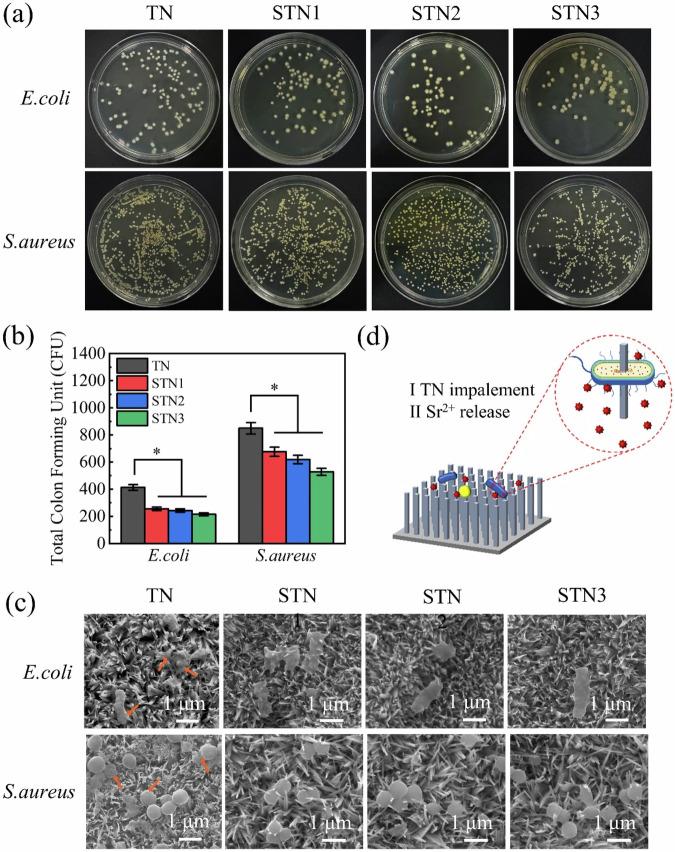
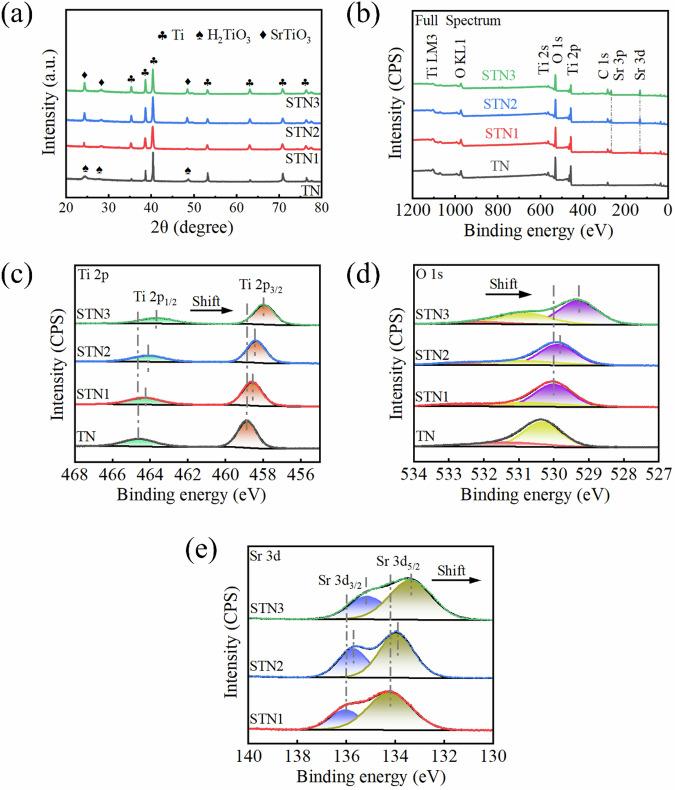
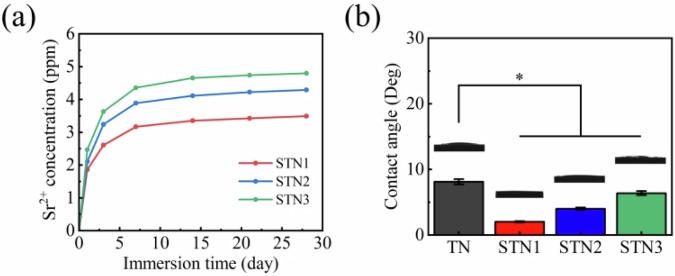
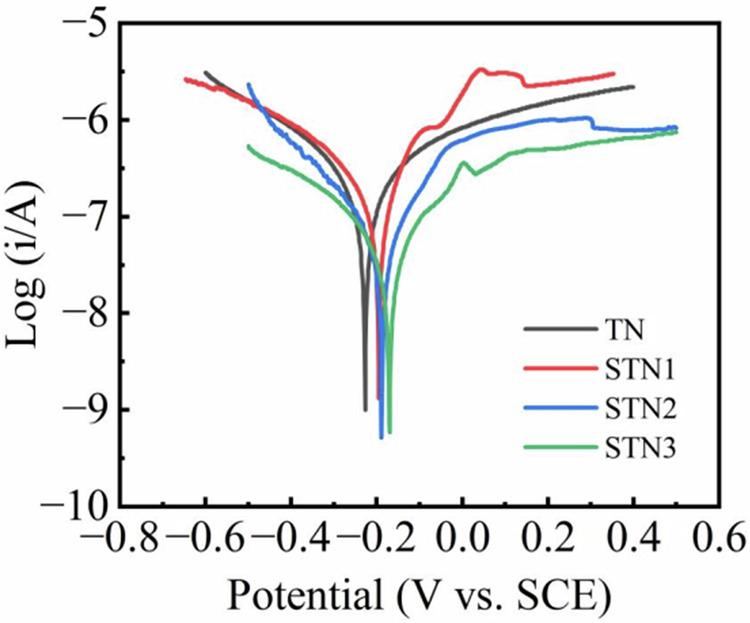
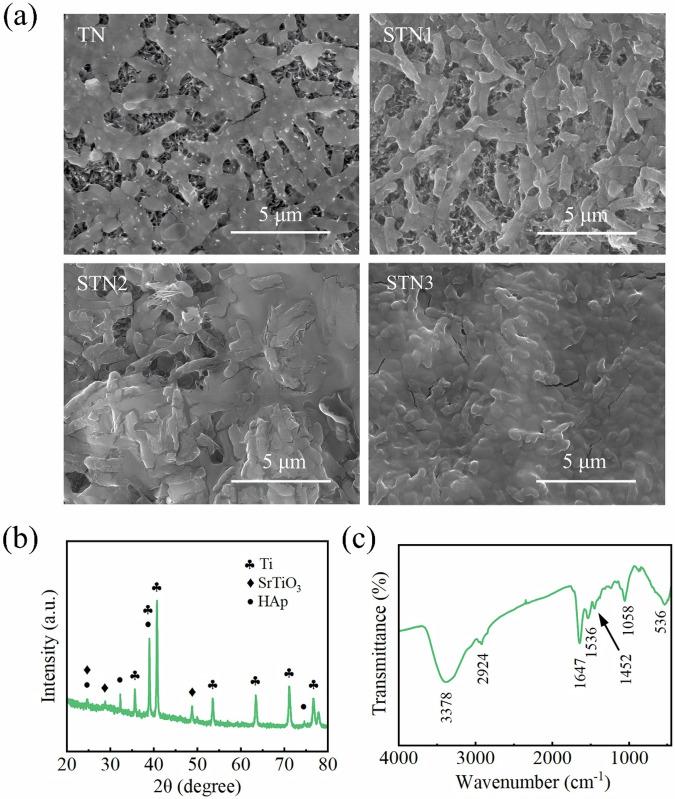
Titanium alloys, as artificial implants for orthopedic diseases, are prone to aseptic loosening and infection after surgery because their smooth surface restricts the attachment and movement of osteoblasts, resulting in a lack of osteogenic and antimicrobial properties. This study aimed to prepare SrTiO nanostructures with varying Sr content on the surface of titanium through a thermal-chemical treatment, enhancing the osteogenic capacity of titanium while providing antibacterial properties. The results indicated that the SrTiO nanostructures are primarily composed of pure titanium and SrTiO phases, exhibiting a rod-like surface morphology. Sr is uniformly distributed across the surface of the samples, and increasing the Sr content does not alter the morphology of the nanostructures. Wettability tests demonstrated that the SrTiO nanostructures exhibited superhydrophilicity, promoting cell adhesion. Electrochemical tests revealed that the SrTiO nanostructures prepared on the titanium surface significantly enhanced its corrosion resistance. After 14 days of immersion in simulated body fluids, a significant amount of hydroxyapatite formed on the surface of STN3, indicating that the SrTiO nanostructures possess good bioactivity. In vitro antimicrobial tests demonstrated that SrTiO nanostructures were effective against both Escherichia coli and Staphylococcus aureus, with the antimicrobial rates increasing alongside the Sr content, reaching 48.1% and 38.6%, respectively.
钛合金作为骨科疾病的人工植入物,术后易发生无菌性松动和感染,因为其光滑表面限制了成骨细胞的附着和移动,导致缺乏成骨和抗菌性能。本研究旨在通过热化学处理在钛表面制备具有不同Sr含量的SrTiO纳米结构,增强钛的成骨能力并提供抗菌性能。结果表明,SrTiO纳米结构主要由纯钛和SrTiO相组成,呈现棒状表面形态。Sr均匀分布在样品表面,增加Sr含量不会改变纳米结构的形态。润湿性测试表明,SrTiO纳米结构表现出超亲水性,促进细胞粘附。电化学测试表明,在钛表面制备的SrTiO纳米结构显著提高了其耐腐蚀性。在模拟体液中浸泡14天后,STN3表面形成了大量羟基磷灰石,表明SrTiO纳米结构具有良好的生物活性。体外抗菌测试表明,SrTiO纳米结构对大肠杆菌和金黄色葡萄球菌均有效,抗菌率随Sr含量增加,分别达到48.1%和38.6%。

 Zotero 插件