
小儿脑肿瘤中的异常组蛋白修饰
Aberrant histone modifications in pediatric brain tumors.
作者信息
Hamanishi Erin T, Dang Derek, Venneti Sriram
机构信息
Division of Pediatric Hematology, Oncology and Bone Marrow Transplant, Department of Pediatrics, University of Michigan Medical School, Ann Arbor, MI, United States.
Department of Pediatrics, University of Michigan Medical School, Ann Arbor, MI, United States.
出版信息
Front Oncol. 2025 Jun 10;15:1587157. doi: 10.3389/fonc.2025.1587157. eCollection 2025.
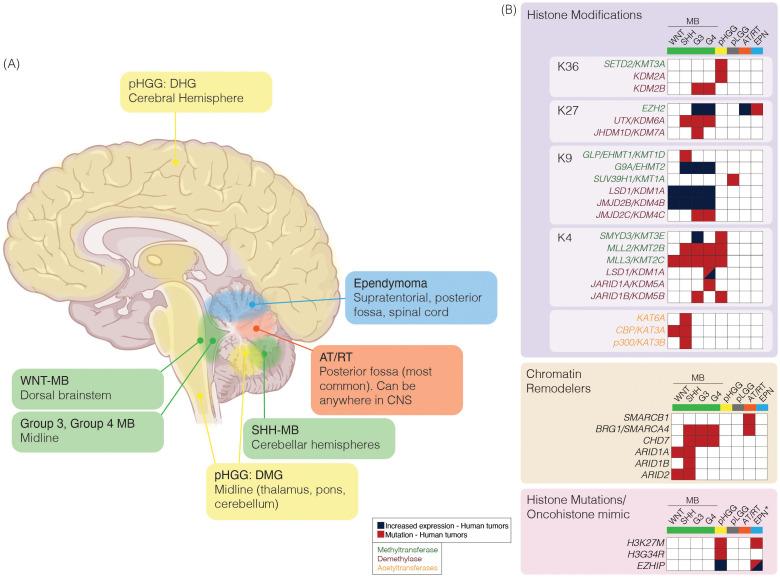
Epigenetic modifications, particularly histone post-translational modifications (PTMs), are central to pediatric brain tumor pathogenesis, impacting chromatin structure, gene expression, and genomic stability. Disruptions in histone PTMs, especially lysine methylation and acetylation, arising due to histone mutations or aberrant enzyme modulation are critical drivers of oncogenesis. Lysine methylation, catalyzed by histone methyltransferases (KMTs), modulates chromatin interactions and gene expression through activation or repression, depending on the methylation state and the specific histone residue. Key enzymes, including histone methyltransferases and demethylases, and associated proteins exemplify the functions of writers, readers, and erasers in maintaining histone modification balance. Similarly, histone acetylation, a dynamic process regulated by histone acetyltransferases (HATs) and histone deacetylases (HDACs), plays a crucial role in pediatric brain tumors. Alterations in these components lead to aberrant gene expression and tumorigenesis. Understanding these disrupted processes offers potential for targeted therapies to rewire oncogenic chromatin states and potentially improve patient outcomes.
表观遗传修饰,尤其是组蛋白翻译后修饰(PTMs),在儿童脑肿瘤发病机制中至关重要,影响着染色质结构、基因表达和基因组稳定性。由于组蛋白突变或异常的酶调节而导致的组蛋白PTMs紊乱,尤其是赖氨酸甲基化和乙酰化,是肿瘤发生的关键驱动因素。由组蛋白甲基转移酶(KMTs)催化的赖氨酸甲基化,根据甲基化状态和特定的组蛋白残基,通过激活或抑制来调节染色质相互作用和基因表达。包括组蛋白甲基转移酶和去甲基酶在内的关键酶以及相关蛋白,体现了“书写者”“阅读者”和“擦除者”在维持组蛋白修饰平衡中的功能。同样,组蛋白乙酰化是一个由组蛋白乙酰转移酶(HATs)和组蛋白去乙酰化酶(HDACs)调节的动态过程,在儿童脑肿瘤中起关键作用。这些成分的改变会导致异常的基因表达和肿瘤发生。了解这些被破坏的过程为靶向治疗提供了潜力,以重塑致癌染色质状态并可能改善患者预后。

 Zotero 插件