
用于儿童肺结核的低复杂度手动核酸扩增检测
Low-complexity manual nucleic acid amplification tests for pulmonary tuberculosis in children.
作者信息
Inbaraj Leeberk Raja, Sathya Narayanan Mukesh Kumar, Daniel Jefferson, Srinivasalu Vignes Anand, Bhaskar Adhin, Daniel Bella Devaleenal, Epsibha Tephilla, Scandrett Katie, Rajendran Priya, Rose Winsley, Korobitsyn Alexei, Ismail Nazir, Takwoingi Yemisi
机构信息
Department of Clinical Research, ICMR - National Institute for Research in Tuberculosis, Chennai, India.
Department of Epidemiology, ICMR - National Institute for Research in Tuberculosis, Chennai, India.
出版信息
Cochrane Database Syst Rev. 2025 Jun 25;6(6):CD015806. doi: 10.1002/14651858.CD015806.pub2.
BACKGROUND
Accurate and prompt diagnosis of tuberculosis in children is challenging due to non-specific clinical presentation and the low bacillary load of samples. Low-complexity manual nucleic acid amplification tests (LC-mNAATs) such as loop-mediated isothermal amplification (TB-LAMP) are World Health Organization (WHO)-recommended rapid molecular diagnostic tests. Even in resource-limited settings, they have good diagnostic accuracy in adults.
OBJECTIVES
To determine the diagnostic accuracy of LC-mNAATs for the detection of pulmonary tuberculosis in children (< 10 years) with presumptive pulmonary tuberculosis. Secondary objectives 1. To compare the diagnostic accuracy of LC-mNAATs and Xpert MTB/RIF Ultra for the detection of pulmonary tuberculosis in children with presumptive pulmonary tuberculosis. 2. To compare the diagnostic accuracy of LC-mNAATs and smear microscopy for detecting pulmonary tuberculosis in children when TB-LAMP is considered as a replacement test for smear microscopy. 3. To determine the diagnostic accuracy of LC-mNAATs for the detection of pulmonary tuberculosis if used as an add-on test amongst sputum smear-negative children. 4. To investigate potential sources of heterogeneity in the diagnostic accuracy of LC-mNAATs due to factors such as smear status, age, HIV status, setting, and tuberculosis burden.
SEARCH METHODS
We searched CENTRAL, MEDLINE, Embase, Science Citation Index, Biosis Previews, Global Index Medicus, SCOPUS, WHO ICTRP, and ClinicalTrials.gov on 2 October 2023 for published articles and trials in progress without language or time limits. We screened the reference lists of included articles, conference abstracts, tuberculosis reviews, and guidelines. We searched ProQuest Dissertations & Theses A&I for dissertations. We approached the Stop TB Partnership, FIND, and other experts on tuberculosis for ongoing and unpublished studies. A WHO public call was made between 30 November 2023 and 15 February 2024 for ongoing and unpublished studies from manufacturers and researchers.
SELECTION CRITERIA
We included cross-sectional and cohort studies that evaluated LC-mNAATs in children (< 10 years) against microbiological or composite reference standards. Our index test was TB-LAMP, and comparator index tests were Xpert MTB/RIF Ultra and smear microscopy. The microbiological reference standard included automated liquid culture, solid culture, or a combination of both methods. We considered only design-locked, marketed technologies.
DATA COLLECTION AND ANALYSIS
Four review authors, in pairs, independently screened titles and abstracts and assessed the full texts of potentially eligible articles. A fifth review author resolved any disagreements. We tailored and applied the QUADAS-2 and QUADAS-C tools to assess the risk of bias and applicability. Six review authors, in three pairs, extracted data and performed methodological quality assessment. A seventh review author resolved any disagreements. We contacted the primary study authors for missing data. We assessed the certainty of evidence using the GRADEpro GDT online tool.
MAIN RESULTS
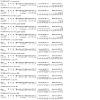
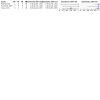
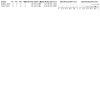
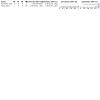
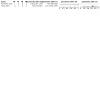
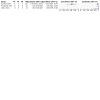
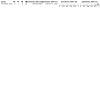
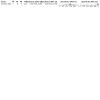
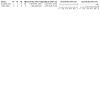
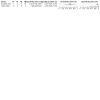
We included four eligible studies (303 participants). Three studies took place in low- and middle-income countries, with two studies from countries with a high tuberculosis burden. All four studies assessed different respiratory and non-respiratory specimen types and evaluated TB-LAMP against the microbiological reference standard. We judged one study to have an unclear risk of bias in two domains of QUADAS-2. The risk of bias was low for most of the studies. One study recruited inpatients from tertiary hospitals, causing high applicability concerns. Three studies (67 children, including eight with pulmonary tuberculosis) evaluated respiratory samples (sputum, broncho-alveolar lavage, and tracheal aspirate). The sensitivities were between 60% and 100%, and the specificities were between 95% and 100% (very low-certainty (sensitivity) and low-certainty (specificity) evidence). Three studies (176 participants, including 14 children with pulmonary tuberculosis) used gastric aspirate; the sensitivity was not estimable in two studies, and was 64% in the third study. The specificities were between 93% and 100%. The sensitivity was 100% (95% confidence interval (CI) 29 to 100), and the specificity was 96% (95% CI 88 to 100) in gastric lavage from one study. One study (144 participants, 12 children with pulmonary tuberculosis) assessed diagnostic accuracy using nasopharyngeal aspirate. The sensitivity was 58% (95% CI 28 to 85), and the specificity was 94% (95% CI 88 to 97). The same study (seven children with pulmonary tuberculosis) also evaluated stool specimens, and the sensitivity and specificity were 100% (95% CI 59 to 100) and 92% (95% CI 86 to 96), respectively. We did not perform a meta-analysis due to limited data. Interpretation of the results Respiratory samples For every 1000 children tested, if 100 had tuberculosis according to culture, 60 to 100 with tuberculosis would be identified as positive by the TB-LAMP. Of the 900 children without tuberculosis, 855 to 900 would be identified as negative by the test. Gastric aspirate For every 1000 children tested, if 100 had tuberculosis according to culture, 64 with tuberculosis would be identified as positive by the TB-LAMP. Of the 900 children without tuberculosis, 837 to 900 would be identified as negative by the test. Gastric lavage For every 1000 children tested, if 100 had tuberculosis according to culture, 135 would be TB-LAMP positive, of which 100 would have tuberculosis (true positives), and 35 would not have tuberculosis (false positives); 865 would be TB-LAMP negative, of which 864 would not have tuberculosis (true negatives), and one would have tuberculosis (false negatives). Nasopharyngeal aspirate For every 1000 children tested, if 100 had tuberculosis according to culture, 112 would be TB-LAMP positives, of which 58 would have tuberculosis (true positives), and 54 would not have tuberculosis (false positives); 888 would test negative, of which 846 would not have tuberculosis (true negatives), and 42 would have tuberculosis (false negatives). Stool For every 1000 children tested, if 100 had tuberculosis according to culture, 171 would be TB-LAMP positive, of which 99 would have tuberculosis (true positives), and 72 would not have tuberculosis (false positives); 829 would test negative, of which 828 would not have tuberculosis (true negatives) and one child would have tuberculosis (false negative).
AUTHORS' CONCLUSIONS: Evidence on the diagnostic accuracy of LC-mNAATs for the detection of pulmonary tuberculosis in children is limited due to few and small studies. Adequately powered studies evaluating LC-mNAATs in children are needed.
背景
由于临床表现不具特异性且样本中细菌载量低,儿童结核病的准确、快速诊断具有挑战性。低复杂度手动核酸扩增检测(LC - mNAATs),如环介导等温扩增技术(TB - LAMP),是世界卫生组织(WHO)推荐的快速分子诊断检测方法。即便在资源有限的环境中,它们对成人也具有良好的诊断准确性。
目的
确定LC - mNAATs对疑似肺结核儿童(<10岁)肺结核检测的诊断准确性。次要目的:1. 比较LC - mNAATs与Xpert MTB/RIF Ultra对疑似肺结核儿童肺结核检测的诊断准确性。2. 当将TB - LAMP视为涂片显微镜检查的替代检测方法时,比较LC - mNAATs与涂片显微镜检查对儿童肺结核检测的诊断准确性。3. 确定LC - mNAATs作为痰涂片阴性儿童的附加检测方法时对肺结核检测的诊断准确性。4. 调查由于涂片状态、年龄、HIV感染状况、环境和结核病负担等因素导致LC - mNAATs诊断准确性存在异质性的潜在来源。
检索方法
2023年10月2日,我们检索了CENTRAL、MEDLINE、Embase、科学引文索引、生物学文摘数据库、全球医学索引、SCOPUS数据库、WHO国际临床试验注册平台(ICTRP)和ClinicalTrials.gov,以查找已发表文章和正在进行的试验,无语言或时间限制。我们筛选了纳入文章的参考文献列表、会议摘要、结核病综述和指南。我们在ProQuest学位论文与学术期刊数据库中检索学位论文。我们联系了终止结核病伙伴关系组织、FIND以及其他结核病专家,了解正在进行和未发表的研究。2023年11月30日至2024年2月15日期间,WHO公开呼吁制造商和研究人员提供正在进行和未发表的研究。
入选标准
我们纳入了针对微生物学或综合参考标准评估<10岁儿童LC - mNAATs的横断面研究和队列研究。我们的索引检测为TB - LAMP,对照索引检测为Xpert MTB/RIF Ultra和涂片显微镜检查。微生物学参考标准包括自动化液体培养、固体培养或两种方法的组合。我们仅考虑设计已定、已上市的技术。
数据收集与分析
四位综述作者两两独立筛选标题和摘要,并评估潜在合格文章的全文。第五位综述作者解决任何分歧。我们定制并应用QUADAS - 2和QUADAS - C工具评估偏倚风险和适用性。六位综述作者分成三组提取数据并进行方法学质量评估。第七位综述作者解决任何分歧。我们联系主要研究作者获取缺失数据。我们使用GRADEpro GDT在线工具评估证据的确定性。
主要结果
我们纳入了四项合格研究(303名参与者)。三项研究在低收入和中等收入国家进行,两项研究来自结核病负担高的国家。所有四项研究评估了不同的呼吸道和非呼吸道标本类型,并针对微生物学参考标准评估了TB - LAMP。我们判定一项研究在QUADAS - 2的两个领域存在偏倚风险不明确的情况。大多数研究的偏倚风险较低。一项研究招募了三级医院的住院患者,导致适用性问题较高。三项研究(67名儿童,包括8名肺结核患者)评估了呼吸道样本(痰液、支气管肺泡灌洗和气管吸出物)。敏感性在60%至100%之间,特异性在95%至100%之间(敏感性证据确定性极低,特异性证据确定性低)。三项研究(176名参与者,包括14名肺结核儿童)使用了胃抽吸物;两项研究无法估计敏感性,第三项研究的敏感性为64%。特异性在93%至100%之间。一项研究中胃灌洗的敏感性为100%(95%置信区间(CI)29至100),特异性为96%(95%CI 88至100)。一项研究(144名参与者,12名肺结核儿童)使用鼻咽抽吸物评估诊断准确性。敏感性为58%(95%CI 28至85),特异性为94%(95%CI 88至97)。同一研究(7名肺结核儿童)还评估了粪便标本,敏感性和特异性分别为100%(95%CI 59至100)和























 Zotero 插件