
蓝藻肽在抗癌治疗中的应用:作用机制、临床进展及生物技术创新的综合综述
Cyanobacterial Peptides in Anticancer Therapy: A Comprehensive Review of Mechanisms, Clinical Advances, and Biotechnological Innovation.
作者信息
Lee Heayyean, Nihan Khuld, Kwon Yale Ryan
机构信息
Plamica Labs, Batten Hall, 125 Western Ave, Allston, MA 02163, USA.
Department of Medical School, Jinnah Sindh Medical University, Rafiqui H.J. Shaheed Road, Karachi 75510, Pakistan.
出版信息
Mar Drugs. 2025 May 29;23(6):233. doi: 10.3390/md23060233.
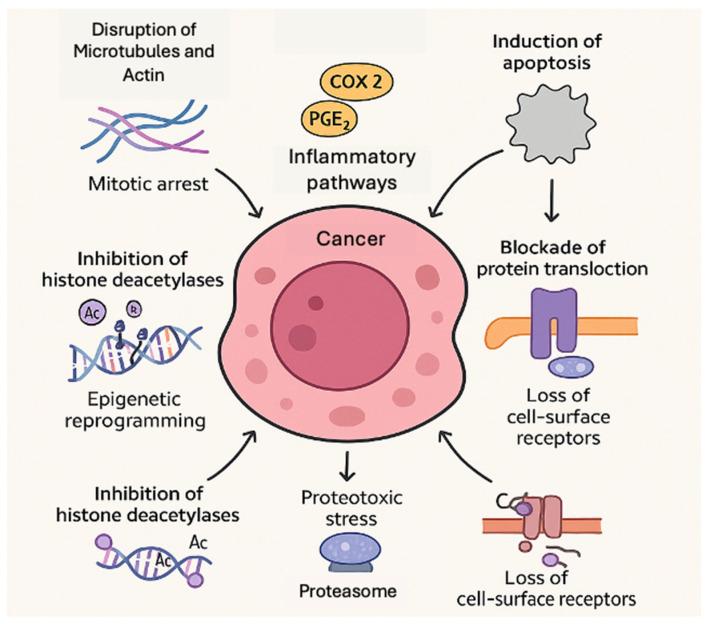
Cyanobacteria-derived peptides represent a promising class of anticancer agents due to their structural diversity and potent bioactivity. They exert cytotoxic effects through mechanisms including microtubule disruption, histone deacetylase inhibition, and apoptosis induction. Several peptides-most notably the dolastatin-derived auristatins-have achieved clinical success as cytotoxic payloads in antibody-drug conjugates (ADCs). However, challenges such as limited tumor selectivity, systemic toxicity, and production scalability remain barriers to broader application. Recent advances in targeted delivery technologies, combination therapy strategies, synthetic biology, and genome mining offer promising solutions. Emerging data from preclinical and clinical studies highlight their therapeutic potential, particularly in treatment-resistant cancers. In this review, we (i) summarize key cyanobacterial peptides and their molecular mechanisms of action, (ii) examine progress toward clinical translation, and (iii) explore biotechnological approaches enabling sustainable production and structural diversification. We also discuss future directions for enhancing specificity and the therapeutic index to fully exploit the potential of these marine-derived peptides in oncology.
蓝藻来源的肽因其结构多样性和强大的生物活性而成为一类很有前景的抗癌药物。它们通过包括微管破坏、组蛋白去乙酰化酶抑制和诱导凋亡等机制发挥细胞毒性作用。几种肽——最显著的是多拉司他汀衍生的澳瑞他汀——作为抗体药物偶联物(ADC)中的细胞毒性载荷已取得临床成功。然而,诸如肿瘤选择性有限、全身毒性和生产可扩展性等挑战仍然是更广泛应用的障碍。靶向递送技术、联合治疗策略、合成生物学和基因组挖掘方面的最新进展提供了有前景的解决方案。临床前和临床研究的新数据突出了它们的治疗潜力,特别是在难治性癌症的治疗中。在本综述中,我们(i)总结关键的蓝藻肽及其分子作用机制,(ii)研究临床转化的进展,以及(iii)探索实现可持续生产和结构多样化的生物技术方法。我们还讨论了提高特异性和治疗指数以充分挖掘这些海洋来源肽在肿瘤学中潜力的未来方向。

 Zotero 插件