
西藏蟾蜍不同发育阶段肠道微生物群的多样性与组成
Diversity and Composition of Gut Microbiota in Different Developmental Stages of the Tibetan Toad ().
作者信息
He Kaiqin, Han Cong, Liu Chenyang, Zhang Lixia
机构信息
Department of Ecology, College of Life Sciences, Henan Normal University, Xinxiang 453007, China.
Puyang Field Scientific Observation and Research Station for Yellow River Wetland Ecosystem, Puyang 457183, China.
出版信息
Animals (Basel). 2025 Jun 12;15(12):1742. doi: 10.3390/ani15121742.
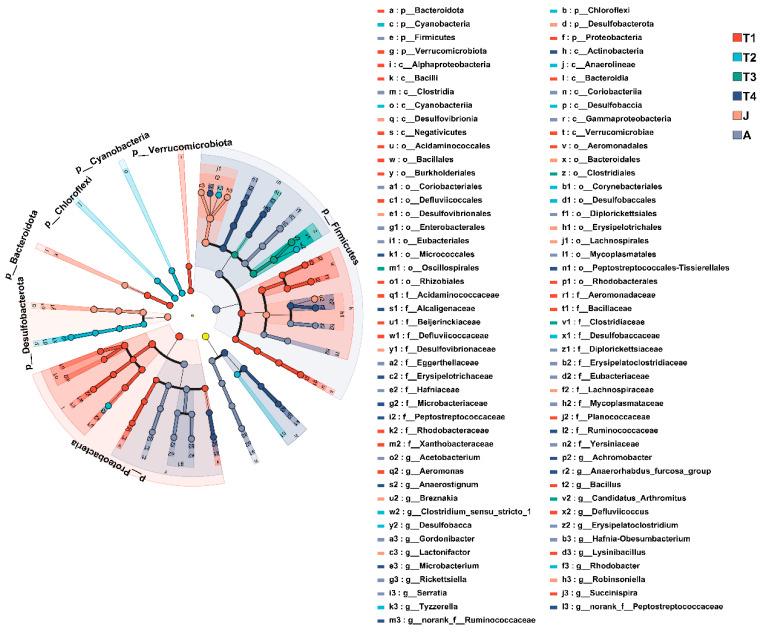
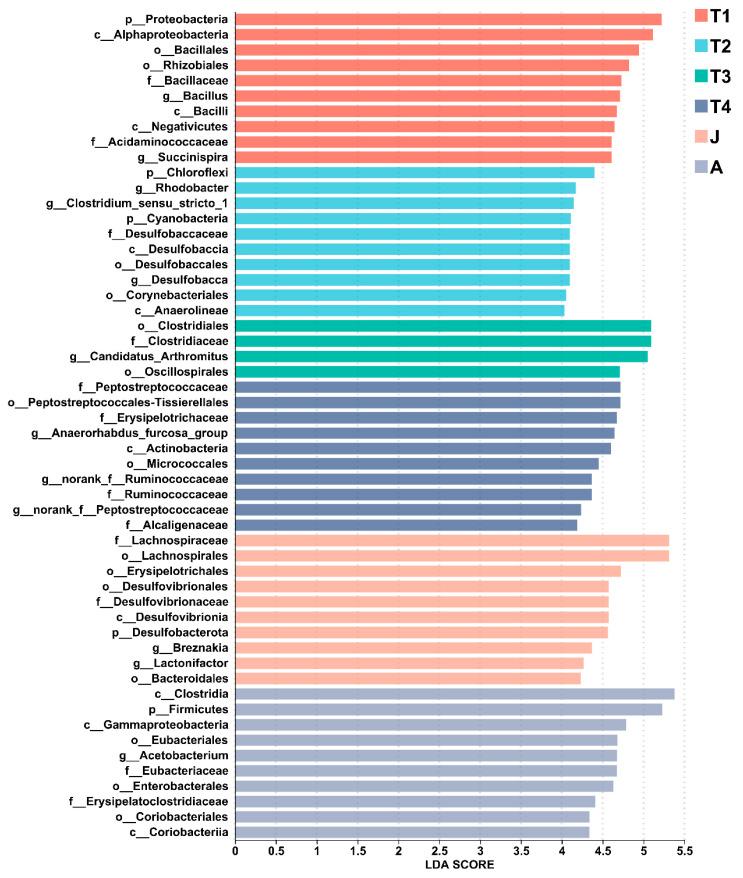
The intestinal microbiota is vital for host immunity and metabolism, and its changes are associated with the development stage of hosts. However, little is known regarding how growth and development of anurans affect the diversity of their microbiota, which has a complex life cycle. The Tibetan toad () is a wild population in the high-altitude area of southwest China, which has special adaptability to the environment. Here, the microbial community of the Tibetan toad at six developmental stages (from the tadpole at Gosner stage 18 to the 8-year-old adult) was assessed using high-throughput 16S rRNA sequencing. The alpha diversity index analysis showed that the Chao, Ace, and Shannon indices were highest at Gosner stage 32 and decreased as development progressed, and their alpha diversity remained unchanged over time in adult stages. Beta diversity revealed that the gut microbiota structure differed significantly from Gosner stages 18 to 31, and it became similar to adult toads from Gosner stages 45 to 46 and in juvenile groups. At the phylum level, Firmicutes, Proteobacteria, and Actinobacteria were dominant phyla in tadpoles and adults. The relative abundance of Firmicutes and Proteobacteria in the adult group was significantly higher and lower than that of tadpoles, respectively. The linear discriminant analysis effect size (LEfSe) analysis identified seven phyla exhibiting significant differences during life stages: Verrucomicrobiota, Bacteroidota, and Proteobacteria (Gosner 18 to 31), Cyanobateria and Chloroflexi (Gosner 32 to 41), Actinobacteriota (Gosner 45 to 46), Desulfobacterota (juvenile group), and Firmicutes (adult group). A pathway enrichment analysis revealed that the metabolism and biosynthesis of secondary metabolites were significantly enriched across all developmental stages. This research unveiled variations in the intestinal microbiota composition during development in anurans. Factors such as developmental stage, habitat type and feeding habit jointly affected the gut microbial diversity and community composition in the Tibetan toad. The findings of this study can provide information for understanding the influence of historical developments on the intestinal microbiota and provide protection information for anurans.
肠道微生物群对宿主免疫和代谢至关重要,其变化与宿主的发育阶段相关。然而,关于具有复杂生命周期的无尾两栖类动物的生长发育如何影响其微生物群的多样性,人们了解甚少。西藏蟾蜍(Bufo tibetanus)是中国西南部高海拔地区的野生种群,对环境具有特殊的适应性。在此,利用高通量16S rRNA测序评估了西藏蟾蜍六个发育阶段(从戈斯纳18期蝌蚪到8岁成年个体)的微生物群落。α多样性指数分析表明,Chao、Ace和Shannon指数在戈斯纳32期最高,并随着发育进程而降低,在成年阶段其α多样性随时间保持不变。β多样性表明,肠道微生物群结构在戈斯纳18期至31期有显著差异,而在戈斯纳45期至46期以及幼体组中与成年蟾蜍相似。在门水平上,厚壁菌门、变形菌门和放线菌门是蝌蚪和成年个体中的优势门。成年组中厚壁菌门和变形菌门的相对丰度分别显著高于和低于蝌蚪组。线性判别分析效应大小(LEfSe)分析确定了七个在生命阶段表现出显著差异的门:疣微菌门、拟杆菌门和变形菌门(戈斯纳18期至31期)、蓝细菌门和绿弯菌门(戈斯纳32期至41期)、放线菌门(戈斯纳45期至46期)、脱硫杆菌门(幼体组)和厚壁菌门(成年组)。通路富集分析表明,次生代谢物的代谢和生物合成在所有发育阶段均显著富集。这项研究揭示了无尾两栖类动物发育过程中肠道微生物群组成的变化。发育阶段、栖息地类型和摄食习性等因素共同影响了西藏蟾蜍的肠道微生物多样性和群落组成。本研究结果可为理解历史发育对肠道微生物群的影响提供信息,并为无尾两栖类动物提供保护信息。


 Zotero 插件