
脑脊液液体活检的最低技术分析前、患者及临床背景数据元素:公共数据库提交建议
Minimum Technical Preanalytical, Patient, and Clinical Context Data Elements for Cerebrospinal Fluid Liquid Biopsy: Recommendations for Public Database Submissions.
作者信息
Bagley Stephen J, Beaubier Nike, Balaj Leonora, Bettegowda Chetan, Carpenter Erica, Carter Bob S, Corner Adam, Dittamore Ryan, Grossman Robert L, Hickman Richard A, Kuhn Peter, LeBlang Suzanne, Lichtenberg Tara, Mansouri Alireza, Miller Alexandra, Ngo Thuy, Rood Brian R, Till Jacob, Xu Liya, Leiman Lauren C
机构信息
University of Pennsylvania Perelman School of Medicine, Philadelphia, PA.
Tempus AI, Chicago, IL.
出版信息
JCO Precis Oncol. 2025 Jun;9:e2400921. doi: 10.1200/PO-24-00921. Epub 2025 Jun 26.
PURPOSE
Blood-based liquid biopsy has enabled minimally invasive molecular profiling in patients with solid tumors. For cancers of the CNS, however, the use of peripheral blood for cell-free DNA (cfDNA) detection and sequencing has proved challenging because of scant levels of tumor-derived material shed into systemic circulation. An alternative is to use cerebrospinal fluid (CSF), which contains a greater concentration of tumor-derived cfDNA in patients with brain tumors (BTs). CSF liquid biopsy is a relatively nascent field, with critical unanswered questions regarding preanalytical variables that may affect assay performance. In an effort to identify and standardize key preanalytical variables, the Blood Profiling Atlas in Cancer (BLOODPAC) Consortium launched a BT Working Group in 2022.
METHODS
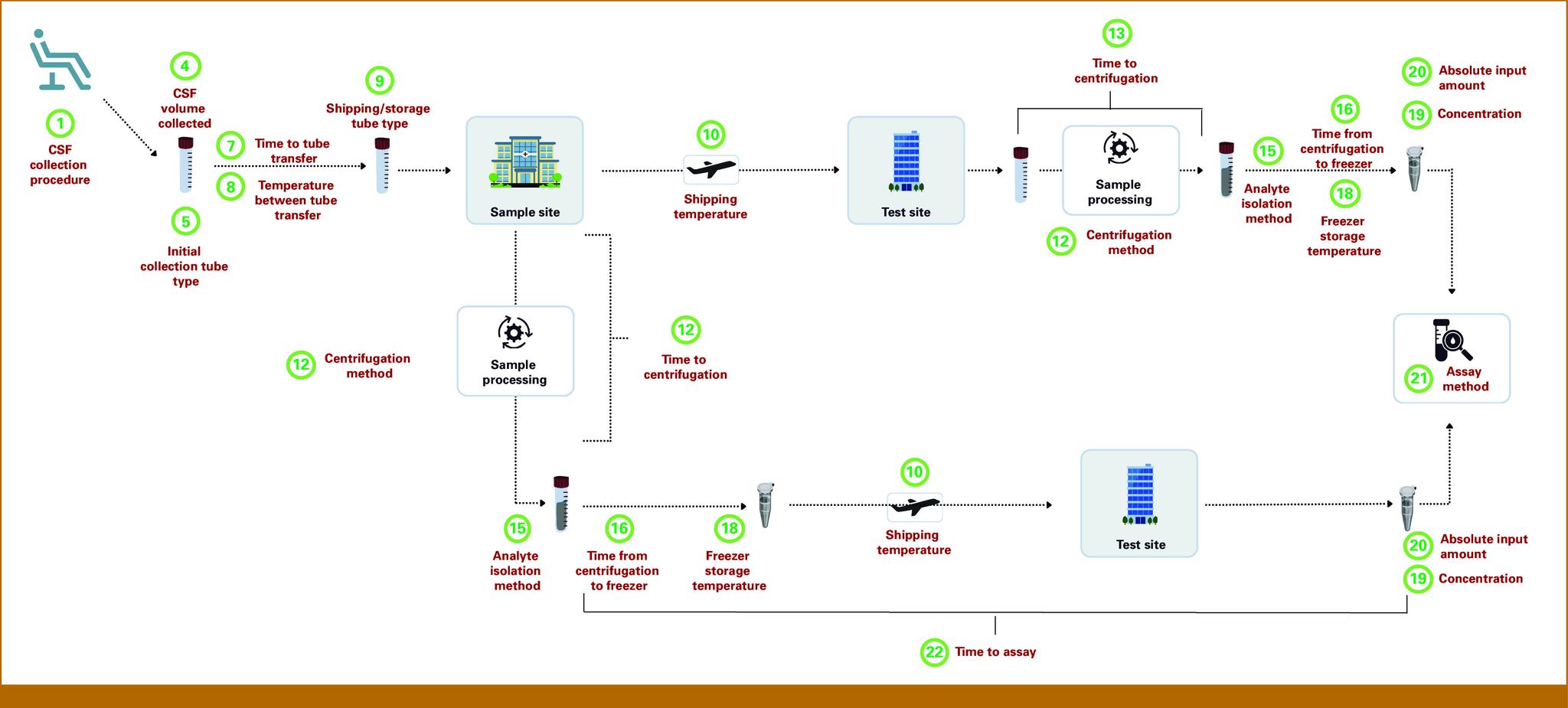
We reviewed protocols for CSF sample collection and processing used by expert Working Group members at their respective academic institutions and diagnostic companies, as well as the available literature on CSF liquid biopsy. Through a collaborative and iterative process, we developed a list of key preanalytical variables for cfDNA-based CSF liquid biopsy in patients with primary and metastatic brain malignancies.
RESULTS
The Working Group agreed on a recommended list of preanalytical minimum technical data elements, clinical context data elements, and patient context data elements for cfDNA-based CSF liquid biopsy in patients with CNS malignancies. A subset of variables were considered to be of critical priority and are designated as required annotations to submissions of cfDNA-based CSF liquid biopsy sample data into the BLOODPAC Data Commons.
CONCLUSION
We propose a list of preanalytical variables relevant for cfDNA-based CSF liquid biopsy, with the overarching goal of encouraging routine collection and reporting of these variables in future studies.
目的
基于血液的液体活检能够对实体瘤患者进行微创分子分析。然而,对于中枢神经系统癌症,由于进入体循环的肿瘤衍生物质水平极低,利用外周血进行游离DNA(cfDNA)检测和测序已被证明具有挑战性。另一种方法是使用脑脊液(CSF),脑肿瘤(BT)患者的脑脊液中含有更高浓度的肿瘤衍生cfDNA。脑脊液液体活检是一个相对较新的领域,关于可能影响检测性能的分析前变量存在关键的未解决问题。为了识别和规范关键的分析前变量,癌症血液分析图谱(BLOODPAC)联盟于2022年成立了一个脑肿瘤工作组。
方法
我们回顾了专家工作组成员在各自学术机构和诊断公司使用的脑脊液样本采集和处理方案,以及关于脑脊液液体活检的现有文献。通过协作和反复的过程,我们制定了一份针对原发性和转移性脑恶性肿瘤患者基于cfDNA的脑脊液液体活检关键分析前变量清单。
结果
工作组就中枢神经系统恶性肿瘤患者基于cfDNA的脑脊液液体活检的分析前最低技术数据元素、临床背景数据元素和患者背景数据元素的推荐清单达成了一致。一部分变量被认为具有关键优先级,并被指定为将基于cfDNA的脑脊液液体活检样本数据提交到BLOODPAC数据共享库时所需的注释。
结论
我们提出了一份与基于cfDNA的脑脊液液体活检相关的分析前变量清单,总体目标是鼓励在未来研究中常规收集和报告这些变量。
 Zotero 插件