
尼日利亚拉沙热流行病学综述
A Review of the Epidemiology of Lassa Fever in Nigeria.
作者信息
Asogun Danny, Arogundade Bosede, Unuabonah Faith, Olugbenro Olorunkemi, Asogun Joyce, Aluede Fatelyn, Ehichioya Deborah
机构信息
Institute of Viral and Emergent Pathogens, Irrua Specialist Teaching Hospital, Ekpoma 310115, Edo State, Nigeria.
Department of Community Medicine, Ambrose Alli University, Ekpoma 310104, Edo State, Nigeria.
出版信息
Microorganisms. 2025 Jun 18;13(6):1419. doi: 10.3390/microorganisms13061419.
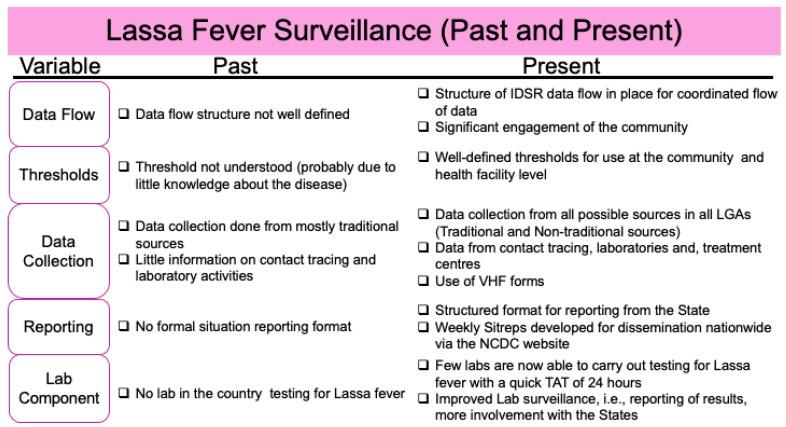
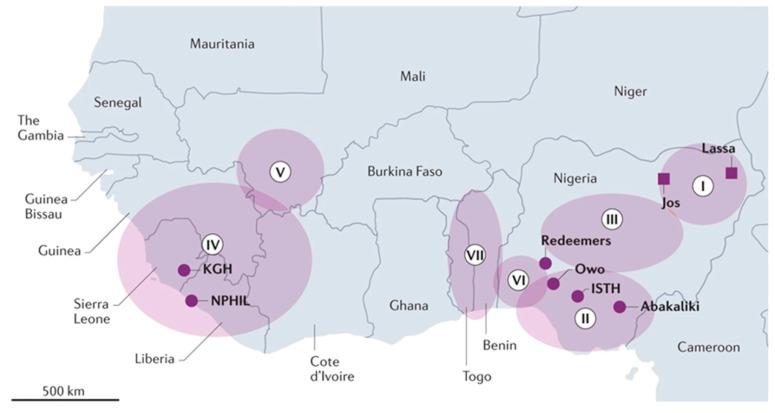
Lassa fever, a viral hemorrhagic illness that first came into the limelight as a clinical entity in 1969 when it was discovered in Northern Nigeria, is now found in other West African countries such as Sierra Leone, Liberia, Guinea, Togo, and the Benin Republic. Over the years, the disease, which is primarily transmitted from contact with infected mastomys rodents to humans, has the capability of secondary human-to-human transmission with significant morbidity and mortality, especially in healthcare settings. The disease is typically characterized by seasonal outbreaks, which peak during the dry season months of December to March. Lassa fever significantly impacts public health and the socioeconomic life of people in affected communities. In Nigeria, the Integrated Disease Surveillance and Response Strategy (IDSR), along with other medical countermeasures, have been employed to curtail the impact of the disease in endemic regions of Nigeria and other West Africa countries. The one-health approach to combat the disease is a promising strategy. This, along with the hope of a safe and effective vaccine, is a ray of hope on the horizon for public health authorities in Nigeria and other West African countries that the battle against Lassa fever might indeed end sooner than later.
拉沙热是一种病毒性出血热疾病,1969年在尼日利亚北部被发现作为一种临床病症首次引起关注,如今在其他西非国家如塞拉利昂、利比里亚、几内亚、多哥和贝宁共和国也有发现。多年来,这种主要通过接触受感染的多乳鼠传播给人类的疾病,具有人传人二次传播的能力,会导致较高的发病率和死亡率,尤其是在医疗环境中。该疾病通常以季节性暴发为特征,在12月至3月的旱季月份达到高峰。拉沙热对公共卫生以及受影响社区民众的社会经济生活产生重大影响。在尼日利亚,综合疾病监测与应对战略(IDSR)以及其他医疗应对措施已被用于减轻该疾病在尼日利亚和其他西非国家流行地区的影响。采用“同一健康”方法抗击该疾病是一项很有前景的战略。这一点,再加上对安全有效疫苗的期待,为尼日利亚和其他西非国家的公共卫生当局带来了一线希望,即抗击拉沙热的战斗或许真的能比预期更早结束。

 Zotero 插件