
人体中微塑料的风险评估:分布、暴露及毒理学效应
Risk Assessment of Microplastics in Humans: Distribution, Exposure, and Toxicological Effects.
作者信息
Li Yifei, Ling Wei, Yang Jian, Xing Yi
机构信息
School of Energy and Environmental Engineering, University of Science and Technology Beijing, Beijing 100083, China.
College of Chemistry and Environmental Engineering, Shenzhen University, Shenzhen 518060, China.
出版信息
Polymers (Basel). 2025 Jun 18;17(12):1699. doi: 10.3390/polym17121699.
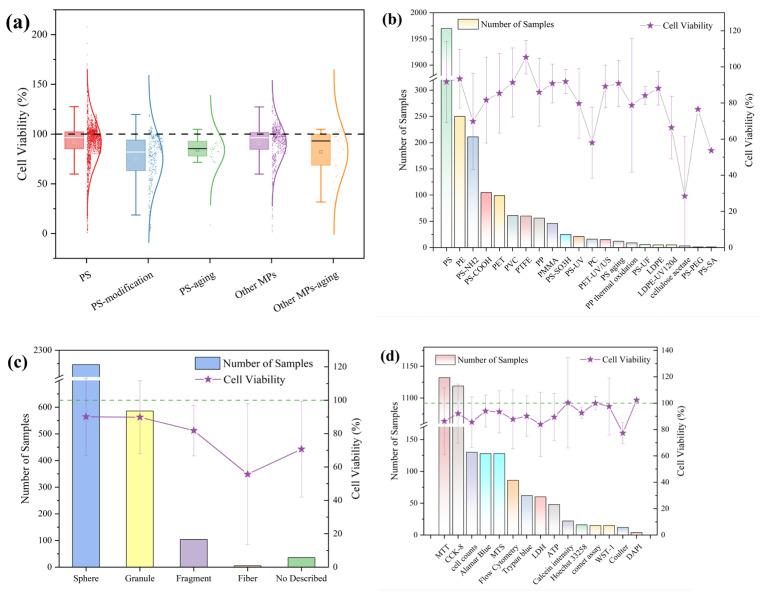
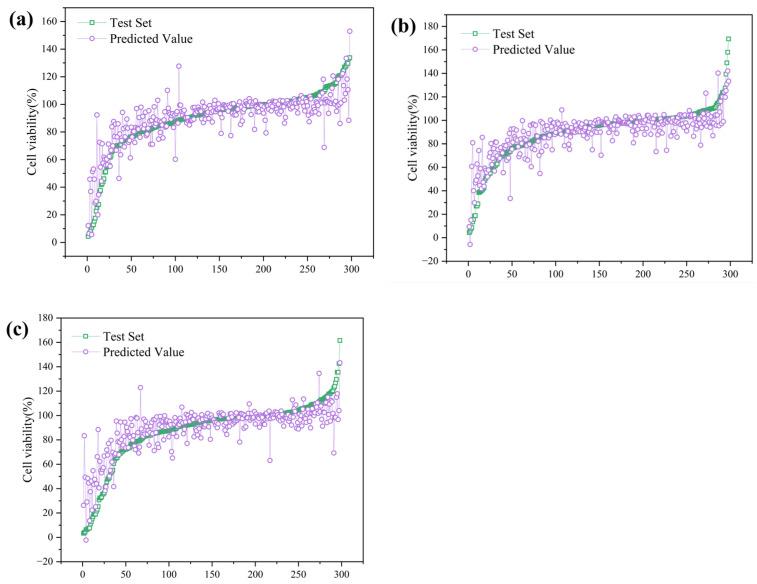
Microplastics are widely present in the environment, and their potential risks to human health have attracted increasing attention. Research on microplastics has exhibited exponential growth since 2014, with a fast-growing focus on human health risks. Keyword co-occurrence networks indicate a research shift from environmental pollution toward human exposure and health effects. Additionally, Trend Factor analysis reveals emerging research topics such as reproductive toxicity, neurotoxicity, and impacts on gut microbiota. This meta-analysis included 125 studies comprising 2977 data samples. The results demonstrated that cytotoxicity in experimental systems was primarily concentrated in Grade I (non-toxic, 62.8%) and Grade II (mildly toxic, 27.6%). Notably, inhibitory effects on cells were significantly enhanced when microplastic concentrations exceeded 40 μg/mL or particle sizes were smaller than 0.02 μm. The Gradient Boosting Decision Tree (GBDT) model was applied to predict cell viability, achieving an R value of 0.737 for the test set and a classification accuracy of 81.5%. Furthermore, reproductive- and circulatory-system cells exhibited the highest sensitivity to microplastics, whereas connective-tissue cells had the lowest survival rates. The study also identified an overuse of polystyrene (PS) polymers and spherical particles in experimental designs, deviating from realistic exposure scenarios.
微塑料广泛存在于环境中,其对人类健康的潜在风险已引起越来越多的关注。自2014年以来,关于微塑料的研究呈指数级增长,对人类健康风险的关注迅速增加。关键词共现网络表明研究重点已从环境污染转向人类暴露和健康影响。此外,趋势因子分析揭示了诸如生殖毒性、神经毒性以及对肠道微生物群的影响等新兴研究主题。这项荟萃分析纳入了125项研究,包含2977个数据样本。结果表明,实验系统中的细胞毒性主要集中在I级(无毒,62.8%)和II级(轻度有毒,27.6%)。值得注意的是,当微塑料浓度超过40μg/mL或粒径小于0.02μm时,对细胞的抑制作用会显著增强。应用梯度提升决策树(GBDT)模型预测细胞活力,测试集的R值为0.737,分类准确率为81.5%。此外,生殖系统和循环系统细胞对微塑料表现出最高的敏感性,而结缔组织细胞的存活率最低。该研究还发现实验设计中聚苯乙烯(PS)聚合物和球形颗粒的使用过度,与实际暴露情况不符。






 Zotero 插件