
海洋来源的抗氧化剂虾青素补充剂与运动在癌症、代谢性疾病及健康个体中的分子机制、耐力运动员及协同治疗作用
Molecular Mechanisms, Endurance Athlete, and Synergistic Therapeutic Effects of Marine-Derived Antioxidant Astaxanthin Supplementation and Exercise in Cancer, Metabolic Diseases, and Healthy Individuals.
作者信息
Nie Wenwen, Li Jianmin, Rajabi Sogand
机构信息
Physical Education Institute Qilu Normal University Jinan, Shandong China.
School of Tai Chi Culture Handan University Handan, Hebei China.
出版信息
Food Sci Nutr. 2025 Jun 27;13(7):e70470. doi: 10.1002/fsn3.70470. eCollection 2025 Jul.
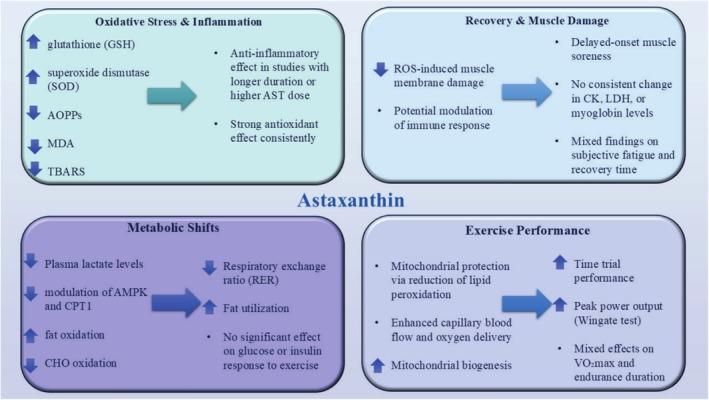
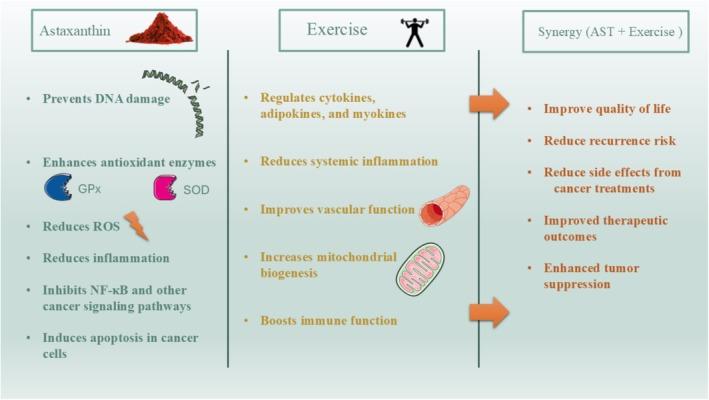
Marine-derived antioxidant astaxanthin (AST), a potent antioxidant carotenoid, has gained significant attention for its potential therapeutic effects in various diseases, including cancer and metabolic disorders. When combined with exercise, which is a well-established intervention for improving health, these two modalities may offer synergistic benefits that extend beyond their individual effects. This review explores the molecular mechanisms underlying the synergistic therapeutic effects of AST and exercise in cancer, metabolic diseases, and healthy individuals. AST exerts its beneficial effects primarily through its ability to reduce oxidative stress, modulate inflammation, and enhance cellular signaling pathways, including those involved in apoptosis, autophagy, and mitochondrial function. It has been shown to suppress tumor growth, improve insulin sensitivity, and protect against the adverse effects of chronic diseases, such as cardiovascular complications and neurodegenerative conditions. Similarly, exercise induces a wide array of molecular adaptations, including the activation of key metabolic pathways, enhancement of mitochondrial biogenesis, and modulation of inflammatory responses. These effects improve metabolic health, reduce cancer risk, and promote overall well-being. The combination of AST supplementation and exercise may provide a more potent therapeutic strategy, targeting multiple molecular pathways simultaneously. This synergy may not only enhance the effectiveness of each intervention but also reduce the side effects commonly associated with pharmacological treatments. This review discussed the current evidence for the synergistic effects of AST and exercise, highlighted the molecular mechanisms involved, and suggested potential clinical applications for these interventions in cancer, metabolic diseases, and healthy populations.
海洋来源的抗氧化剂虾青素(AST)是一种强效抗氧化类胡萝卜素,因其在包括癌症和代谢紊乱在内的各种疾病中的潜在治疗作用而备受关注。运动是一种公认的促进健康的干预措施,当与运动相结合时,这两种方式可能会产生超越其各自效果的协同益处。本综述探讨了AST与运动在癌症、代谢疾病和健康个体中协同治疗作用的分子机制。AST主要通过其降低氧化应激、调节炎症以及增强细胞信号通路(包括参与细胞凋亡、自噬和线粒体功能的信号通路)的能力发挥有益作用。研究表明,它能抑制肿瘤生长、提高胰岛素敏感性,并预防慢性疾病的不良影响,如心血管并发症和神经退行性疾病。同样,运动也会引发一系列分子适应性变化,包括关键代谢途径的激活、线粒体生物合成的增强以及炎症反应的调节。这些作用改善代谢健康、降低癌症风险并促进整体健康。补充AST与运动相结合可能提供一种更有效的治疗策略,同时针对多种分子途径。这种协同作用不仅可以增强每种干预措施的有效性,还可以减少与药物治疗常见相关的副作用。本综述讨论了AST与运动协同作用的当前证据,强调了其中涉及的分子机制,并提出了这些干预措施在癌症、代谢疾病和健康人群中的潜在临床应用。

 Zotero 插件