
结直肠癌肿瘤微环境中肥大细胞亚群的多样性及其预后意义。
Diversity of mast cell subpopulations in the tumor microenvironment of colorectal cancer and their prognostic implications.
作者信息
Qiao Tianyu, Ding Chao, Yu Songtao, Li Wenyang, Zhao Yonghou, Wang Guiyu
机构信息
Department of Colorectal Surgery, The Second Affiliated Hospital of Harbin Medical University, Harbin, China.
Heilongjiang Mental Hospital, Harbin, China.
出版信息
Cancer Immunol Immunother. 2025 Jun 30;74(8):255. doi: 10.1007/s00262-025-04119-8.
BACKGROUND
Colorectal cancer (CRC) is one of the most common and deadly malignancies worldwide, with a particularly low 5-year survival rate in advanced patients. Immune cells in the tumor microenvironment, especially mast cells, play crucial roles in tumor initiation and progression. However, the dual role of mast cells in CRC remains poorly understood.
METHODS
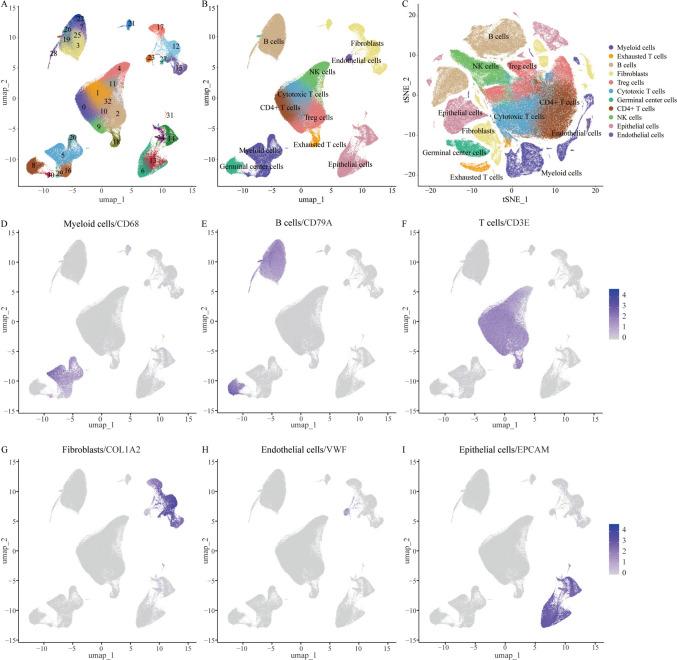
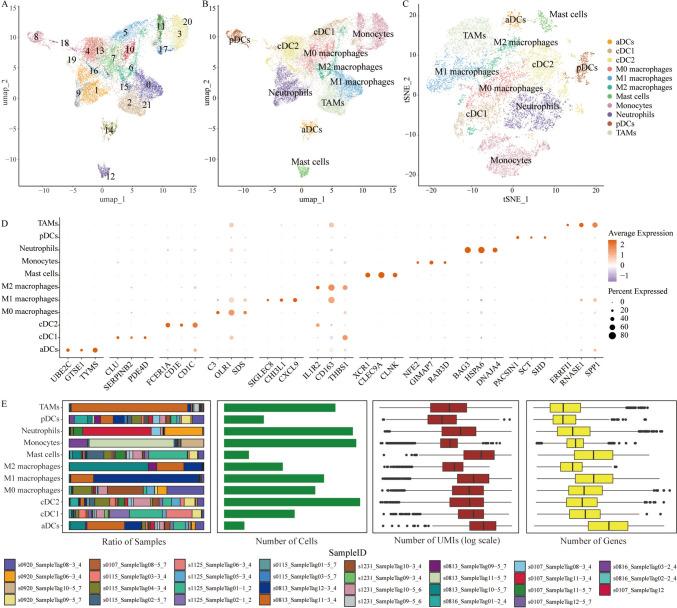
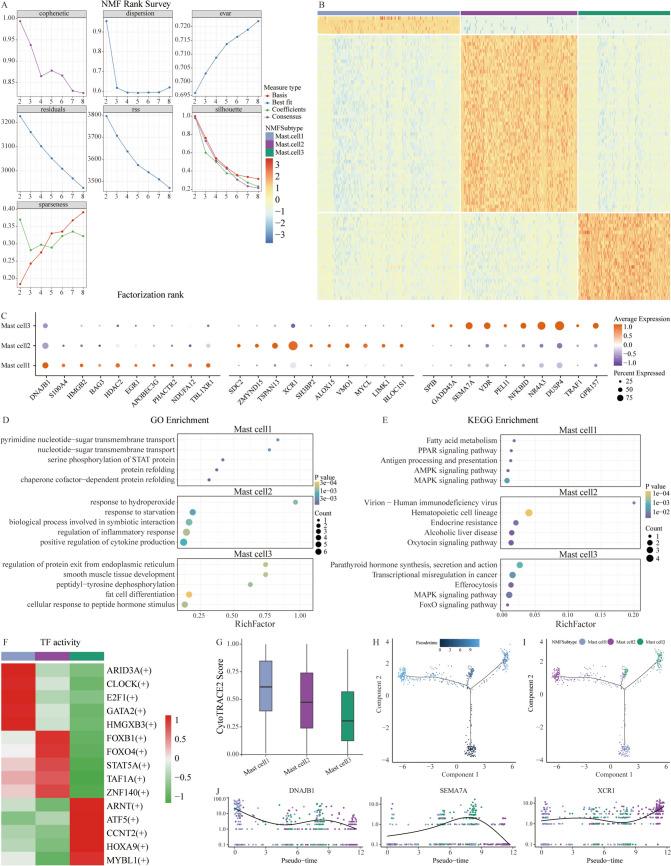
In this study, we used single-cell RNA sequencing (scRNA-seq), bulk RNA sequencing, and bioinformatics analyses to explore the heterogeneity of mast cell subpopulations in the CRC tumor microenvironment and their relationship with prognosis. We analyzed gene expression signatures associated with mast cell subpopulations derived from single-cell data of 40 CRC tumor samples and combined bulk RNA-seq data from HMU, GEO, and TCGA cohorts for prognostic prediction. Non-negative matrix factorization was used for clustering of mast cell subpopulations, followed by analysis of their specific gene markers, transcription factor activity, and biological pathways. Survival analysis and ROC curves were performed to assess their prognostic significance.
RESULTS
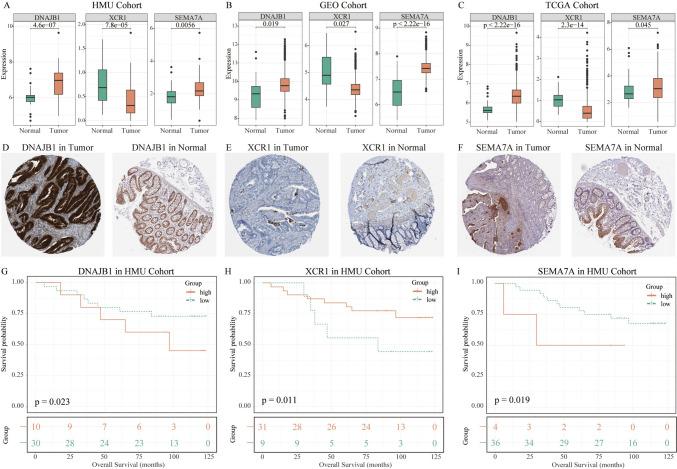
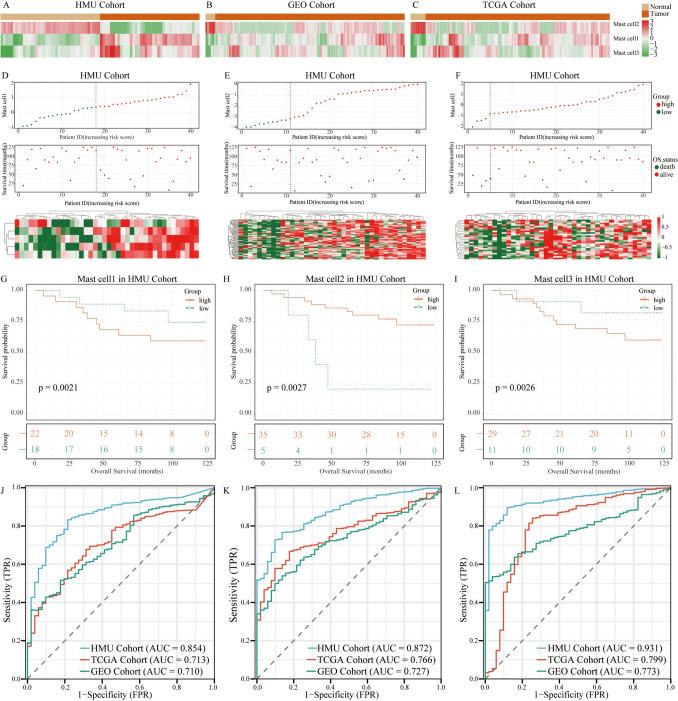
Mast cells in the CRC tumor microenvironment were classified into three distinct subpopulations, each with unique gene markers and functional pathways. Mast cell subpopulations 1 and 3 were highly associated with pro-tumor pathways, while mast cell subpopulation 2 primarily exhibited anti-tumor immune regulatory characteristics. High expression of mast cell subpopulations 1 and 3 was associated with poor survival prognosis, while high expression of subpopulation 2 was linked to a better survival outcome. Key marker genes such as DNAJB1, SEMA7A, and XCR1 were identified as potential prognostic factors, with high expression of DNAJB1 and SEMA7A being significantly associated with poor prognosis, while high expression of XCR1 was linked to a favorable prognosis.
CONCLUSION
This study reveals the functional heterogeneity of mast cell subpopulations in the CRC tumor microenvironment and their differential roles in tumor progression. Identification of mast cell subpopulation-specific marker genes provides new molecular targets for clinical diagnosis, prognostic prediction, and personalized immunotherapy in CRC.
背景
结直肠癌(CRC)是全球最常见且致命的恶性肿瘤之一,晚期患者的5年生存率特别低。肿瘤微环境中的免疫细胞,尤其是肥大细胞,在肿瘤的发生和发展中起着关键作用。然而,肥大细胞在结直肠癌中的双重作用仍知之甚少。
方法
在本研究中,我们使用单细胞RNA测序(scRNA-seq)、批量RNA测序和生物信息学分析,以探索结直肠癌肿瘤微环境中肥大细胞亚群的异质性及其与预后的关系。我们分析了与来自40个结直肠癌肿瘤样本单细胞数据的肥大细胞亚群相关的基因表达特征,并结合来自HMU、GEO和TCGA队列的批量RNA-seq数据进行预后预测。使用非负矩阵分解对肥大细胞亚群进行聚类,随后分析其特异性基因标记、转录因子活性和生物学途径。进行生存分析和ROC曲线分析以评估其预后意义。
结果
结直肠癌肿瘤微环境中的肥大细胞被分为三个不同的亚群,每个亚群都有独特的基因标记和功能途径。肥大细胞亚群1和3与促肿瘤途径高度相关,而肥大细胞亚群2主要表现出抗肿瘤免疫调节特征。肥大细胞亚群1和3的高表达与不良生存预后相关,而亚群2的高表达与较好的生存结果相关。DNAJB1、SEMA7A和XCR1等关键标记基因被确定为潜在的预后因素,DNAJB1和SEMA7A的高表达与不良预后显著相关,而XCR1的高表达与良好预后相关。
结论
本研究揭示了结直肠癌肿瘤微环境中肥大细胞亚群的功能异质性及其在肿瘤进展中的不同作用。肥大细胞亚群特异性标记基因的鉴定为结直肠癌的临床诊断、预后预测和个性化免疫治疗提供了新的分子靶点。
 Zotero 插件