
泰国乌汶叻差他尼府微塑料浸出的地理空间调查:基于模糊逻辑的分析
A geospatial investigation of microplastics leaching in Ubon Ratchathani province, Thailand: fuzzy logic-based analysis.
作者信息
Sharma Ekisha, Surendra K C, Thanh Dan Tran, Koottatep Thammarat
机构信息
Environmental Engineering and Management, School of Environment, Resources and Development, Asian Institute of Technology, Khlong Luang District, Pathum Thani, 12120, Thailand.
Civil and Environmental Engineering, School of Engineering, The Hong Kong University of Science and Technology, Clear Water Bay, Kowloon, Hong Kong.
出版信息
Environ Monit Assess. 2025 Jun 30;197(7):821. doi: 10.1007/s10661-025-14263-4.
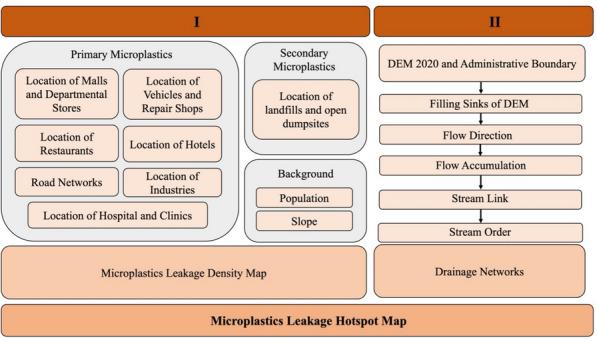
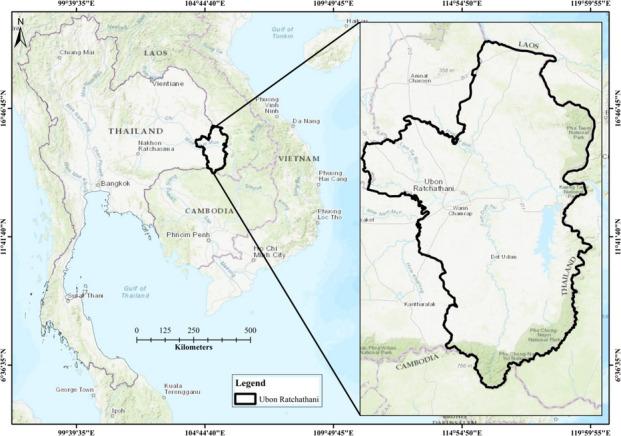
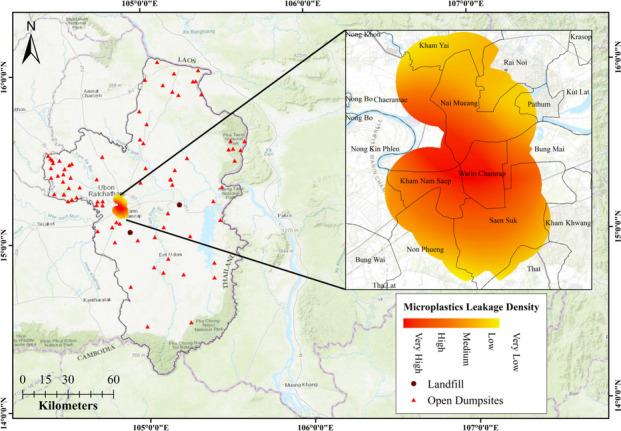
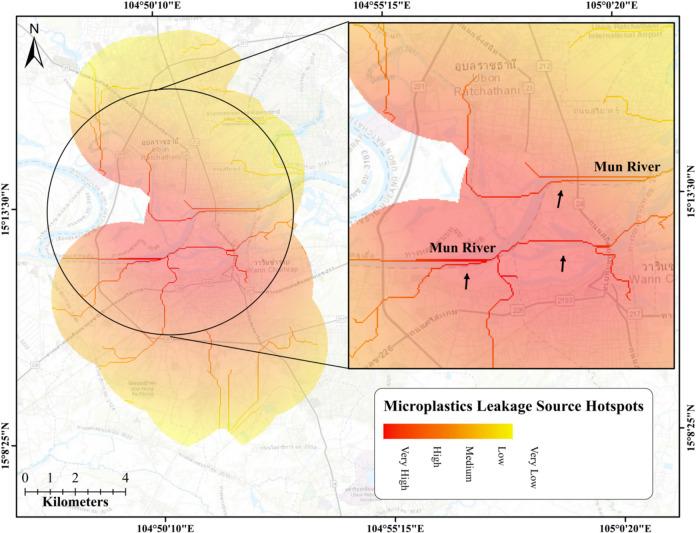
Microplastics pollution poses significant environmental challenge, with river networks serving as major pathways for transport to oceans. Effectively managing microplastics requires identification of their sources and pathways into river networks, yet there is a lack of understanding, hindering successful mitigation efforts. This study demonstrates the novel use of fuzzy logic-based tools in geographic information system (GIS) for the precise identification of microplastics leakage sources in Ubon Ratchathani province, situated in Northeastern Thailand. A leakage density map was developed by applying fuzzy logic to variables responsible for microplastics production in the environment, using available geospatial datasets. A fuzzy overlay was performed, merging the density map and drainage networks of the province, creating a comprehensive microplastics leakage sources map. This leakage sources map illustrated the flow of microplastics from leakage-dense areas towards the susceptible river network in the province. It identified key sources of microplastic leakage, such as road networks, facilities, and industries contaminating urban waterways. Field-based microplastic data verified the map's accuracy. A comparative analysis between identified polluted rivers and those not flagged revealed that microplastic accumulation is influenced not only by source proximity but also by river characteristics such as flow rate, hydrology, and seasonal variations. The study underscores the effectiveness and reliability of fuzzy logic-based GIS tools in identifying microplastics source hotspots within a specific region. Furthermore, it provides a valuable approach for advancing Sustainable Development Goal 14 (Life Below Water) by managing microplastics in river networks to prevent their accumulation in marine environments.
微塑料污染对环境构成了重大挑战,河流网络是微塑料进入海洋的主要运输途径。有效管理微塑料需要识别其进入河流网络的来源和途径,但目前仍缺乏相关了解,这阻碍了成功的缓解措施。本研究展示了基于模糊逻辑的工具在地理信息系统(GIS)中的新应用,用于精确识别泰国东北部乌汶叻差他尼府的微塑料泄漏源。利用现有的地理空间数据集,通过将模糊逻辑应用于环境中导致微塑料产生的变量,绘制了泄漏密度图。进行了模糊叠加,将该省的密度图与排水网络合并,创建了一张全面的微塑料泄漏源地图。这张泄漏源地图展示了微塑料从泄漏密集区域流向该省易受影响的河流网络的情况。它确定了微塑料泄漏的主要来源,如污染城市水道的道路网络、设施和行业。基于实地的微塑料数据验证了地图的准确性。对已识别的污染河流和未被标记的河流进行的比较分析表明,微塑料的积累不仅受源地距离的影响,还受河流特征如流速、水文和季节变化的影响。该研究强调了基于模糊逻辑的GIS工具在识别特定区域内微塑料源热点方面的有效性和可靠性。此外,它为推进可持续发展目标14(水下生物)提供了一种有价值的方法,即通过管理河流网络中的微塑料来防止它们在海洋环境中积累。




 Zotero 插件