
紧密连接蛋白4(CLDN4)的棕榈酰化促进肝细胞癌中肝向胆管谱系转变及乐伐替尼耐药。
CLDN4 palmitoylation promotes hepatic-to-biliary lineage transition and lenvatinib resistance in hepatocellular carcinoma.
作者信息
Xu Minghao, Zheng Yimin, Chen Junbo, Gao Chao, Zhu Miao, Ma Aying, Liang Bugang, Xu Wenxin, Fan Jia, Zhou Haibo, Ke Aiwu, Shen Yinghao
机构信息
Department of Hepatobiliary Surgery and Liver Transplantation, Zhongshan Hospital, Fudan University, Shanghai 200032, China.
Key Laboratory of Carcinogenesis and Cancer Invasion, Ministry of Education of the People's Republic of China, Shanghai 200032, China.
出版信息
Cell Rep Med. 2025 Jul 15;6(7):102208. doi: 10.1016/j.xcrm.2025.102208. Epub 2025 Jun 30.
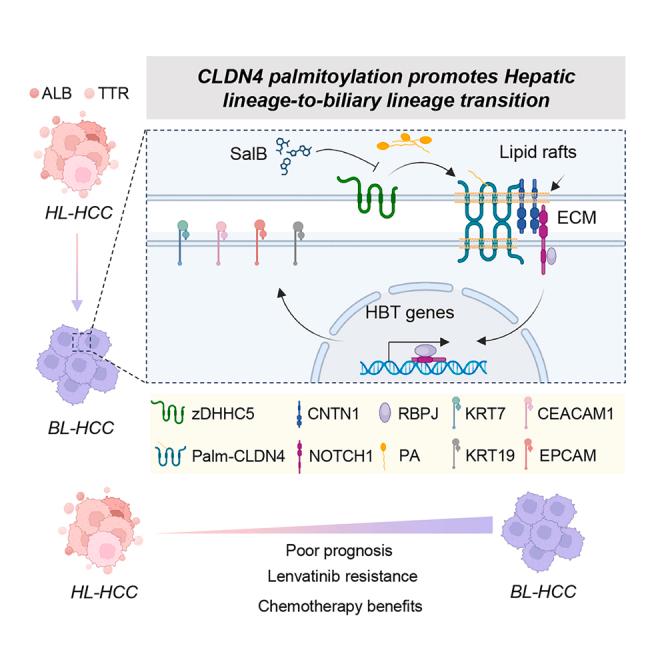
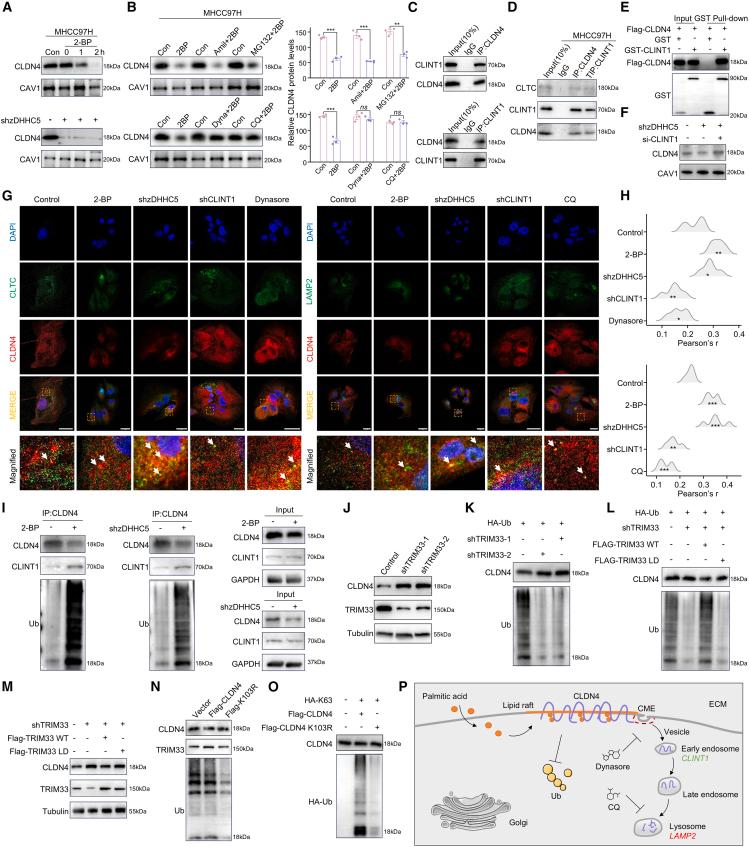
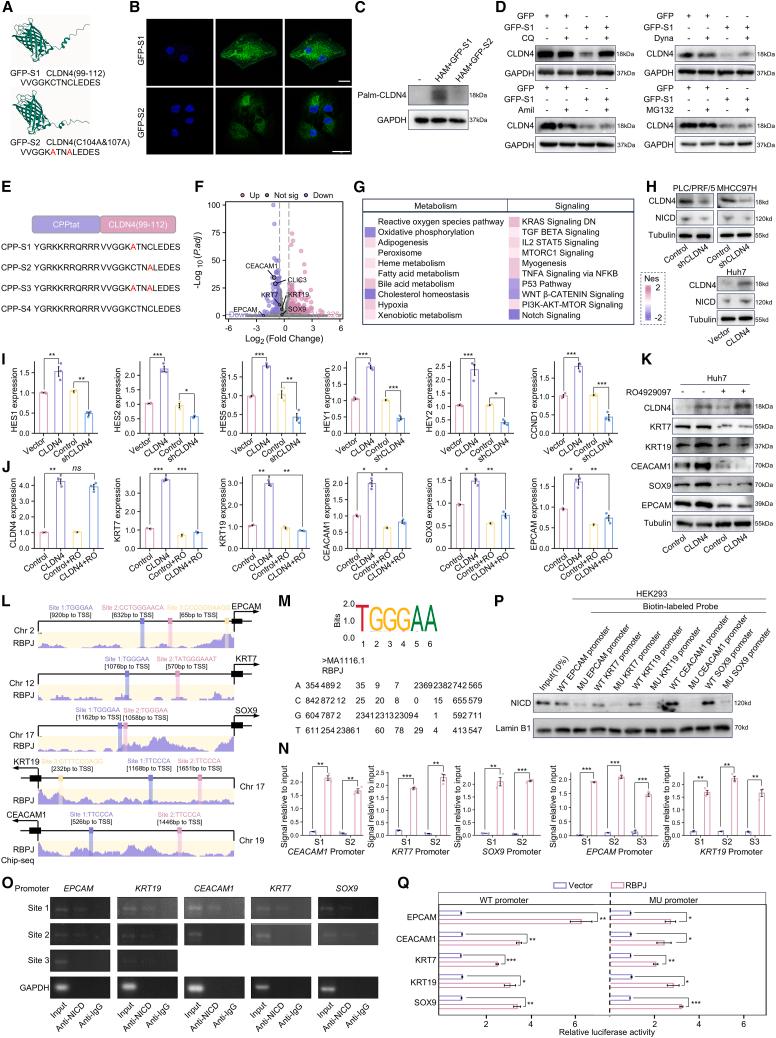
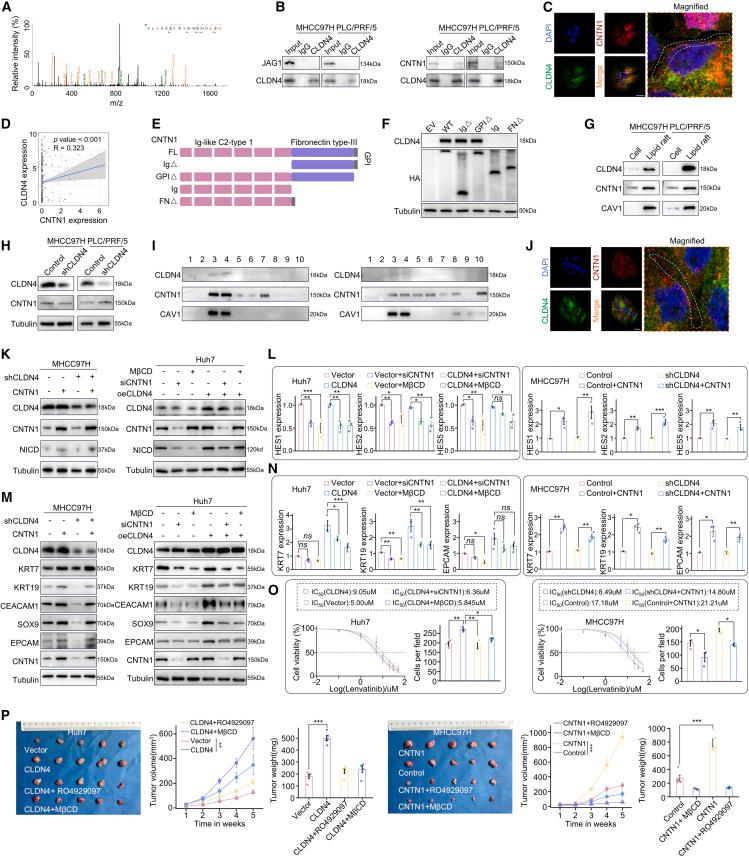
Hepatocellular carcinoma (HCC) exhibits significant plasticity, enabling phenotypic switching that promotes a drug-tolerant state and circumvents drug-induced cytotoxicity. In this study, we identify the hepatic-to-biliary lineage transition (HBT), associated with Claudin 4 (CLDN4), a tight junction protein, as a potential target for mitigating lenvatinib resistance in HCC. CLDN4 expression is more prevalent in lenvatinib-resistant patients. Palmitoylation of CLDN4 at cysteine residues C104 and C107 regulates ubiquitination at lysine residue K103, inhibits clathrin-mediated endocytosis, and sustains CLDN4 anchoring within lipid rafts. Anchored CLDN4 facilitates the phenotypic transition of HCC cells, resulting in increased resistance to lenvatinib by driving the mobilization of contactin-1 to lipid rafts and activating the Notch signaling pathway. Salvianolic acid B, an inhibitor of CLDN4, is demonstrated to reduce both HBT and lenvatinib resistance in HCC. Additionally, combination chemotherapy appears to be an effective therapeutic strategy for HCC patients undergoing HBT.
肝细胞癌(HCC)具有显著的可塑性,能够进行表型转换,从而促进耐药状态并规避药物诱导的细胞毒性。在本研究中,我们确定与紧密连接蛋白Claudin 4(CLDN4)相关的肝向胆管谱系转变(HBT)是减轻HCC中乐伐替尼耐药性的一个潜在靶点。CLDN4表达在乐伐替尼耐药患者中更为普遍。CLDN4在半胱氨酸残基C104和C107处的棕榈酰化调节赖氨酸残基K103处的泛素化,抑制网格蛋白介导的内吞作用,并维持CLDN4在脂筏中的锚定。锚定的CLDN4促进HCC细胞的表型转变,通过驱动接触蛋白-1向脂筏的移动并激活Notch信号通路,导致对乐伐替尼的耐药性增加。丹酚酸B作为CLDN4的抑制剂,被证明可降低HCC中的HBT和乐伐替尼耐药性。此外,联合化疗似乎是对经历HBT的HCC患者有效的治疗策略。



 Zotero 插件