
一种用于分析大气样品中从超短链到长链全氟和多氟烷基物质的全面、简单、稳健且无溶剂的方法。
A Comprehensive, Simple, Robust, and Solvent-Free Method Covering Ultrashort- to Long-Chain PFAS in Atmospheric Samples.
作者信息
Guo Wanlin, Zhang Yanhao, Wang Yawei, Zhu Lin, Cai Zongwei
机构信息
State Key Laboratory of Environmental and Biological Analysis, Department of Chemistry, Hong Kong Baptist University, Kowloon, Hong Kong SAR 999077, China.
School of Ecology and Environment, Zhengzhou University, Zhengzhou 450001, China.
出版信息
Anal Chem. 2025 Jul 15;97(27):14838-14846. doi: 10.1021/acs.analchem.5c03123. Epub 2025 Jul 1.
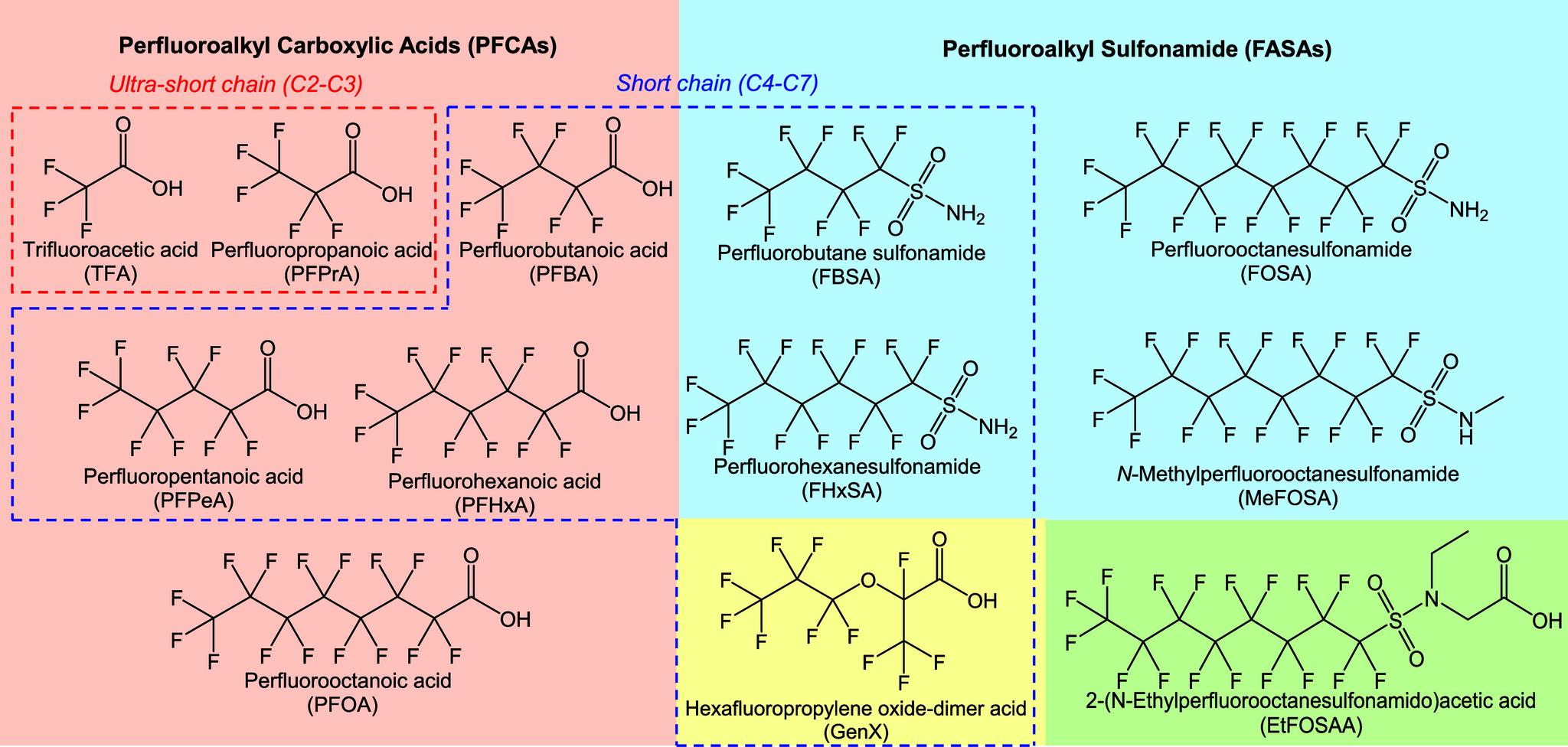
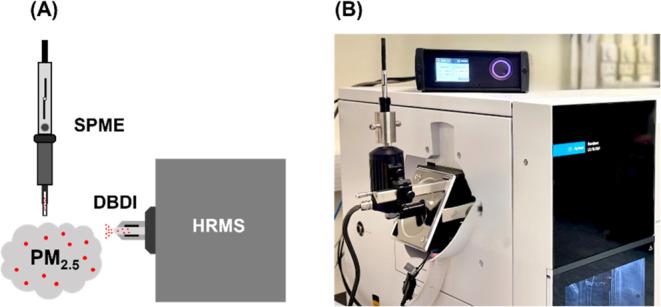
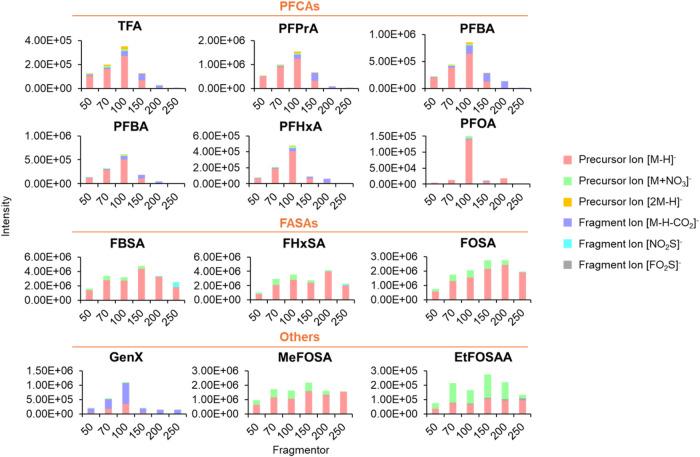
Ultrashort- and short-chain perfluoroalkyl and polyfluoroalkyl substances (PFAS), including trifluoroacetic acid (TFA), are emerging as widespread and persistent atmospheric pollutants of growing concern. Their atmospheric accumulation is further exacerbated by the transformation from various precursors, such as long-chain perfluorocarboxylic acids (PFCAs) and neutral PFAS. An efficient analytical method covering ultrashort- to long-chain PFAS is therefore required to monitor environmental levels and understand transformation mechanisms. However, distinct polarity among these PFAS poses technical challenges for simultaneous detection within a single run, hindering the comprehensive understanding of degradation mechanisms and quantitative correlation analysis. Conventional methods using liquid chromatography-electrospray ionization (LC-ESI) are effective for medium- to long-chain PFAS but are limited in detecting ultrashort-chain species concurrently. Herein, we present a simple yet robust method for broad-spectrum PFAS analysis, covering ultrashort- to long-chain species, using dielectric barrier discharge ionization (DBDI) coupled directly to high-resolution tandem mass spectrometry (HRMS/MS). This approach enables efficient ionization across a wide polarity range with reduced intensity of in-source fragmentation (ISF). Moreover, solid-phase microextraction (SPME) simplifies labor- and time-intensive sample preparation without solvents. As a result, a high sensitivity of 0.06-2.02 pg/m was achieved with minimal background interference, and ISF was reduced by over 60% compared to existing methods. Using this approach, we explored potential environmental associations between PFAS and cooccurring pollutants in seasonal atmospheric samples, showcasing its utility for future environmental research.
超短链和短链全氟烷基及多氟烷基物质(PFAS),包括三氟乙酸(TFA),正成为日益受到关注的广泛存在且持久的大气污染物。各种前体物质(如长链全氟羧酸(PFCA)和中性PFAS)的转化进一步加剧了它们在大气中的积累。因此,需要一种高效的分析方法来涵盖超短链到长链的PFAS,以监测环境水平并了解转化机制。然而,这些PFAS之间明显的极性差异给单次运行中的同时检测带来了技术挑战,阻碍了对降解机制的全面理解和定量相关分析。使用液相色谱 - 电喷雾电离(LC - ESI)的传统方法对中长链PFAS有效,但在同时检测超短链物质方面存在局限性。在此,我们提出了一种简单而稳健的广谱PFAS分析方法,该方法涵盖超短链到长链物质,使用直接与高分辨率串联质谱(HRMS/MS)耦合的介质阻挡放电电离(DBDI)。这种方法能够在宽极性范围内实现高效电离,同时降低源内碎片化(ISF)强度。此外,固相微萃取(SPME)简化了无需溶剂的耗时费力的样品制备过程。结果,实现了0.06 - 2.02 pg/m的高灵敏度,背景干扰最小,与现有方法相比,ISF降低了60%以上。使用这种方法,我们探索了季节性大气样品中PFAS与同时存在的污染物之间的潜在环境关联,展示了其在未来环境研究中的实用性。



 Zotero 插件