
利用动物模型和计算实验发现聚果榕中的抗糖尿病化合物。
Harnessing animal model and computational experiments to discover antidiabetic compounds in Ficus racemosa.
作者信息
Hossain Mohammad Uzzal, Rahman A B Z Naimur, Hossain Md Shahadat, Dey Shajib, Chowdhury Zeshan Mahmud, Bhattacharjee Arittra, Ahammad Ishtiaque, Hasan Mohammad Kamrul, Ahmed Istiak, Hosen Md Billal, Das Keshob Chandra, Keya Chaman Ara, Salimullah Md
机构信息
Bioinformatics Division, National Institute of Biotechnology, Ganakbari, Ashulia, Savar, Dhaka-1349, Bangladesh.
Department of Microbiology, Noakhali Science and Technology University, Noakhali, Bangladesh.
出版信息
BMC Complement Med Ther. 2025 Jul 2;25(1):215. doi: 10.1186/s12906-025-04845-7.
BACKGROUND
Diabetes mellitus (DM) is a major health concern caused by poor blood sugar regulation. Despite oral hypoglycemic medications, diabetes and its complications remain clinically serious. Using animal models and in silico research, the antidiabetic potential of Ficus racemosa (F. racemosa) has been assessed in this study.
MATERIALS AND METHODS
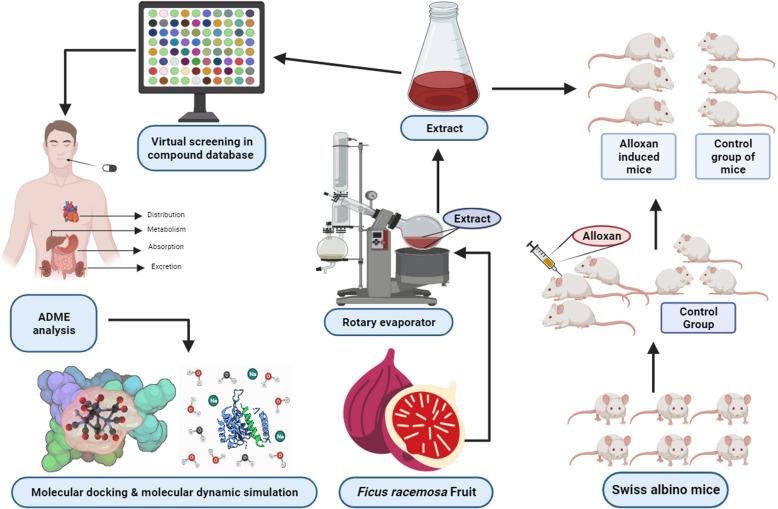
The methanol extract of F. racemosa fruits was prepared using suitable methods. After injecting Alloxan (150 mg/kg) into Swiss Albino mice to cause diabetes, both diabetic and non-diabetic animals underwent OGTT and acute toxicity testing. The antihyperglycemic action was assessed by administering oral doses of 300 and 500 mg/kg of the methanol extract of F. racemosa fruit, as well as 5 mg/kg of glibenclamide. Subsequently, in silico techniques such as ADMET profiling, molecular docking, and simulations were employed.
RESULTS
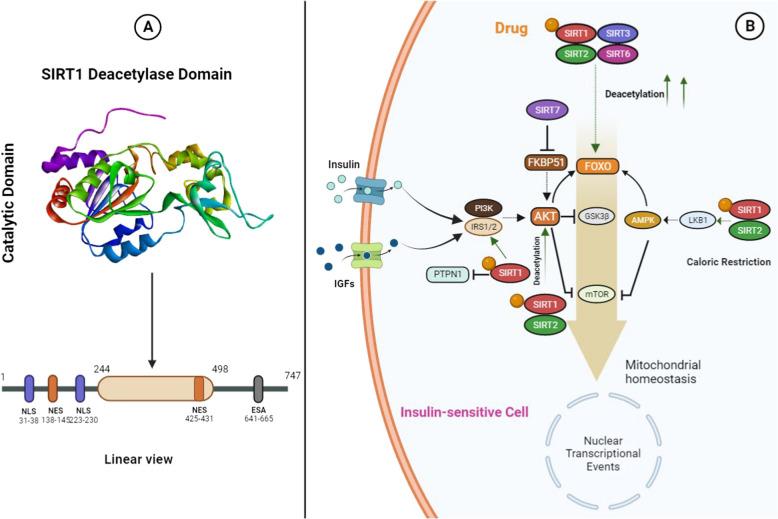
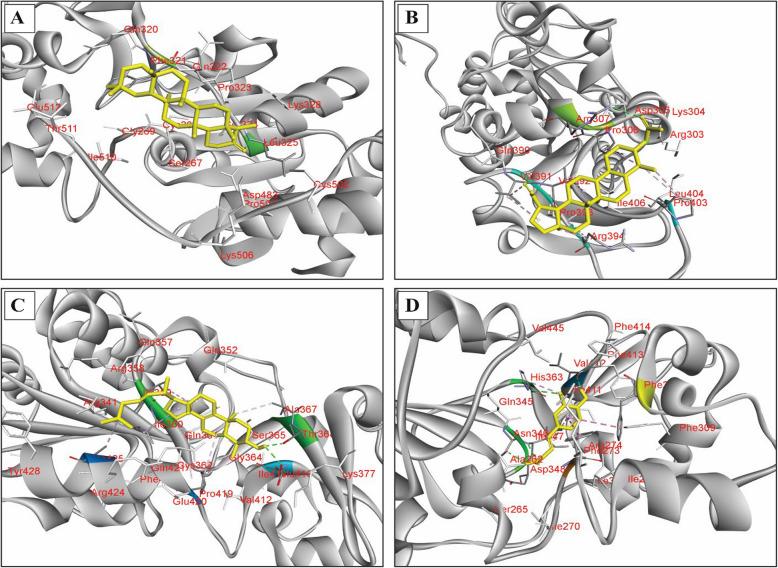
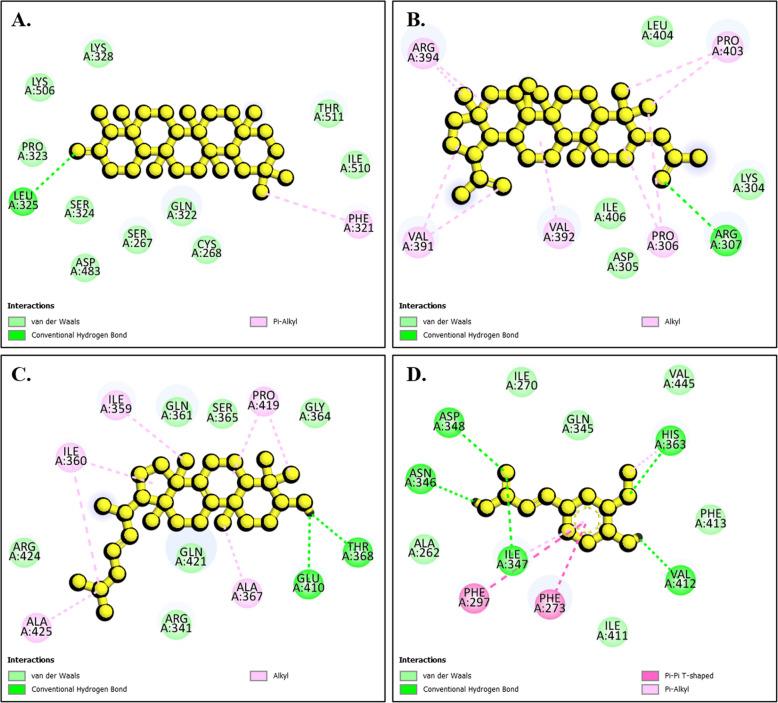
The findings from this study suggest that mice have tolerated doses under 3000 mg/kg without death or side effects. In mice model, both doses of F. racemosa extracts effectively reduced blood glucose (BGL) after 7 days of oral administration. Molecular docking and simulations demonstrated that the SIRT1 receptor had a greater affinity for friedelin, lupeol acetate, gluanol, and ferulic acid. The molecular dynamics demonstrated that all the compounds are stable to the receptors, as revealed by RMSD, RMSF, Rg and SASA parameters.
CONCLUSION
This study found that F. racemosa fruit extract significantly reduced hyperglycemia. Furthermore, four compounds may significantly contribute to the treatment of diabetes by reducing blood glucose levels. Thus, the findings of the current study may strengthen future research in the identification of antidiabetic compounds.
背景
糖尿病(DM)是一种因血糖调节不佳而引发的重大健康问题。尽管有口服降糖药物,但糖尿病及其并发症在临床上仍然很严重。本研究利用动物模型和计算机模拟研究评估了无花果(Ficus racemosa)的抗糖尿病潜力。
材料与方法
采用合适的方法制备无花果果实的甲醇提取物。向瑞士白化小鼠注射四氧嘧啶(150mg/kg)以诱导糖尿病,然后对糖尿病和非糖尿病动物进行口服葡萄糖耐量试验(OGTT)和急性毒性试验。通过口服300mg/kg和500mg/kg的无花果果实甲醇提取物以及5mg/kg的格列本脲来评估其降血糖作用。随后,采用了计算机模拟技术,如ADMET分析、分子对接和模拟。
结果
本研究结果表明,小鼠对3000mg/kg以下的剂量具有耐受性,无死亡或副作用。在小鼠模型中,口服给药7天后,两种剂量的无花果提取物均能有效降低血糖(BGL)。分子对接和模拟表明,SIRT1受体对木栓酮、乙酸羽扇豆醇酯、羽扇豆醇和阿魏酸具有更高的亲和力。分子动力学表明,所有化合物对受体都是稳定的,均方根偏差(RMSD)、均方根波动(RMSF)、回旋半径(Rg)和溶剂可及表面积(SASA)参数揭示了这一点。
结论
本研究发现无花果果实提取物能显著降低高血糖。此外,四种化合物可能通过降低血糖水平对糖尿病治疗有显著贡献。因此,本研究结果可能会加强未来在抗糖尿病化合物鉴定方面的研究。


 Zotero 插件