
中国内蒙古中西部地区牛隐孢子虫的流行情况及分布
Prevalence and distribution of Cryptosporidium spp. in cattle in central and western Inner Mongolia, China.
作者信息
Mo Ziran, Xu Bin, Quan Jingwei, Meng Qinghan, Jiang Xu, Li Junyan, Wang Jia, Xuan Yaping, Ruan Xingyu, Yang Wenbin, Luo Xiaoping, Hu Wei
机构信息
College of Life Sciences, Inner Mongolia University, Hohhot, 010070, China.
Key Laboratory of Parasite and Vector Biology of China Ministry of Health, WHO Collaborating Centre for Tropical Diseases, Joint Research Laboratory of Genetics and Ecology on Parasite- Host Interaction, Chinese Center for Disease Control and Prevention, National Institute of Parasitic Diseases, Chinese Center for Disease Control and Prevention, Fudan University, Shanghai, 200025, China.
出版信息
BMC Microbiol. 2025 Jul 4;25(1):411. doi: 10.1186/s12866-025-04119-9.
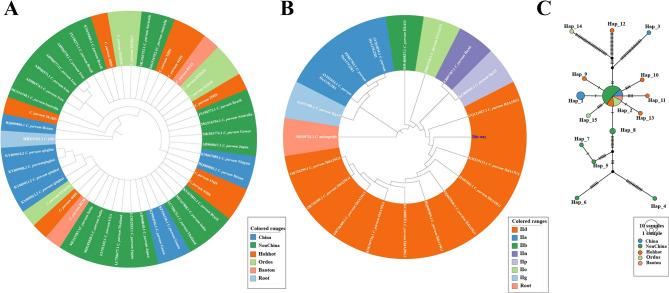
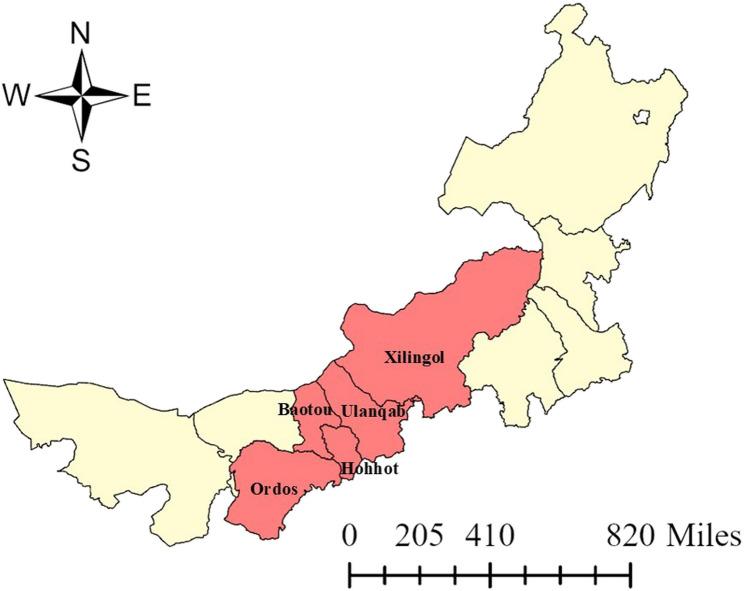
Cryptosporidium, an important zoonotic protozoan, poses a global threat to animal and human health, with cattle being recognized as susceptible hosts. Although Inner Mongolia is an important production and export base for beef, milk, and other cattle products, there is a paucity of comprehensive data on the prevalence of Cryptosporidium in cattle in the region. This study aims to investigate the prevalence and genetic characteristics of this parasite in the cattle populations of Inner Mongolia. From 2020 to 2021, 296 fecal samples were collected from cattle in five regions of Inner Mongolia. Nested PCR targeting the Cryptosporidium SSU rRNA gene, along with gp60 gene amplification for C. parvum subtype identification, was conducted. Phylogenetic and haplotype analyses were performed on positive sequences and the chi-square test was used to determine differences in infection rates between groups. The results showed an overall Cryptosporidium infection rate of 18.6% (55/296), which varied between regions, with Hohhot having the highest rate (27.5%, 30/109) and Ulanqab the lowest (5%, 3/60). Intensively farmed cattle had significantly higher infection rates (20.6%, 54/262) compared to non-intensive farms (2.9%, 1/34). Diarrheic calves had a higher prevalence (36.9%, 24/65) than non-diarrheic calves (20.3%, 13/64), while no significant in prevalence difference was observed in adult cattle. Calves exhibited a higher infection rate (25.3%, 37/146) than adult cattle (12.0%, 18/150). Five Cryptosporidium species were identified, with a predominance of C. bovis and C. parvum. Notably, all C. parvum belonged to the zoonotic IIdA15G1 subtype. Population genetic analysis indicated that C. bovis and C. parvum exhibited relatively homogeneous genetic structures, whereas C. ryanae showed significant genetic differentiation, likely driven by geographic isolation. This study sheds light on the epidemiology of cryptosporidiosis and highlights the potential risk of zoonotic transmission from cattle to humans in Inner Mongolia. The findings emphasize the urgent need for enhanced Cryptosporidium surveillance, prevention, and control measures in the region.
隐孢子虫是一种重要的人畜共患原生动物,对动物和人类健康构成全球威胁,牛被认为是易感宿主。内蒙古是牛肉、牛奶及其他牛产品的重要生产和出口基地,但该地区牛群中隐孢子虫感染率的综合数据匮乏。本研究旨在调查内蒙古牛群中这种寄生虫的感染率及遗传特征。2020年至2021年,从内蒙古五个地区的牛采集了296份粪便样本。采用针对隐孢子虫小亚基核糖体RNA基因的巢式PCR,以及用于微小隐孢子虫亚型鉴定的gp60基因扩增。对阳性序列进行系统发育和单倍型分析,并使用卡方检验确定组间感染率差异。结果显示,隐孢子虫总体感染率为18.6%(55/296),各地区有所不同,呼和浩特感染率最高(27.5%,30/109),乌兰察布最低(5%,3/60)。集约化养殖的牛感染率(20.6%,54/262)显著高于非集约化养殖场(2.9%,1/34)。腹泻犊牛的感染率(36.9%,24/65)高于非腹泻犊牛(20.3%,13/64),而成牛感染率无显著差异。犊牛感染率(25.3%,37/146)高于成牛(12.0%,18/150)。鉴定出五种隐孢子虫,以牛隐孢子虫和微小隐孢子虫为主。值得注意的是,所有微小隐孢子虫均属于人畜共患的IIdA15G1亚型。群体遗传分析表明,牛隐孢子虫和微小隐孢子虫表现出相对均匀的遗传结构,而雷氏隐孢子虫表现出显著的遗传分化,可能是由地理隔离驱动的。本研究揭示了隐孢子虫病的流行病学情况,并突出了内蒙古牛传人畜共患病传播的潜在风险。研究结果强调了该地区加强隐孢子虫监测、预防和控制措施的迫切需求。


 Zotero 插件