
迷迭香酸通过调节癌细胞与癌症相关成纤维细胞之间的相互作用增强吉非替尼对肺腺癌的疗效。
Rosmarinic acid potentiates gefitinib in lung adenocarcinoma by modulating interactions between cancer cells and cancer-associated fibroblasts.
作者信息
Li Duo, Lv Yiying, Hu Leihao, Sun Anqi, Sun Lingling
机构信息
The First Clinical School of Guangzhou University of Chinese Medicine, Guangzhou, Guangdong, China.
Cancer Centre, The First Affiliated Hospital of Guangzhou University of Chinese Medicine, Guangzhou, Guangdong, China.
出版信息
Sci Rep. 2025 Jul 6;15(1):24100. doi: 10.1038/s41598-025-09755-9.
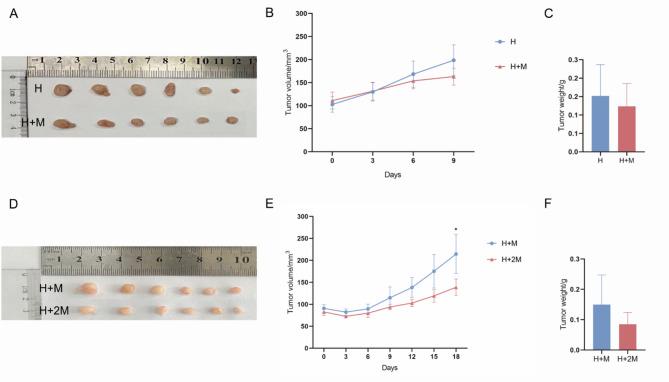
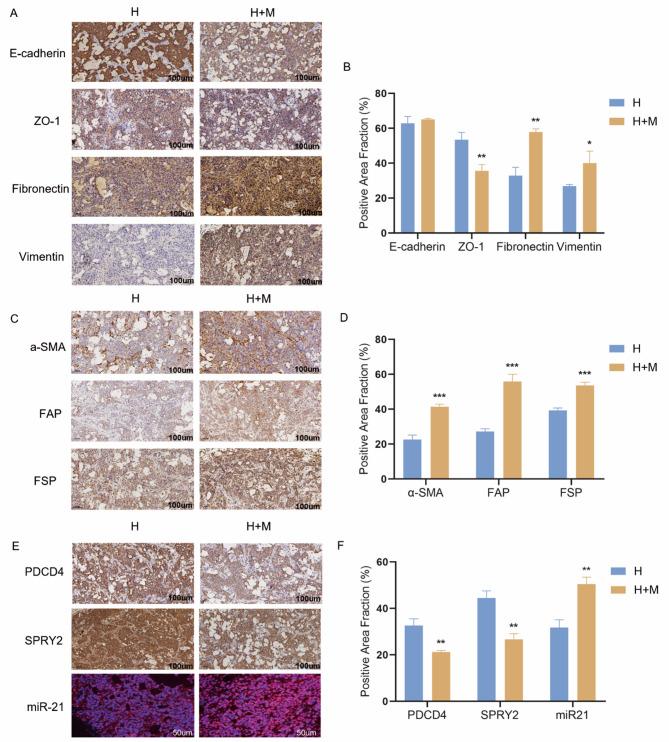
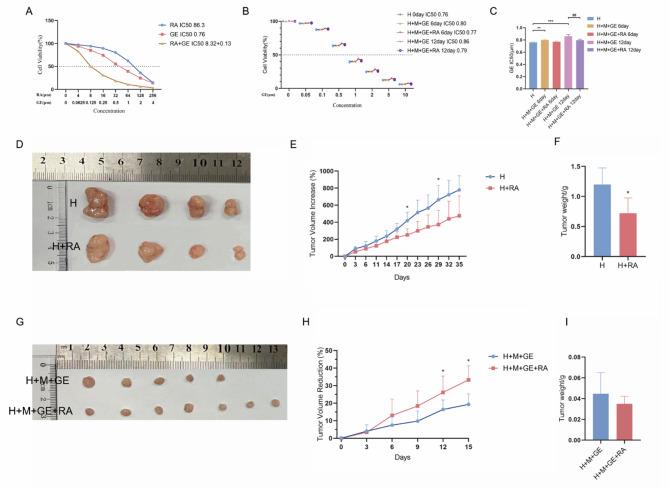
While cancer-associated fibroblasts (CAFs) significantly influence tumor progression, their temporal dynamics remain poorly understood. We investigated time-dependent interactions between non-small cell lung cancer (NSCLC) cells and CAFs, and evaluated rosmarinic acid (RA)'s potential to modulate these interactions. HCC827 lung adenocarcinoma cells and MRC-5 fibroblasts were co-cultured in vitro. CAF activation markers (α-SMA, FAP) and epithelial-mesenchymal transition (EMT) were assessed through morphological and molecular analyses. Xenograft models with different tumor-to-fibroblast ratios (1:1, 1:2) evaluated tumor growth dynamics and RA's therapeutic effects combined with gefitinib. Time-course analysis revealed a biphasic pattern in tumor-CAF interactions. CAF activation markers reached peak levels by day 6, followed by maximal EMT marker expression in NSCLC cells at day 8. In xenograft models, higher CAF proportions initially inhibited tumor growth but accelerated tumor progression. RA treatment significantly attenuated CAF activation markers and reversed EMT-related changes in cancer cells, leading to reduced tumor growth in CAF-enriched xenografts. The combination of RA with gefitinib demonstrated enhanced anti-tumor effects compared to gefitinib alone. CAFs exhibit temporally biphasic roles in NSCLC progression characterized by initial suppression followed by promotion of tumor microenvironment deterioration. RA effectively modulates these tumor-stromal interactions, enhances gefitinib efficacy, and delays the development of drug resistance.
虽然癌症相关成纤维细胞(CAFs)对肿瘤进展有显著影响,但其时间动态变化仍知之甚少。我们研究了非小细胞肺癌(NSCLC)细胞与CAFs之间的时间依赖性相互作用,并评估了迷迭香酸(RA)调节这些相互作用的潜力。将HCC827肺腺癌细胞和MRC-5成纤维细胞进行体外共培养。通过形态学和分子分析评估CAF激活标志物(α-SMA、FAP)和上皮-间质转化(EMT)。采用不同肿瘤与成纤维细胞比例(1:1、1:2)的异种移植模型评估肿瘤生长动态以及RA与吉非替尼联合使用的治疗效果。时间进程分析揭示了肿瘤与CAF相互作用的双相模式。CAF激活标志物在第6天达到峰值水平,随后在第8天NSCLC细胞中的EMT标志物表达达到最大值。在异种移植模型中,较高的CAF比例最初抑制肿瘤生长,但加速了肿瘤进展。RA治疗显著减弱了CAF激活标志物,并逆转了癌细胞中与EMT相关的变化,导致富含CAF的异种移植瘤中肿瘤生长减少。与单独使用吉非替尼相比,RA与吉非替尼联合使用显示出增强的抗肿瘤效果。CAFs在NSCLC进展中表现出时间上的双相作用,其特征是最初抑制随后促进肿瘤微环境恶化。RA有效地调节了这些肿瘤-基质相互作用,增强了吉非替尼的疗效,并延缓了耐药性的发展。



 Zotero 插件