
开发中暑诱导凝血功能障碍的分子诊断模型:蛋白质组学和代谢组学方法
Developing a molecular diagnostic model for heatstroke-induced coagulopathy: a proteomics and metabolomics approach.
作者信息
Zeng Qingbo, Lin Qingwei, He Longping, Zhong Lincui, Zhou Ye, Deng Xingping, Zhang Nianqing, Song Qing, Song Jingchun
机构信息
Intensive Care Unit, The 908th Hospital of Chinese PLA Logistic Support Force, Nanchang, China.
Intensive Care Unit, Nanchang Hongdu Hospital of Traditional Chinese Medicine, Nanchang, China.
出版信息
Front Mol Biosci. 2025 Jun 20;12:1616073. doi: 10.3389/fmolb.2025.1616073. eCollection 2025.
BACKGROUND
Heatstroke (HS) is becoming more concerning, with coagulopathy contributing to higher mortality. The aim of this study was to analyze the metabolomic and proteomic profiles associated with heatstroke-induced coagulopathy (HSIC) and to develop a molecular diagnostic model based on proteomic and metabolomic patterns.
METHODS
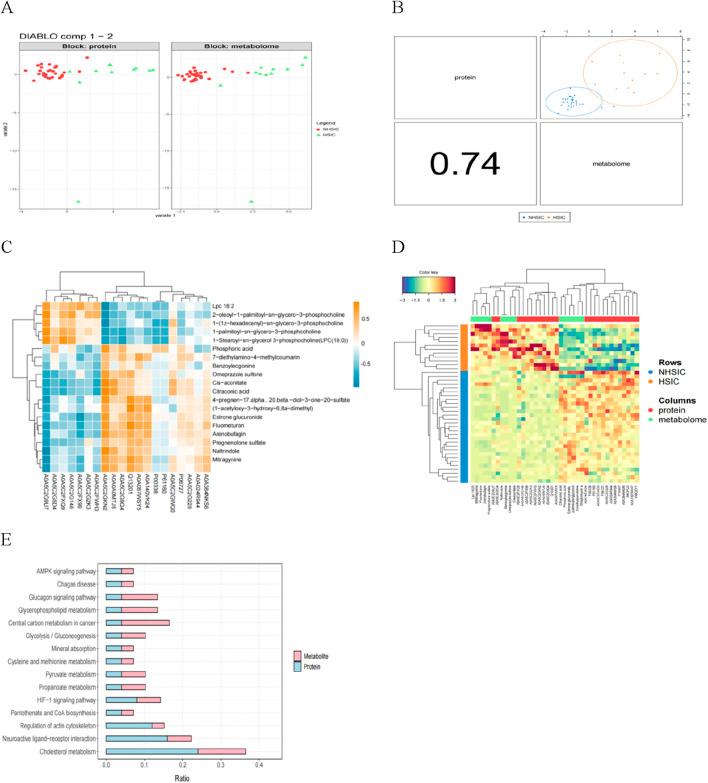
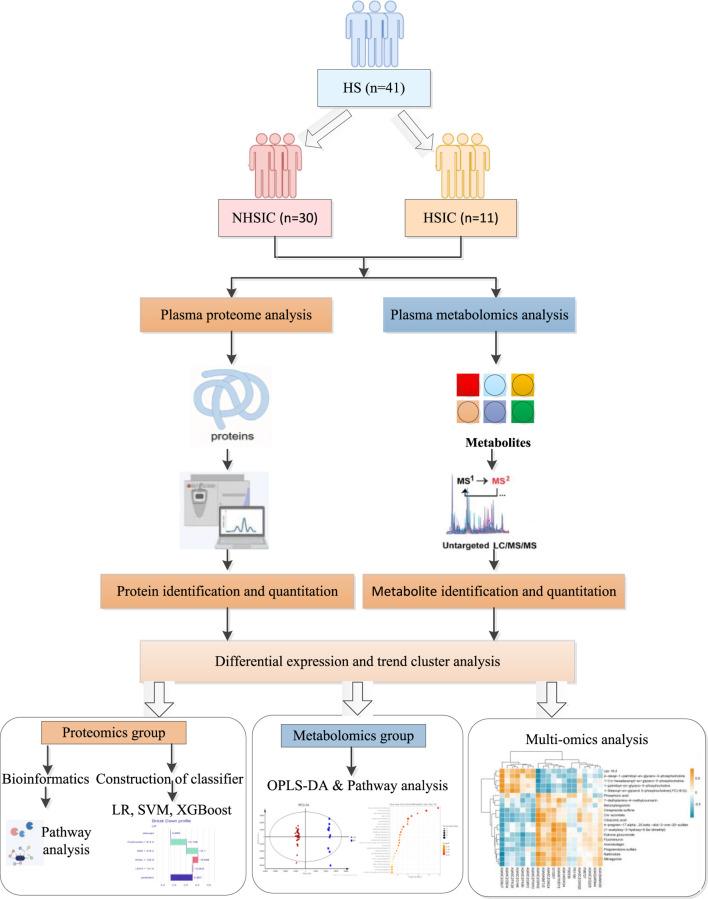
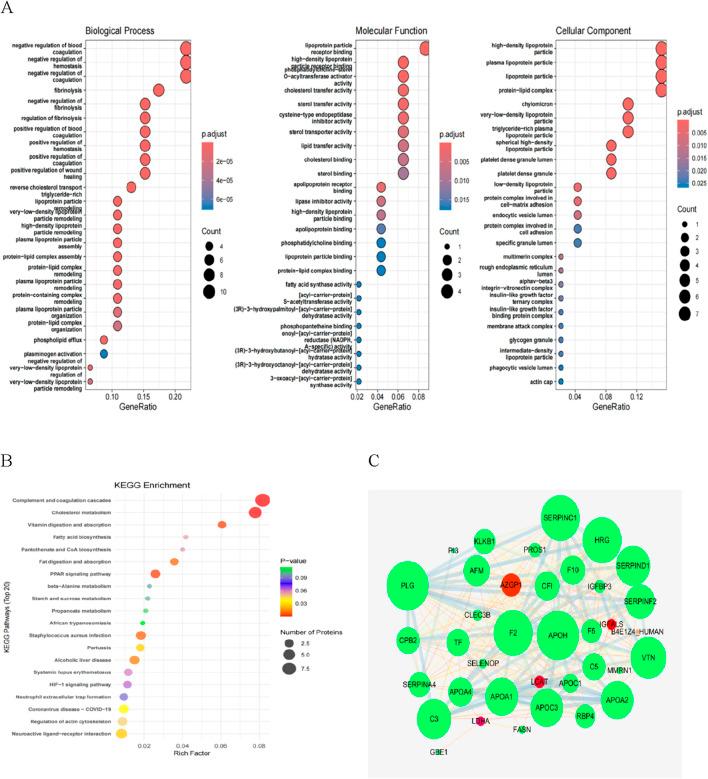
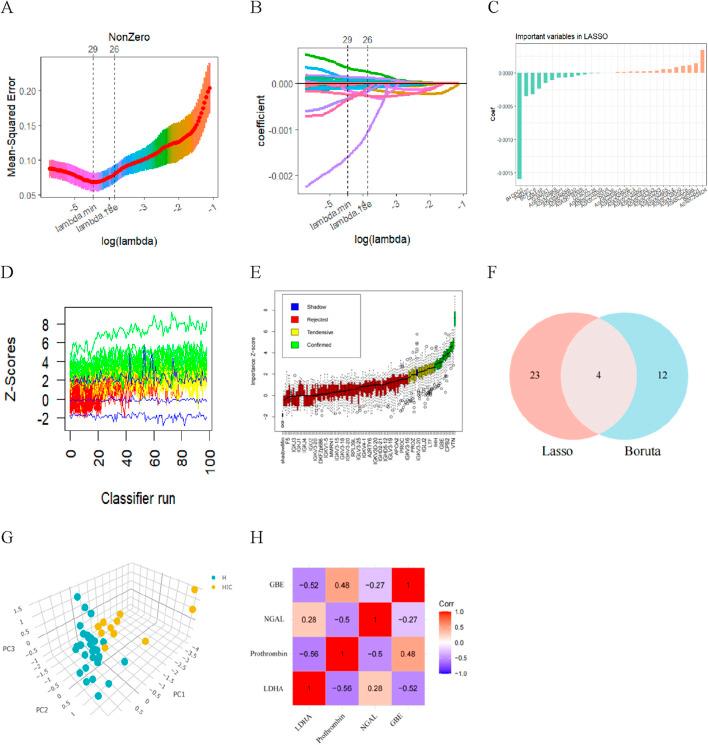
This study included 41 HS patients from the Department of Critical Care Medicine at a comprehensive teaching hospital. Plasma proteins and metabolites from HSIC and non-heatstroke-induced coagulopathy (NHSIC) patients were compared using LC-MS/MS. Multivariate and univariate statistical analyses identified differentially expressed proteins (DEPs) and metabolites (DEMs). Functional annotation and pathway enrichment analyses were performed using the GO and KEGG databases, and machine learning models were developed using candidate proteins selected by LASSO and Boruta algorithms to diagnose HSIC. Finally, bioinformatic analysis was used to integrate the results of proteomics and metabolomics to find the potential mechanisms of HSIC.
RESULTS
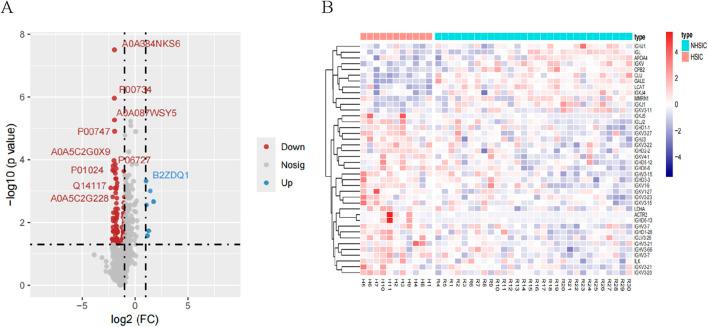
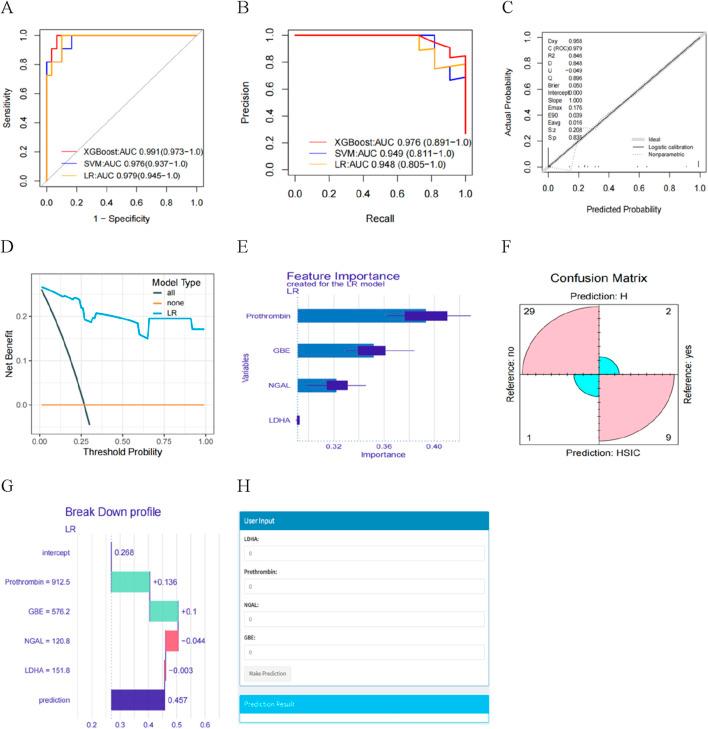
A total of 41 patients participated in the study, with 11 cases in the HSIC group and 30 cases in the NHSIC group. Significant differences were observed between the groups in temperature, heart rate, white blood cell count, platelet count, liver function, coagulation markers, APACHE II score, and GCS score. Survival analysis revealed that the heatstroke group had a higher mortality risk. A total of 125 DEPs and 110 DEMs were identified, primarily enriched in energy regulation-related pathways and lipid and carbohydrate metabolism. Additionally, three optimal predictive models (AUC >0.9) were developed and validated for classifying HSIC from HS individuals based on proteomic patterns and machine learning, with the logistic regression model showing the best diagnostic performance (AUC = 0.979, sensitivity = 81.8%, specificity = 96.7%), highlighting lactate dehydrogenase A chain (LDHA), neutrophil gelatinase-associated lipocalin (NGAL), prothrombin and glucan-branching enzyme (GBE) as key predictors of HSIC.
CONCLUSION
The study uncovered critical metabolic and protein changes linked to heatstroke, highlighting the involvement of energy regulation, lipid metabolism, and carbohydrate metabolism. Building on these findings, an optimal machine learning diagnostic model was developed to boost the accuracy of HSIC diagnosis, integrating LDHA, NGAL, prothrombin, and GBE as key biomarkers.
背景
中暑(HS)日益受到关注,凝血病会导致更高的死亡率。本研究旨在分析与中暑诱导的凝血病(HSIC)相关的代谢组学和蛋白质组学特征,并基于蛋白质组学和代谢组学模式开发一种分子诊断模型。
方法
本研究纳入了一家综合性教学医院重症医学科的41例中暑患者。使用液相色谱-串联质谱法(LC-MS/MS)比较了HSIC患者和非中暑诱导凝血病(NHSIC)患者的血浆蛋白质和代谢物。多变量和单变量统计分析确定了差异表达蛋白(DEP)和代谢物(DEM)。使用基因本体论(GO)和京都基因与基因组百科全书(KEGG)数据库进行功能注释和通路富集分析,并使用最小绝对收缩和选择算子(LASSO)和博鲁塔算法选择的候选蛋白开发机器学习模型以诊断HSIC。最后,使用生物信息学分析整合蛋白质组学和代谢组学的结果,以发现HSIC的潜在机制。
结果
共有41例患者参与研究,其中HSIC组11例,NHSIC组30例。两组在体温、心率、白细胞计数、血小板计数、肝功能、凝血指标、急性生理与慢性健康状况评分系统II(APACHE II)评分和格拉斯哥昏迷量表(GCS)评分方面存在显著差异。生存分析显示中暑组有更高的死亡风险。共鉴定出125个DEP和110个DEM,主要富集于能量调节相关通路以及脂质和碳水化合物代谢。此外,基于蛋白质组学模式和机器学习开发并验证了三种最佳预测模型(曲线下面积[AUC]>0.9)用于从中暑个体中分类HSIC,逻辑回归模型显示出最佳诊断性能(AUC = 0.979,灵敏度 = 81.8%,特异性 = 96.7%),突出显示乳酸脱氢酶A链(LDHA)、中性粒细胞明胶酶相关脂质运载蛋白(NGAL)、凝血酶原和葡聚糖分支酶(GBE)作为HSIC的关键预测指标。
结论
该研究揭示了与中暑相关的关键代谢和蛋白质变化,突出了能量调节、脂质代谢和碳水化合物代谢的参与。基于这些发现,开发了一种最佳机器学习诊断模型以提高HSIC诊断的准确性,将LDHA、NGAL、凝血酶原和GBE整合为关键生物标志物。



 Zotero 插件