
机器学习助力肺癌腺癌中调节性细胞死亡关键生物标志物的选择:生物学数据测试与细胞试验测定
Machine learning assists regulated cell death crucial biomarker selection in adenocarcinoma of the lung: biological data testing and cell assay determination.
作者信息
Ning Han, Jiang Ying, Zheng Mengli, Yang Gao, Ma Lianjun, Zhao Yachao
机构信息
Weizikeng Outpatient Department, Jingzhong Medical District, Chinese PLA General Hospital, Beijing, China.
Department of Clinical Laboratory, The Eighth Medical Center of Chinese, PLA General Hospital, Beijing, China.
出版信息
Discov Oncol. 2025 Jul 8;16(1):1285. doi: 10.1007/s12672-025-02793-9.
BACKGROUND
Lung cancer is a highly aggressive and lethal cancer requiring prognostic and predictive biomarkers for improving patient outcomes. Here, a prognostic signature for lung cancer was developed and prognostic programmed cell death (PCD)-related genes were identified.
METHODS
In this study, we performed comprehensive bioinformatic analyses on diverse datasets, such as Gene Expression Omnibus and The Cancer Genome Atlas. Consensus clustering, Weighted Gene Co-expression Network Analysis, and Gene Set Enrichment Analysis were applied to gain valuable insights from the data, and survival analysis was performed to determine the genes associated with prognosis PCD and construct a prognostic signature.
RESULTS
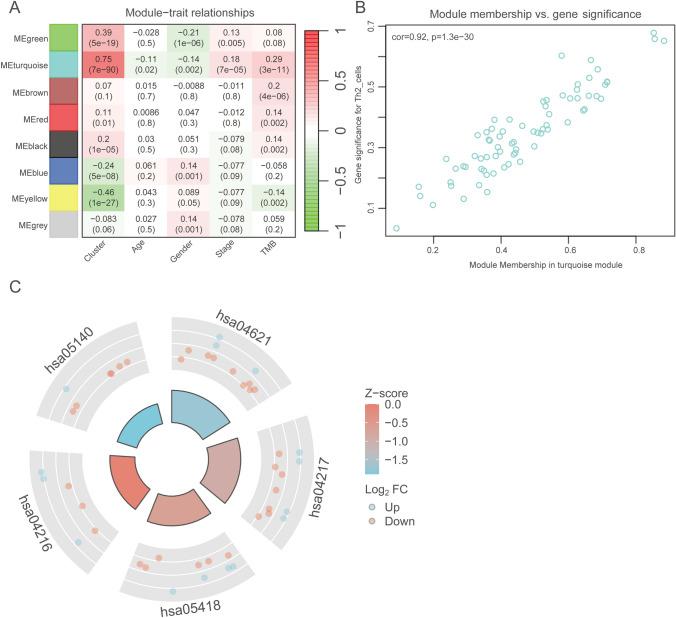
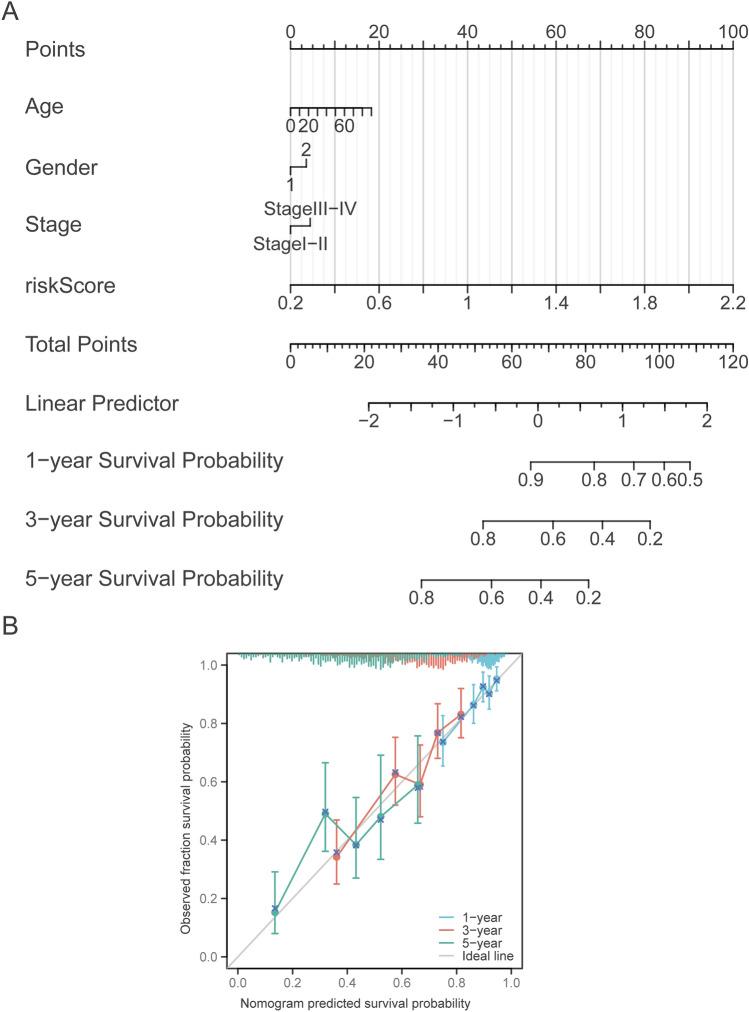
PCD-related genes (n = 46), significantly correlated with lung cancer prognosis, including ACSL3 and BID, were evaluated. A prognostic gene signature was constructed using 12 genes, which showed excellent overall survival prediction for 1, 3, and 5 years (AUC: 0.687, 0.699, and 0.627). The analysis focused on the nine ley mutant PCD risk model genes and their pan-cancer and elevated mutation frequencies were noted in ALK across several cancer types. The drug sensitivity and immune cell infiltration of the two risk groups were analyzed and revealed noteworthy differences. Patients classified as high-risk demonstrated increased susceptibility to drugs and elevated infiltration of Th2, Tcm, and T helper cells. A prognostic nomogram was developed to predict patient survival at 1, 3, and 5 years, and variables such as age, grading, stage, and the PCD risk score were incorporated. The relationship between PCD-associated genes, genes involved in cell proliferation, and immune cell phenotypes were evaluated. HSPA4 exhibited a significant positive correlation with T helper cells, Th2 cells, and Tcm cells and a negative association with pDCs, TFH, and B cells. In stage III tumors, compared to stage I/II tumors, HSPA4 expression was also significantly upregulated.
CONCLUSION
Prognostic PCD-related genes for lung cancer were identified and a prognostic signature was constructed. Our findings are invaluable for lung cancer prognostic prediction and personalized treatment.
背景
肺癌是一种极具侵袭性和致命性的癌症,需要预后和预测生物标志物来改善患者预后。在此,我们开发了一种肺癌预后特征,并鉴定了与预后程序性细胞死亡(PCD)相关的基因。
方法
在本研究中,我们对多个数据集进行了全面的生物信息学分析,如基因表达综合数据库(Gene Expression Omnibus)和癌症基因组图谱(The Cancer Genome Atlas)。应用共识聚类、加权基因共表达网络分析和基因集富集分析从数据中获取有价值的见解,并进行生存分析以确定与预后PCD相关的基因并构建预后特征。
结果
评估了与肺癌预后显著相关的46个PCD相关基因,包括ACSL3和BID。使用12个基因构建了一个预后基因特征,其对1年、3年和5年的总生存预测表现出色(AUC:0.687、0.699和0.627)。分析聚焦于9个关键的PCD风险模型突变基因,其在多种癌症类型中的泛癌和升高的突变频率在ALK中被发现。分析了两个风险组的药物敏感性和免疫细胞浸润情况,发现了显著差异。被归类为高风险的患者对药物的敏感性增加,Th2、Tcm和辅助性T细胞的浸润增加。开发了一个预后列线图来预测患者1年、3年和5年的生存情况,并纳入了年龄、分级、分期和PCD风险评分等变量。评估了PCD相关基因、细胞增殖相关基因和免疫细胞表型之间的关系。HSPA4与辅助性T细胞、Th2细胞和Tcm细胞呈显著正相关,与浆细胞样树突状细胞、滤泡辅助性T细胞和B细胞呈负相关。在III期肿瘤中,与I/II期肿瘤相比,HSPA4表达也显著上调。
结论
鉴定了肺癌预后相关的PCD基因并构建了预后特征。我们的发现对肺癌预后预测和个性化治疗具有重要价值。





 Zotero 插件