
用鼠李糖脂提高纳米氧化锌的分散稳定性并评估其对有害玉米真菌的抗菌活性。
Enhancing dispersion stability of nano zinc oxide with rhamnolipids and evaluating antibacterial activity against harmful corn fungi.
作者信息
Niu Ben, Qiao Shan, Sun Yiming, Niu Yongwu
机构信息
National Engineering Research Center For Wheat and Corn Further Processing, Zhengzhou, China.
College of Food Science and Technology, Henan University of Technology, Zhengzhou, China.
出版信息
Front Microbiol. 2025 Jun 25;16:1527473. doi: 10.3389/fmicb.2025.1527473. eCollection 2025.
OBJECTIVE
Zinc oxide nanoparticles (ZnONPs) have strong antifungal activity against major harmful fungi in corn kernels. However, due to the high surface energy prone to agglomeration, the residual synthetic surfactants from conventional chemical synthesis may trigger cytotoxicity, whereas rhamnolipids, as a green, safe, non-toxic, and easily degradable biosurfactant, can effectively regulate the size and morphology of zinc oxide nanoparticles, thereby enhancing their antifungal activity and dispersibility.
METHODS AND RESULTS
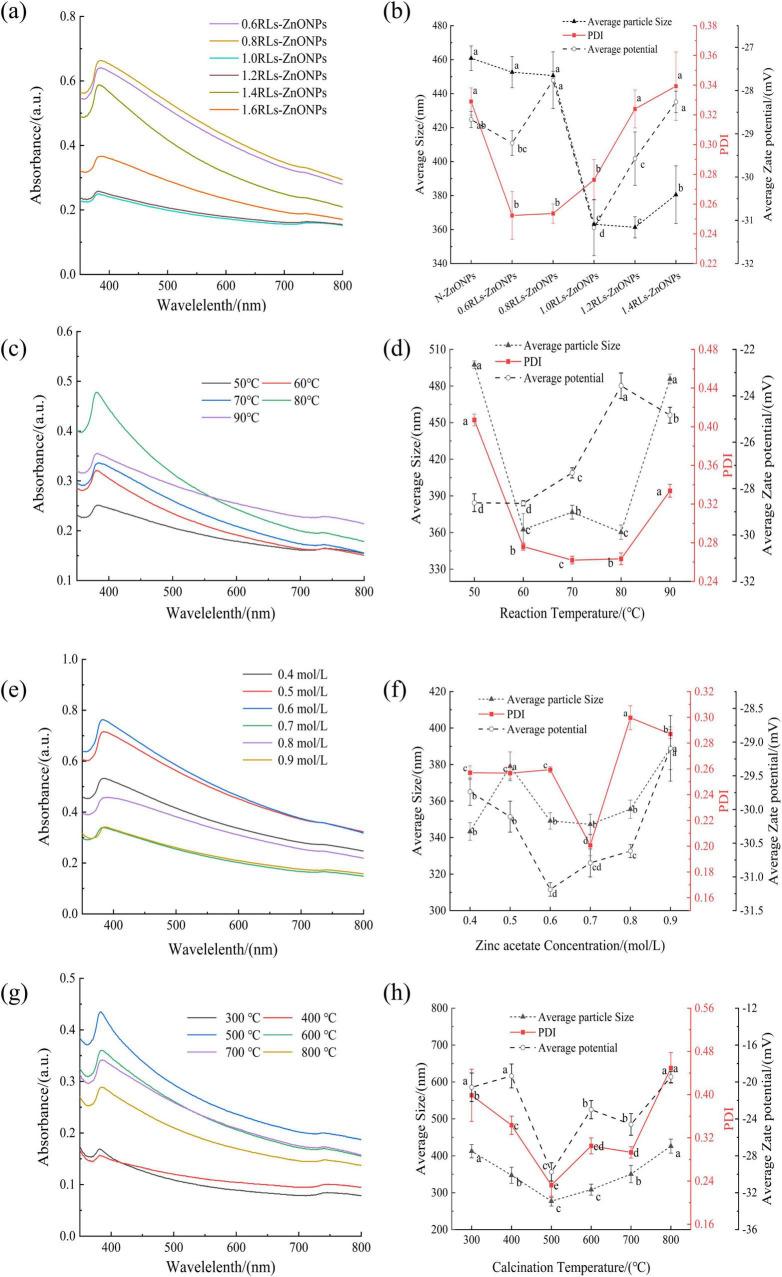
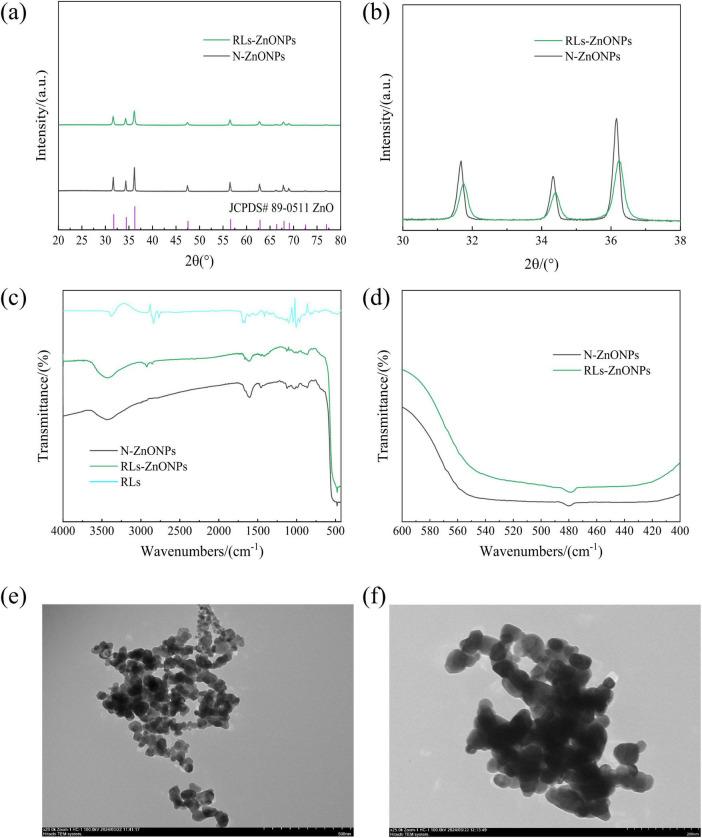
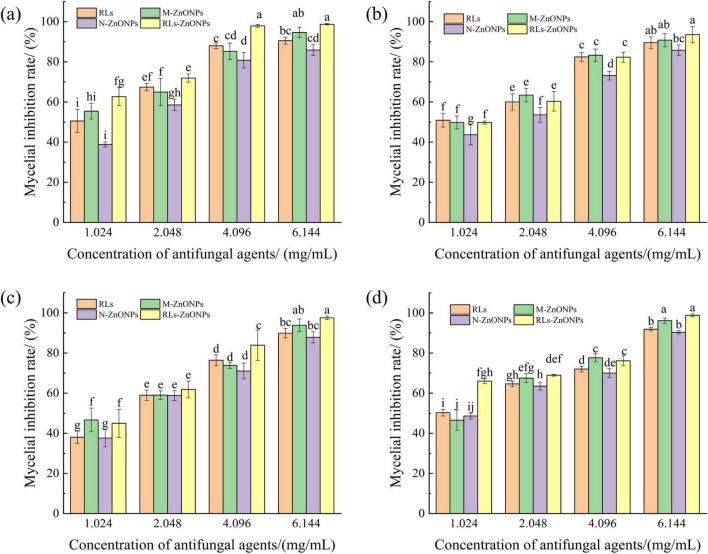
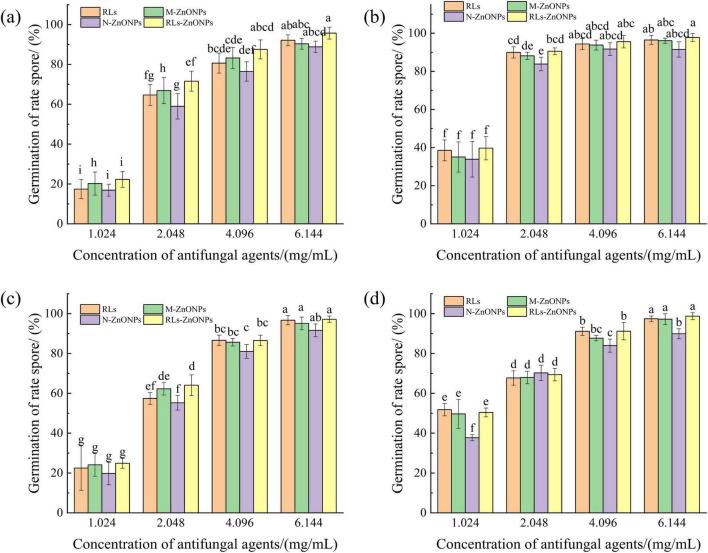
The products were characterized by one-way experiments with nanoparticle size, zeta potential, ultraviolet-visible spectrum, transmission electron microscopy, Fourier transform infrared spectroscopy and X-ray diffraction to determine the optimization conditions. The results showed that when the concentration of RLs was 1.0 mg/mL, the reaction temperature was 60°C, the concentration of zinc acetate was 0.7 mol/L, and the calcination temperature was 500 °C, the average particle size of RLs-ZnONPs was smaller about 45-50 nm compared with that of the unmodified N-ZnONPs, which had good dispersion and high stability. The antifungal performance of RLs-ZnONPs was evaluated using spore germination rate, mycelial biomass inhibition rate, ergosterol content, and leakage of intracellular contents. It was observed that at a concentration of 4.096 mg/mL, RLs-ZnONPs inhibited the mycelial biomass of four types of fungi by over 76.14%. At the same concentration, spore germination inhibition rates for the same fungi exceeded 86.56%, which interfered with the metabolic activities of the spores and inhibited the germination process. Additionally, RLs-ZnONPs disrupted the stability and integrity of fungal cell membranes, leading to leakage of intracellular electrolytes, nucleic acids, and proteins, thereby suppressing fungal growth.
CONCLUSION
These research findings indicate that rhamnolipids can significantly improve the dispersibility of nanoscale zinc oxide and effectively reduce its particle size, thereby substantially enhancing its antifungal activity.
目的
氧化锌纳米颗粒(ZnONPs)对玉米粒中的主要有害真菌具有很强的抗真菌活性。然而,由于高表面能易于团聚,传统化学合成中残留的合成表面活性剂可能引发细胞毒性,而鼠李糖脂作为一种绿色、安全、无毒且易于降解的生物表面活性剂,能够有效调节氧化锌纳米颗粒的尺寸和形态,从而增强其抗真菌活性和分散性。
方法与结果
通过纳米颗粒尺寸、zeta电位、紫外可见光谱、透射电子显微镜、傅里叶变换红外光谱和X射线衍射的单向实验对产物进行表征,以确定优化条件。结果表明,当鼠李糖脂浓度为1.0 mg/mL、反应温度为60°C、醋酸锌浓度为0.7 mol/L且煅烧温度为500°C时,与未改性的N-ZnONPs相比,RLs-ZnONPs的平均粒径更小,约为45 - 50 nm,具有良好的分散性和高稳定性。使用孢子萌发率、菌丝体生物量抑制率、麦角固醇含量和细胞内容物泄漏来评估RLs-ZnONPs的抗真菌性能。观察到在浓度为4.096 mg/mL时,RLs-ZnONPs对四种真菌的菌丝体生物量抑制率超过76.14%。在相同浓度下,对相同真菌的孢子萌发抑制率超过86.56%,这干扰了孢子的代谢活动并抑制了萌发过程。此外,RLs-ZnONPs破坏了真菌细胞膜的稳定性和完整性,导致细胞内电解质、核酸和蛋白质泄漏,从而抑制真菌生长。
结论
这些研究结果表明,鼠李糖脂可以显著提高纳米级氧化锌的分散性并有效减小其粒径,从而大幅增强其抗真菌活性。


 Zotero 插件