
南非血液系统恶性肿瘤患者的SARS-CoV-2病毒载量检测值与新冠肺炎症状
SARS-CoV-2 Ct values and COVID-19 symptoms in patients with haematological malignancies in South Africa.
作者信息
Sothoane Keitumetsi L, van Blydenstein Sarah A, Philip Vinitha, Wadula Jeannette
机构信息
Department of Internal Medicine, Faculty of Health Sciences, University of the Witwatersrand, Johannesburg, South Africa.
Division of Pulmonology, Department of Internal Medicine, Chris Hani Baragwanath Academic Hospital, Faculty of Health Sciences, University of the Witwatersrand, Johannesburg, South Africa.
出版信息
S Afr J Infect Dis. 2025 Jan 9;40(1):676. doi: 10.4102/sajid.40i1.676. eCollection 2025.
BACKGROUND
Severe acute respiratory syndrome coronavirus 2 (SARS-CoV-2) reverse transcriptase polymerase chain reaction (RT-PCR) cycle threshold (Ct) values serve as surrogate markers for estimating viral load. Their usefulness in patients with haematological malignancies and COVID-19 has not been studied in the South African context.
OBJECTIVES
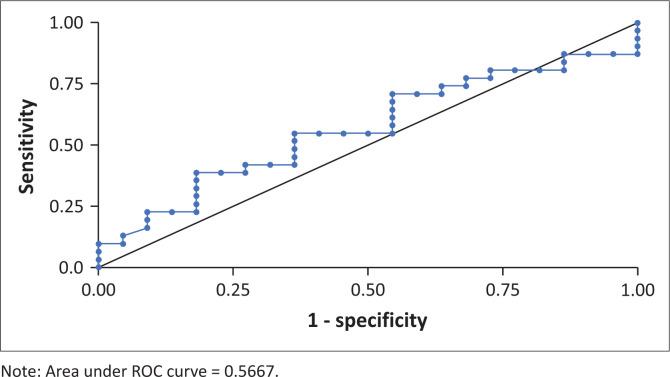
To evaluate if a Ct value < 30 can predict COVID-19 symptom development in adult patients with haematological malignancies.
METHOD
A retrospective cohort study on adult patients with haematological malignancies and COVID-19 was conducted at Chris Hani Baragwanath Academic Hospital from 01 July 2020 to 31 July 2021. The relationship between Ct values, symptoms and disease severity, along with changes over time were evaluated.
RESULTS
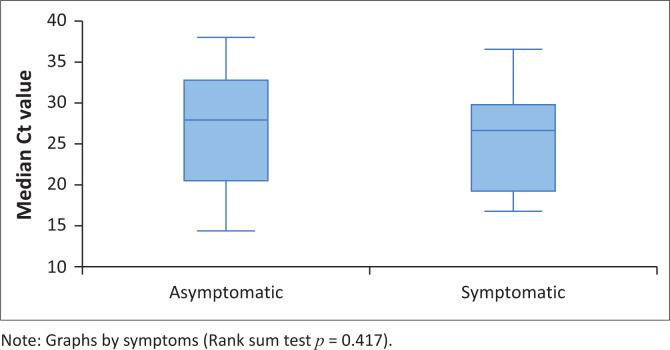
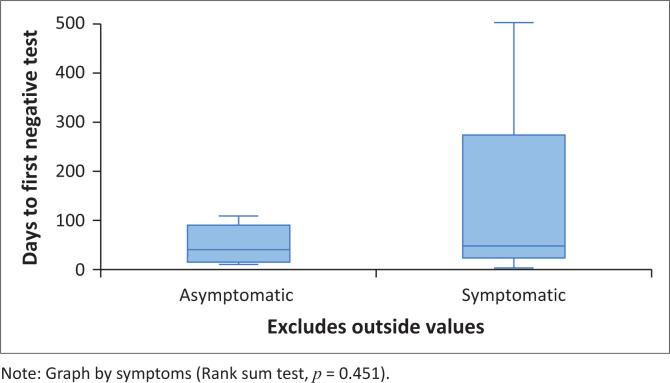
Among 53 patients (50.9% male, median age of 38 years), Ct values < 30 did not significantly predict COVID-19 symptom development ( = 0.417). However, severe disease correlated with lower Ct values ( = 0.002). No significant difference in the duration (days) from positive to negative tests was found between symptomatic and asymptomatic patients, and by severity of disease in the symptomatic patients. Lymphopenia was associated with severe disease, and those with lymphoid malignancies experienced longer viral shedding.
CONCLUSION
Patients with haematological malignancies can exhibit symptoms at any Ct value but lower Ct values indicate more severe disease. This information can be critical for chemotherapy timing to minimize adverse outcomes.
CONTRIBUTION
The findings suggest a potential benefit in delaying chemotherapy at any Ct value as patients could present with acute SARS-CoV-2 infection at higher Ct values, and therefore face increased risk of adverse outcomes with early chemotherapy initiation.
背景
严重急性呼吸综合征冠状病毒2(SARS-CoV-2)逆转录聚合酶链反应(RT-PCR)循环阈值(Ct)值可作为估计病毒载量的替代指标。在南非背景下,尚未对其在血液系统恶性肿瘤合并新型冠状病毒肺炎(COVID-19)患者中的作用进行研究。
目的
评估Ct值<30是否可预测成年血液系统恶性肿瘤合并COVID-19患者出现COVID-19症状。
方法
于2020年7月1日至2021年7月31日在克里斯·哈尼·巴拉干纳特学术医院对成年血液系统恶性肿瘤合并COVID-19患者进行了一项回顾性队列研究。评估了Ct值、症状与疾病严重程度之间的关系以及随时间的变化。
结果
在53例患者中(男性占50.9%,中位年龄38岁),Ct值<30并不能显著预测COVID-19症状的出现(P = 0.417)。然而,重症疾病与较低的Ct值相关(P = 0.002)。有症状和无症状患者之间,以及有症状患者中按疾病严重程度划分,从检测阳性到阴性的持续时间(天数)没有显著差异。淋巴细胞减少与重症疾病相关,淋巴系统恶性肿瘤患者的病毒脱落时间更长。
结论
血液系统恶性肿瘤患者在任何Ct值时都可能出现症状,但较低的Ct值表明疾病更严重。这些信息对于确定化疗时机以尽量减少不良后果可能至关重要。
贡献
研究结果表明,在任何Ct值时延迟化疗可能有潜在益处,因为患者可能在较高Ct值时出现急性SARS-CoV-2感染,因此早期开始化疗会面临更高的不良后果风险。



 Zotero 插件