
假激酶NRBP1和NRBP2在调节L1逆转座中的相反作用。
Opposing roles of pseudokinases NRBP1 and NRBP2 in regulating L1 retrotransposition.
作者信息
Yang Wei, Cong Shaobo, Li Ruoyao, Schwarz Jennifer, Schulze Thilo, Gevelhoff Raban A, Chen Xinyan, Ullrich Sara, Falkenstein Kristina, Ott Denis, Eixmann Pia, Trentino Angelica, Thien Antje, Heidmann Thierry, Schulze Ekkehard, Warscheid Bettina, Baumeister Ralf, Qi Wenjing
机构信息
Bioinformatics and Molecular Genetics, Institute of Biology III, Faculty of Biology, Albert-Ludwigs-University Freiburg, Freiburg, Germany.
College of Food Science and Engineering, Shandong Agricultural University, Shandong Engineering Research Center of Food Nutrition and Active Health, Taian, 271018, People's Republic of China.
出版信息
Nat Commun. 2025 Jul 11;16(1):6327. doi: 10.1038/s41467-025-61626-z.
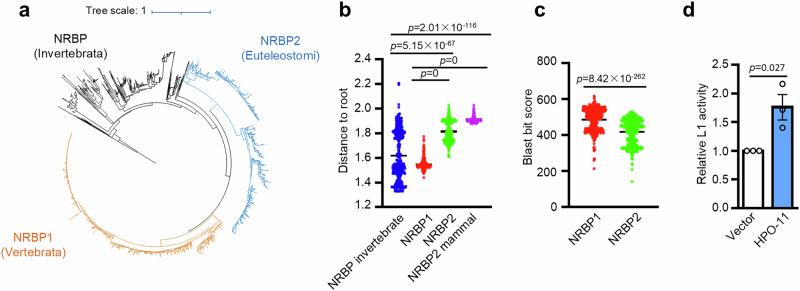
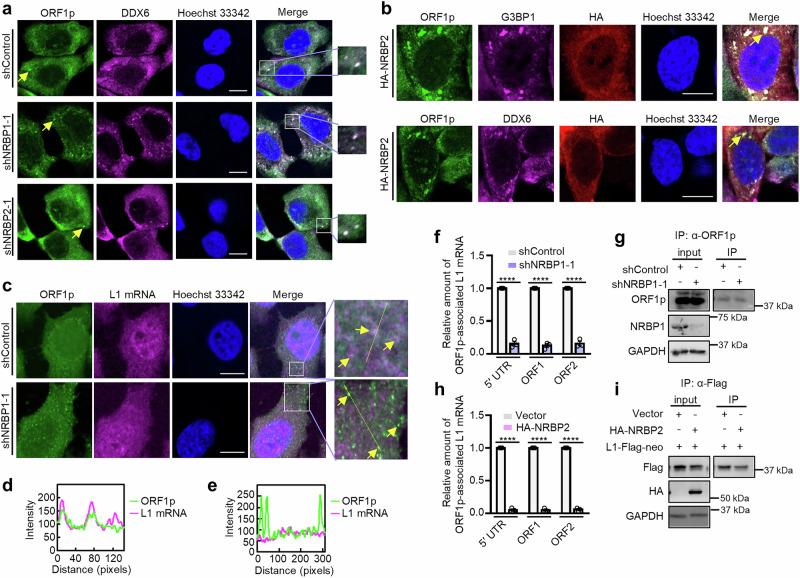
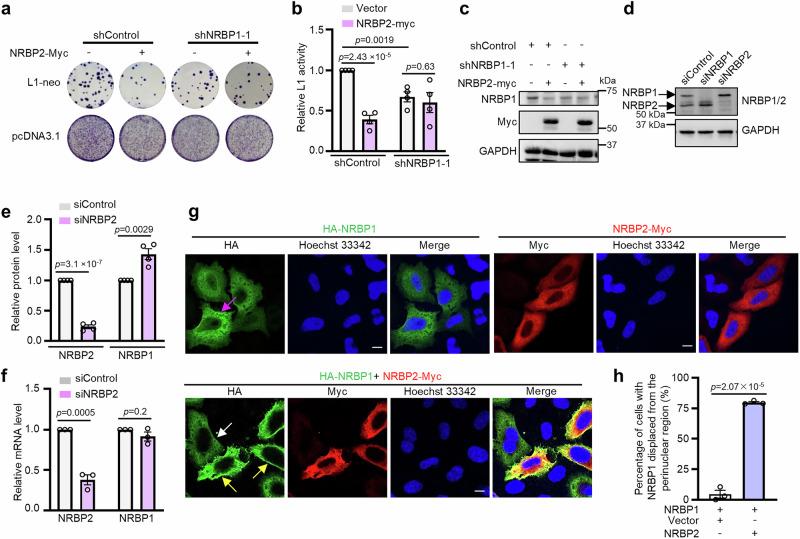
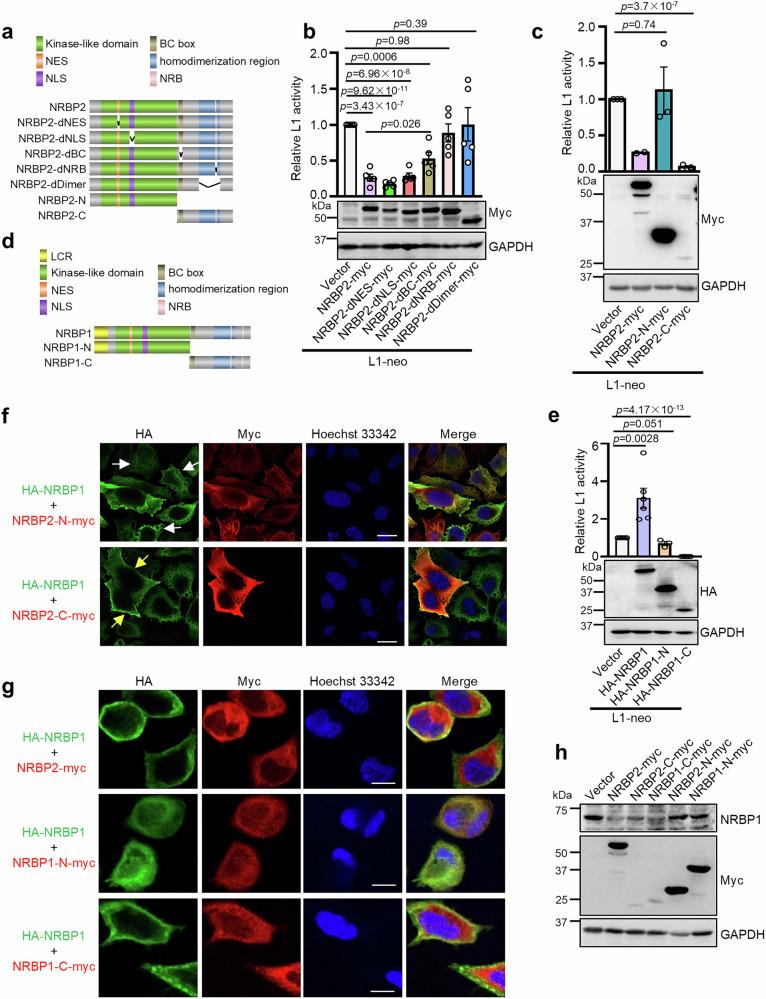
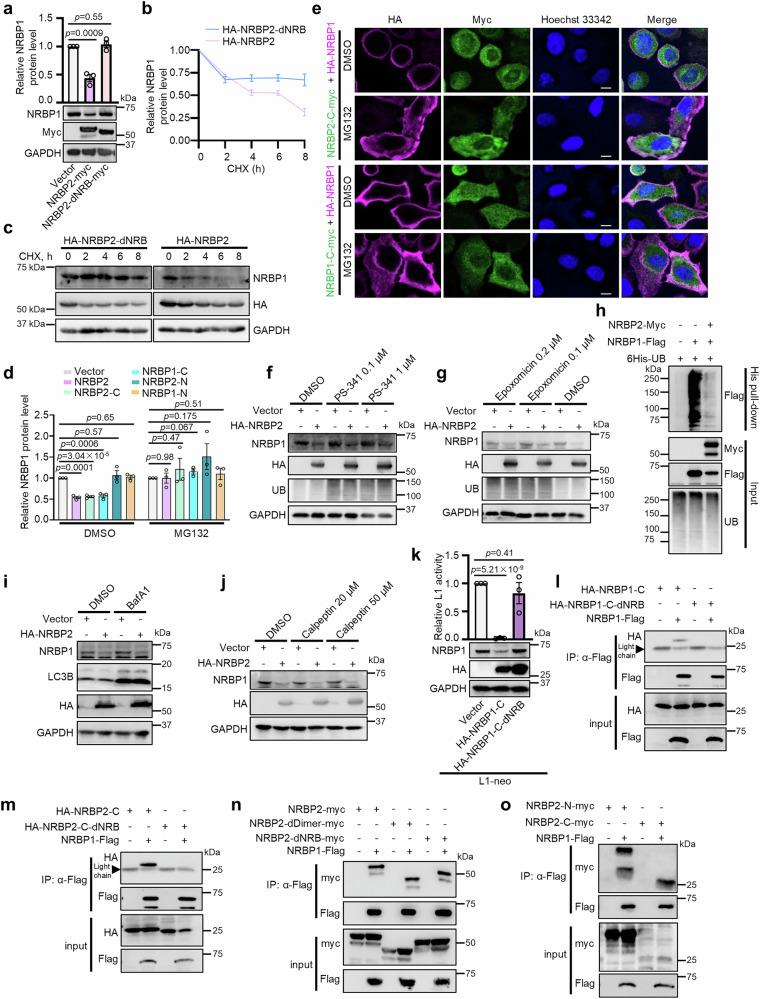
Gene duplication generates gene paralogs that may undergo diverse fates during evolution, and thus serves as a potent catalyst of biological complexity. Genetic paralogs frequently share redundant functions and may also exhibit antagonistic activities by competing for common interaction partners. Here we show that the gene paralogs NRBP1 and NRBP2 oppositely regulate long interspersed nuclear element-1 (L1) retrotransposition, via influencing integrity of the L1 ribonucleoprotein complex. We demonstrate that the opposing roles of NRBP1 and NRBP2 are not results of a competitive mechanism, but rather due to targeting NRBP1 for degradation by NRBP2, probably through heterodimer formation. Moreover, our phylogenetic analysis shows that the regulatory function of NRBP2 may be acquired later during evolution, suggesting that evolutionary pressure has favored this functional fine-tuning of NRBP1. In summary, our findings not only identify NRBP1/2 as L1 regulators and implicate their involvement in human pathogenesis, but also provide a mechanistic insight into the regulatory details arising from gene duplication.
基因复制产生基因旁系同源物,这些旁系同源物在进化过程中可能经历不同的命运,因此是生物复杂性的有力催化剂。基因旁系同源物常常具有冗余功能,也可能通过竞争共同的相互作用伙伴而表现出拮抗活性。在此,我们表明基因旁系同源物NRBP1和NRBP2通过影响长散在核元件1(L1)逆转录转座复合物的完整性,对L1逆转录转座发挥相反的调节作用。我们证明NRBP1和NRBP2的相反作用并非竞争机制的结果,而是由于NRBP2可能通过形成异源二聚体靶向NRBP1进行降解。此外,我们的系统发育分析表明,NRBP2的调节功能可能是在进化后期获得的,这表明进化压力有利于NRBP1的这种功能微调。总之,我们的发现不仅确定NRBP1/2为L1调节因子,并表明它们参与人类发病机制,还为基因复制产生的调节细节提供了机制性见解。


 Zotero 插件