
胶质母细胞瘤:蛋白质组学研究及生物样本库方法概述,用于构建多学科转化网络
Glioblastoma: Overview of Proteomic Investigations and Biobank Approaches for the Development of a Multidisciplinary Translational Network.
作者信息
Ciuffreda Giusy, Casati Sara, Brambilla Francesca, Campello Mauro, De Falco Valentina, Di Silvestre Dario, Frigeri Antonio, Locatelli Marco, Magrassi Lorenzo, Salmaggi Andrea, Salvetti Marco, Signorelli Francesco, Torrente Yvan, Umana Giuseppe Emanuele, Viganò Raffaello, Mauri Pietro Luigi
机构信息
Institute of Biomedical Technologies National Research Council (ITB-CNR), 20054 Segrate, Italy.
Institute of Endotypes in Oncology Metabolism and Immunology "G. Salvatore" (IEOMI-CNR), 80131 Naples, Italy.
出版信息
Cancers (Basel). 2025 Jun 26;17(13):2151. doi: 10.3390/cancers17132151.
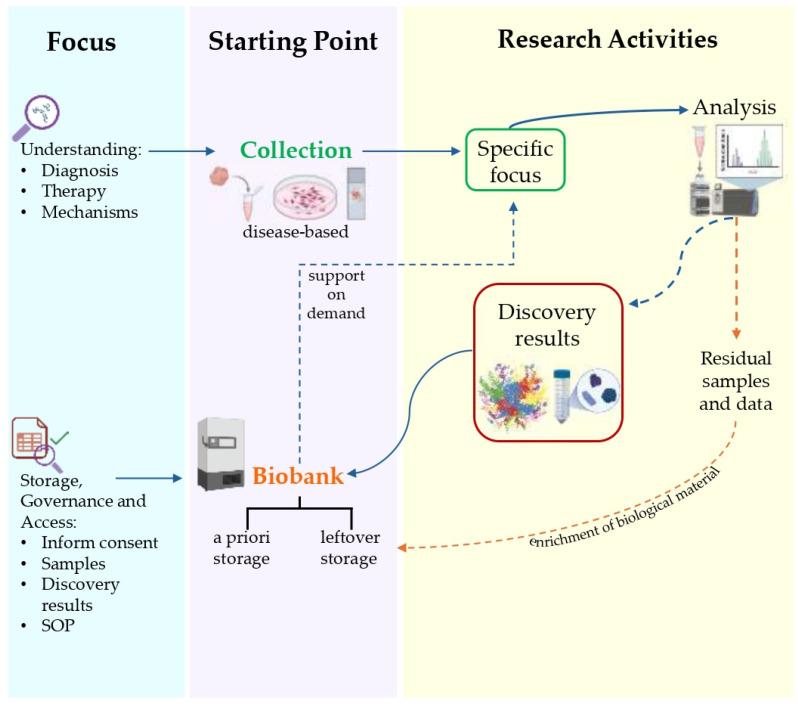
Glioblastoma is a highly aggressive, infiltrative brain tumor of the central nervous system (CNS). Its extensive molecular and biochemical heterogenicity hinders the identification of reliable biomarkers and therapeutic targets, thereby making prognosis and existing therapy ineffective. In recent years, breakthroughs in the use of proteomics on a range of biological samples, such as plasma, cerebrospinal fluid (CSF), tissues, brain cells, and exosomes, represent a potential improvement to GBM investigations. Mass spectrometry-based approaches represent an important technique in the characterization of the tumoral proteome, for the identification of differentially expressed proteins, and for studying altered molecular pathways involved in tumor stages. Proteomics studies advance our knowledge about GBM pathogenesis, the discovery of reliable diagnostic and prognostic markers, and therapeutic approaches, also. In this context, for the effective application of proteomics on GBM, it is mandatory to develop a translational network by integrating hospitals, biobanks, and research institutions into a single network, to enable a collaborative approach across disciplines, thereby enabling rapid translation to clinical application of new proteomic insights. Today, high-quality biobanks play a key role in enabling collaborative, ethically compliant research, supporting the effective application of proteomics in glioblastoma studies and the translation of discoveries into clinical practice. This review explores current trends in proteomics and GBM research, highlighting how leveraging biobank infrastructure and fostering institutional cooperation can drive the development of targeted pilot projects to enhance the impact and effectiveness of glioblastoma research.
胶质母细胞瘤是一种侵袭性很强的中枢神经系统(CNS)浸润性脑肿瘤。其广泛的分子和生化异质性阻碍了可靠生物标志物和治疗靶点的识别,从而使预后评估和现有治疗方法效果不佳。近年来,蛋白质组学在一系列生物样本(如血浆、脑脊液(CSF)、组织、脑细胞和外泌体)中的应用取得了突破,为胶质母细胞瘤的研究带来了潜在的进展。基于质谱的方法是表征肿瘤蛋白质组、识别差异表达蛋白质以及研究肿瘤阶段相关分子通路改变的重要技术。蛋白质组学研究也增进了我们对胶质母细胞瘤发病机制的了解,有助于发现可靠的诊断和预后标志物以及治疗方法。在这种背景下,为了使蛋白质组学在胶质母细胞瘤研究中得到有效应用,必须建立一个转化网络,将医院、生物样本库和研究机构整合到一个单一网络中,以实现跨学科的协作方法,从而使新的蛋白质组学见解能够迅速转化为临床应用。如今,高质量的生物样本库在推动合规伦理的协作研究、支持蛋白质组学在胶质母细胞瘤研究中的有效应用以及将研究发现转化为临床实践方面发挥着关键作用。本综述探讨了蛋白质组学和胶质母细胞瘤研究的当前趋势,强调了利用生物样本库基础设施和促进机构合作如何能够推动有针对性的试点项目的开展,以增强胶质母细胞瘤研究的影响力和有效性。

 Zotero 插件