
喹唑啉二酮衍生物作为通过诱导MCF-7细胞凋亡的潜在抗癌剂
Quinazolinedione Derivatives as Potential Anticancer Agents Through Apoptosis Induction in MCF-7.
作者信息
Limboonreung Tanapol, Suansilpong Teetat, Jumjitvi Panitan, Lohawittayanan Duangporn, Krobthong Sucheewin, Charoensutthivarakul Sitthivut
机构信息
School of Dentistry, King Mongkut's Institute of Technology Ladkrabang, Chalongkrung Road, Ladkrabang, Bangkok 10520, Thailand.
Innovative Molecular Discovery Laboratory (iMoD), School of Bioinnovation and Bio-Based Product Intelligence, Faculty of Science, Mahidol University, Bangkok 10400, Thailand.
出版信息
Int J Mol Sci. 2025 Jun 24;26(13):6038. doi: 10.3390/ijms26136038.
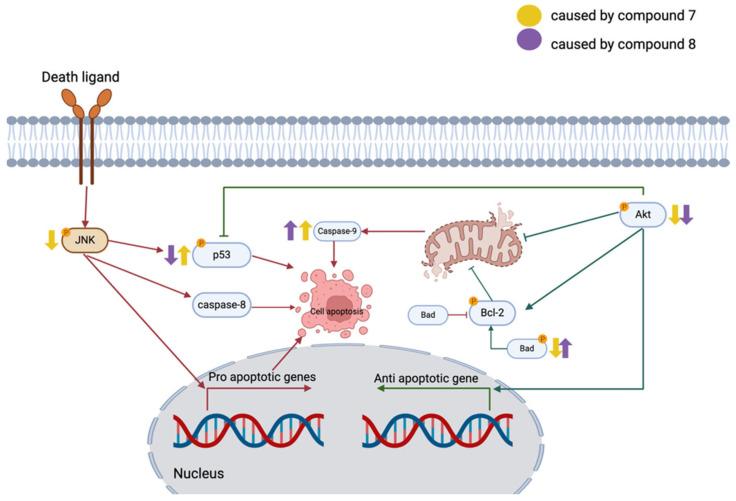
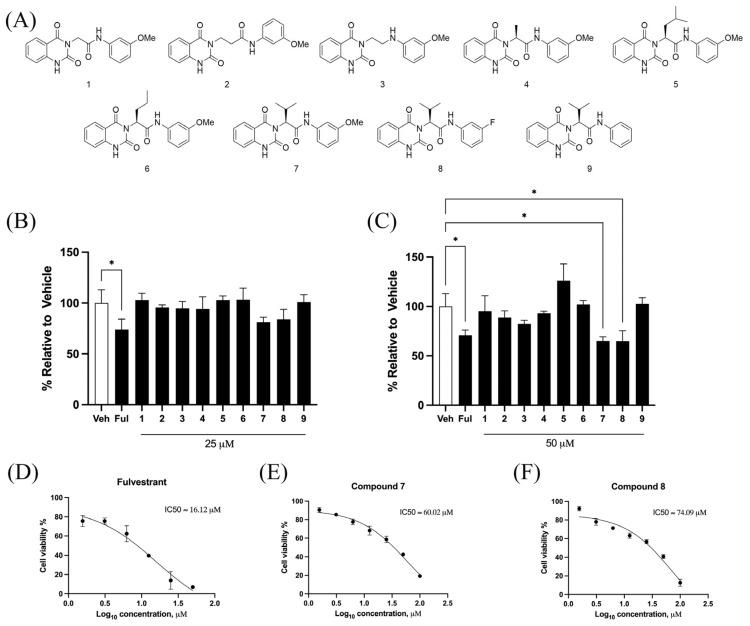
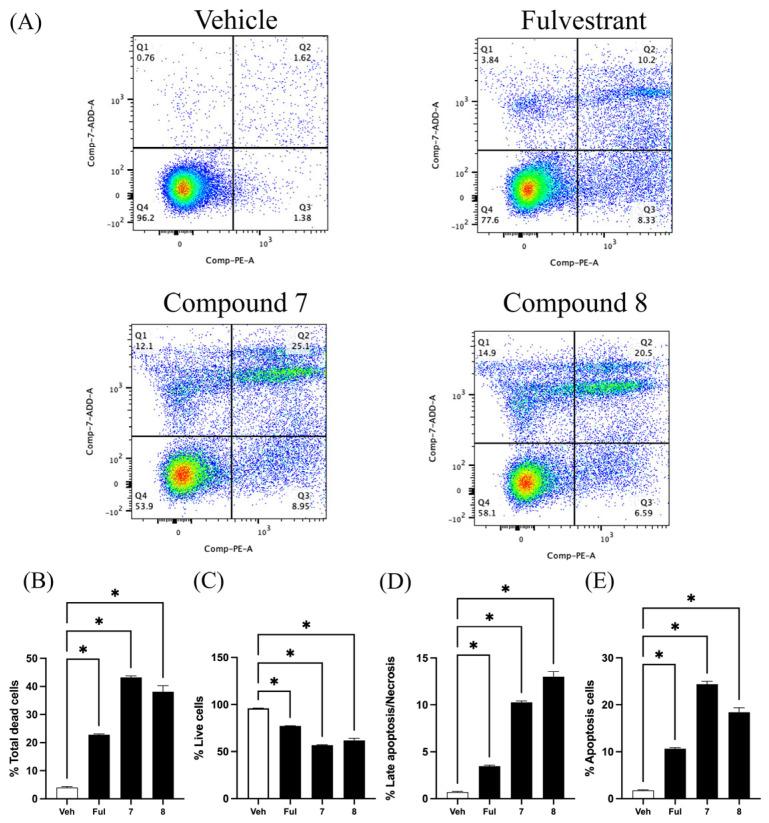
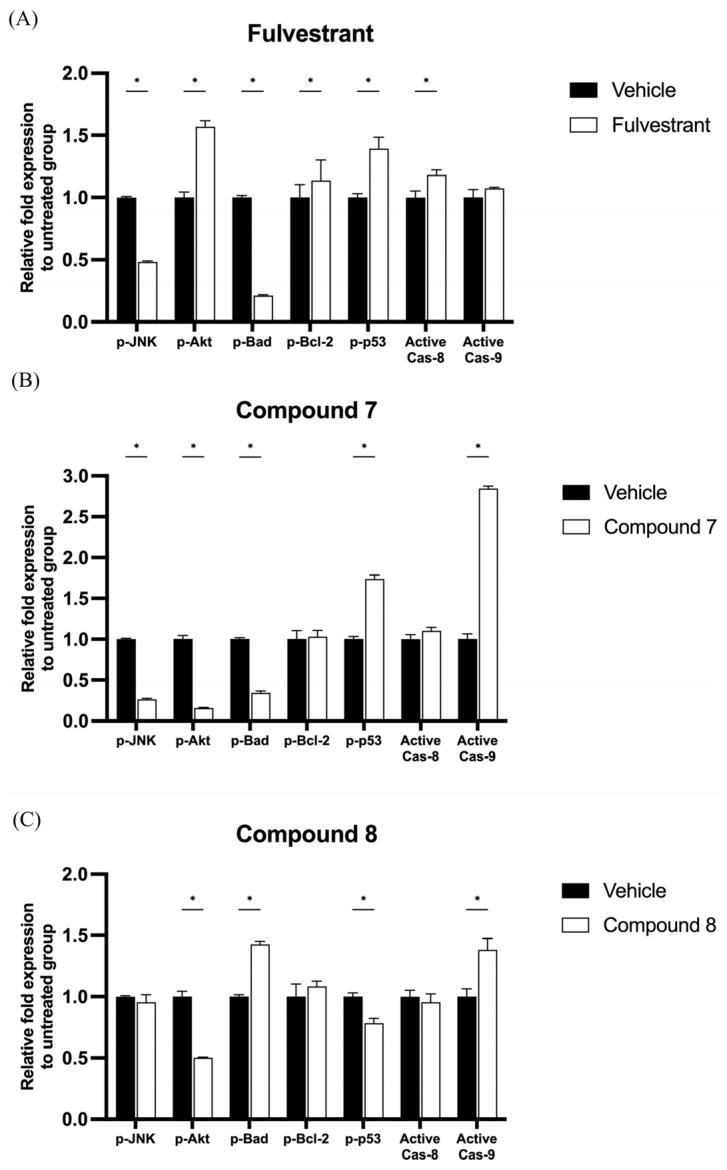
Breast cancer remains a leading cause of mortality among women worldwide. Surgery, radiation therapy, chemotherapy, and hormone-based treatments are standard therapeutic approaches, but drug resistance and adverse effects necessitate the search for novel anticancer agents. Quinazolinedione derivatives have emerged as potential anticancer compounds due to their cytotoxic and apoptosis-inducing properties. This study aimed to evaluate the apoptotic induction of previously reported quinazolinedione derivatives on MCF-7 breast cancer cells. The cytotoxic effect was assessed using the MTT assay, apoptosis was quantified by Annexin V-PE/7AAD staining and flow cytometry, and apoptosis-related protein expression was analyzed via multiplexed bead-based immunoassays. These findings indicate that two derivatives in the series significantly reduced the cell viability in a dose-dependent manner. Apoptosis was induced primarily through the intrinsic apoptotic pathway as evidenced by the upregulation of caspase-9 and p53 and the downregulation of Bcl-2 and p-Akt. These results highlight quinazolinedione derivatives as promising candidates for breast cancer therapy prompting further investigation into their molecular mechanisms and potential clinical applications.
乳腺癌仍然是全球女性死亡的主要原因。手术、放射治疗、化疗和基于激素的治疗是标准的治疗方法,但耐药性和副作用促使人们寻找新型抗癌药物。喹唑啉二酮衍生物因其细胞毒性和诱导凋亡的特性而成为潜在的抗癌化合物。本研究旨在评估先前报道的喹唑啉二酮衍生物对MCF-7乳腺癌细胞的凋亡诱导作用。使用MTT法评估细胞毒性,通过膜联蛋白V-PE/7AAD染色和流式细胞术对凋亡进行定量,并通过基于微珠的多重免疫测定分析凋亡相关蛋白表达。这些发现表明,该系列中的两种衍生物以剂量依赖性方式显著降低了细胞活力。凋亡主要通过内源性凋亡途径诱导,这表现为半胱天冬酶-9和p53上调以及Bcl-2和p-Akt下调。这些结果突出了喹唑啉二酮衍生物作为乳腺癌治疗的有前景的候选药物,促使对其分子机制和潜在临床应用进行进一步研究。
 Zotero 插件