
在一项多组学研究中,CXCL14通过激活NF-κB信号通路驱动与年龄相关的椎间盘退变。
CXCL14 drives age-related intervertebral disc degeneration via NF-κB pathway activation in a multiomic study.
作者信息
Zhou Tianle, Zhang Tonghui, He Qiwang, Zhang Zhiwen, Huang Yong, Chen Zijun, Wang Wei
机构信息
College of Acupuncture and Orthopedics, Hubei University of Chinese Medicine, Wuhan, 430061, China.
Department of Orthopedic Surgery, Hubei Provincial Hospital of Traditional Chinese Medicine, Hubei Shizhen Laboratory, Affiliated Hospital of Hubei University of Chinese Medicine, Wuhan, 430061, China.
出版信息
Sci Rep. 2025 Jul 13;15(1):25307. doi: 10.1038/s41598-025-10998-9.
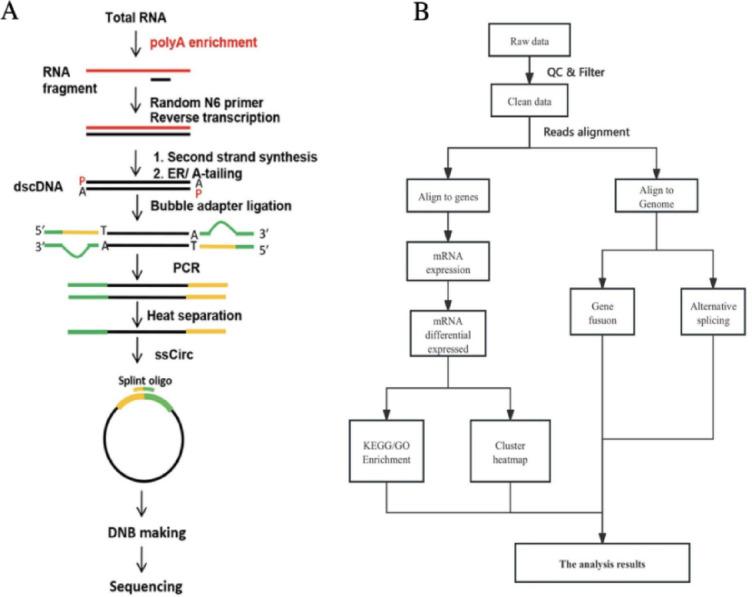
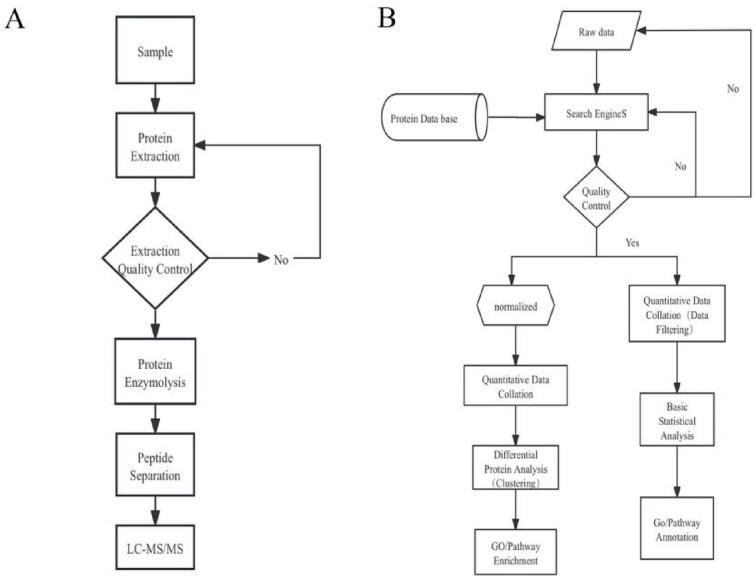
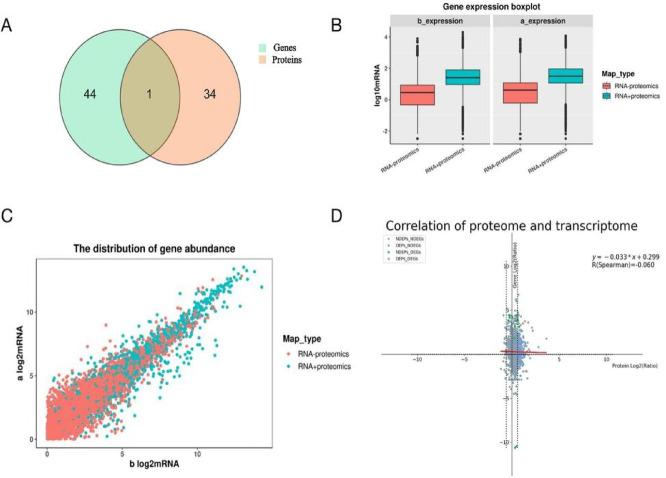
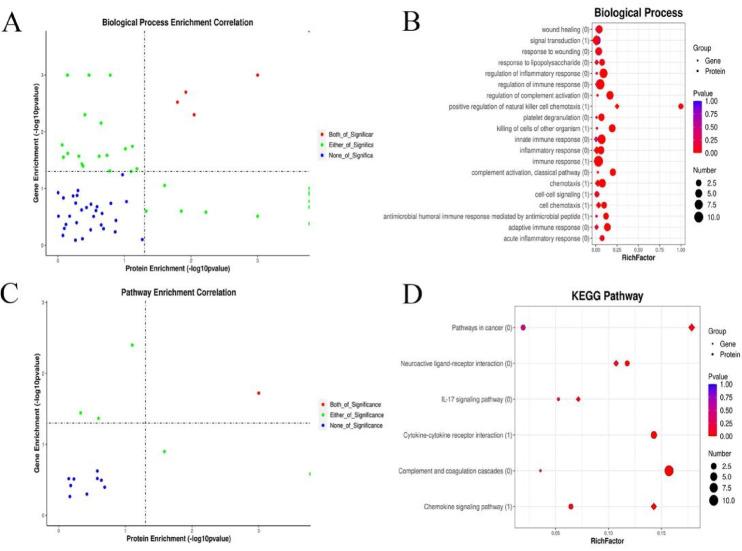
Intervertebral disc degeneration (IDD), a common cause of chronic low back pain, strongly impacts daily life. Although previous studies have identified certain biomarkers indicating IDD, comprehensive analyses that integrate transcriptomic and proteomic data to elucidate age-related changes in IDD are lacking. We addressed this issue by integrating transcriptomic and proteomic analyses to identify key molecular signatures that may be potential therapeutic targets for improving the treatment of age-related IDD. We used transcriptomic and proteomic analyses to identify key regulatory genes associated with IDD. We performed RNA sequencing and mass spectrometry of 3 elderly patients with IDD and 3 younger patients with intervertebral disc lesions. Statistical analysis and GO and KEGG enrichment analyses were employed to interpret the transcriptomic and proteomic data. Validation was performed with external datasets and RT‒qPCR. Gene regulatory network and ceRNA network analyses revealed the factors associated with characteristic genes. Transcriptomic and proteomic analyses revealed 45 differentially expressed genes (DEGs) and 34 differentially expressed proteins (DEPs) associated with IDD. We identified CXCL14 as the sole molecule significantly upregulated in IDD at both the transcriptome (4.2-fold, p < 0.001) and proteome levels (3.8-fold, p = 0.003). RT‒qPCR confirmed CXCL14 overexpression in elderly IDD patients (|log2-fold change| =4.1, p < 0.001), consistent with external dataset analysis (GSE147383: |log2-fold change| =1.3, p = 0.008). Gene regulatory networks revealed that CXCL14 interacts with inflammatory mediators (IL-1β and TNF-α) and activates the NF-κB pathway, a key driver of extracellular matrix degradation and inflammation. ceRNA network analysis further identified hsa-miR-582-3p and hsa-miR-150-5p as potential upstream regulators of CXCL14. We analysed the expression profiles of elderly IDD patients and younger patients through transcriptomic and proteomic analyses, identifying unique molecular features associated with IDD. These findings lay a foundation for developing targeted treatments for elderly IDD patients and provide broader insights into potential therapeutic strategies for managing ageing-related IDD across different patient populations. CXCL14 is a potential therapeutic target for pain associated with age-related IDD and could inform the development of novel drug therapies and diagnostic tools, potentially improving clinical outcomes and providing a basis for personalized treatment approaches in managing chronic low back pain and IDD.
椎间盘退变(IDD)是慢性下腰痛的常见原因,对日常生活有严重影响。尽管先前的研究已经确定了某些指示IDD的生物标志物,但缺乏整合转录组学和蛋白质组学数据以阐明IDD中与年龄相关变化的综合分析。我们通过整合转录组学和蛋白质组学分析来解决这个问题,以识别可能是改善与年龄相关的IDD治疗的潜在治疗靶点的关键分子特征。我们使用转录组学和蛋白质组学分析来识别与IDD相关的关键调控基因。我们对3例老年IDD患者和3例年轻椎间盘病变患者进行了RNA测序和质谱分析。采用统计分析以及GO和KEGG富集分析来解释转录组学和蛋白质组学数据。使用外部数据集和RT-qPCR进行验证。基因调控网络和ceRNA网络分析揭示了与特征基因相关的因素。转录组学和蛋白质组学分析揭示了45个与IDD相关的差异表达基因(DEG)和34个差异表达蛋白(DEP)。我们确定CXCL14是在转录组水平(4.2倍,p<0.001)和蛋白质组水平(3.8倍,p = 0.003)上在IDD中均显著上调的唯一分子。RT-qPCR证实老年IDD患者中CXCL14过表达(|log2倍变化| = 4.1,p<0.001),与外部数据集分析一致(GSE147383:|log2倍变化| = 1.3,p = 0.008)。基因调控网络显示CXCL14与炎症介质(IL-1β和TNF-α)相互作用并激活NF-κB通路,这是细胞外基质降解和炎症的关键驱动因素。ceRNA网络分析进一步确定hsa-miR-582-3p和hsa-miR-150-5p为CXCL14的潜在上游调节因子。我们通过转录组学和蛋白质组学分析分析了老年IDD患者和年轻患者的表达谱,识别出与IDD相关的独特分子特征。这些发现为开发针对老年IDD患者的靶向治疗奠定了基础,并为管理不同患者群体中与衰老相关的IDD的潜在治疗策略提供了更广泛的见解。CXCL14是与年龄相关的IDD相关疼痛的潜在治疗靶点,可为新型药物疗法和诊断工具的开发提供依据,有可能改善临床结果,并为管理慢性下腰痛和IDD的个性化治疗方法提供基础。



 Zotero 插件