
快速间断性病原体进化的多尺度系统发育动力学建模
Multi-scale phylodynamic modelling of rapid punctuated pathogen evolution.
作者信息
Nguyen Quang Dang, Chang Sheryl L, Suster Carl J E, Rockett Rebecca J, Sintchenko Vitali, Sorrell Tania C, Prokopenko Mikhail
机构信息
Centre for Complex Systems, The University of Sydney, Sydney, New South Wales, Australia.
Sydney Infectious Diseases Institute, The University of Sydney, Sydney, New South Wales, Australia.
出版信息
PLoS Comput Biol. 2025 Jul 14;21(7):e1013295. doi: 10.1371/journal.pcbi.1013295. eCollection 2025 Jul.
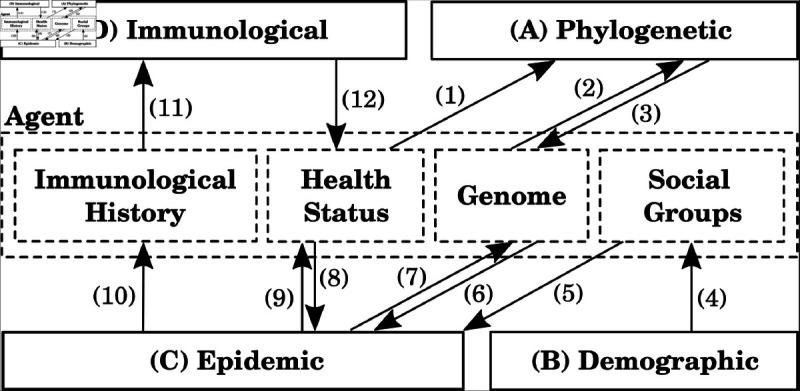
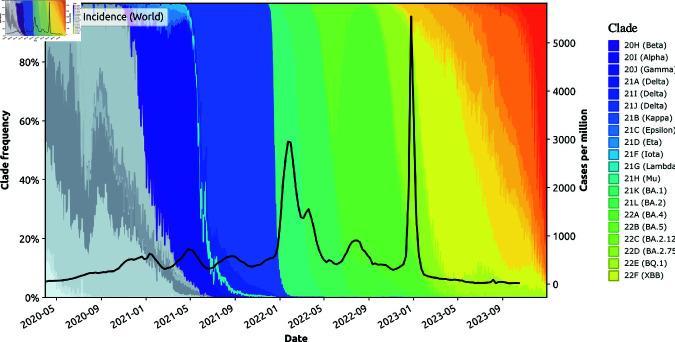
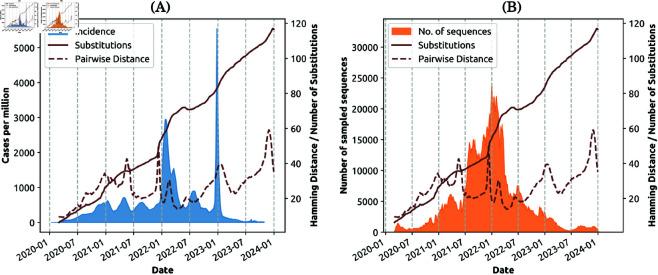
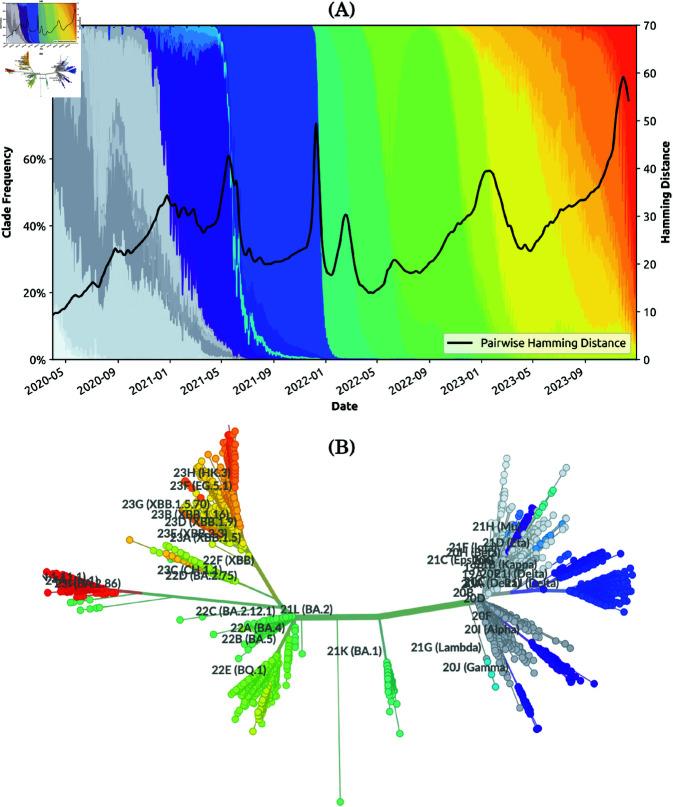
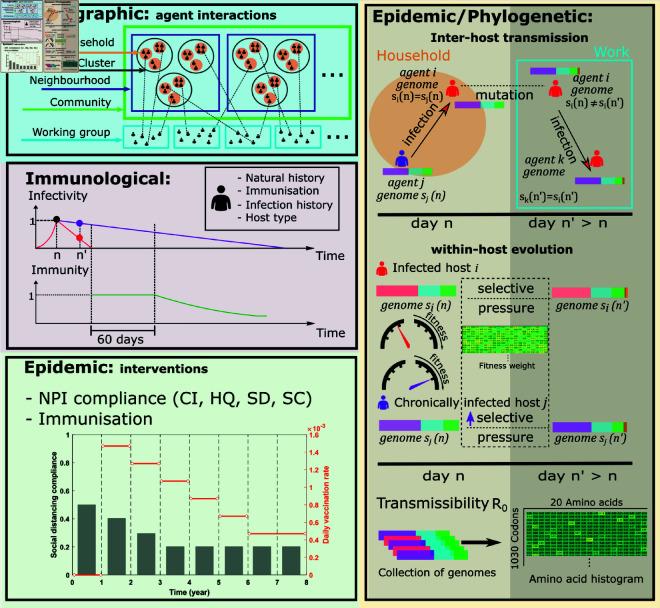
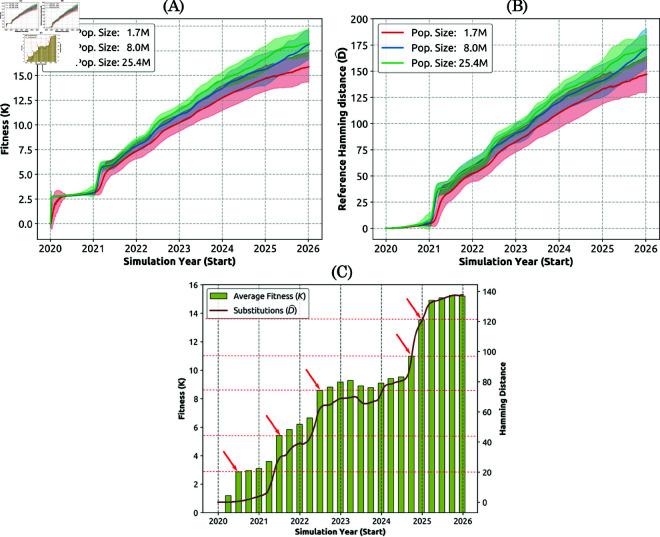
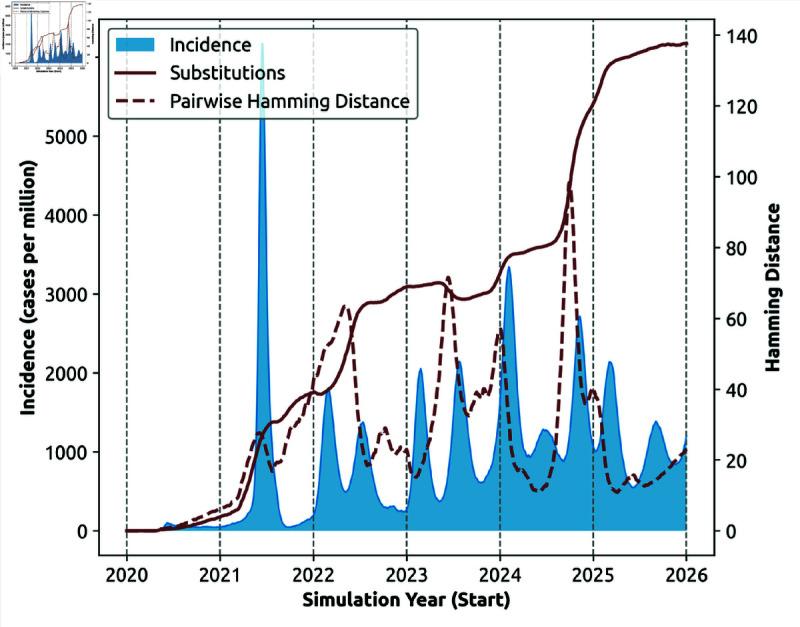
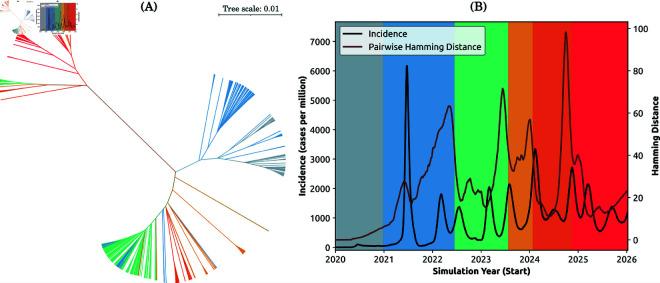
Computational multi-scale pandemic modelling remains a major and timely challenge. Here we identify specific requirements for a new class of models simulating pandemics across three scales: (1) pathogen evolution, often punctuated by the rapid emergence of new variants, (2) human interactions within a heterogeneous population, and (3) public health responses which constrain individual actions to control the disease transmission. We then present a pandemic modelling framework satisfying these requirements and capable of simulating feedback loops between dynamics unfolding at these different scales. The developed framework comprises a stochastic agent-based model of pandemic spread, coupled with a phylodynamic model that incorporates within-host pathogen evolution. It is validated with a case study, modelling the punctuated evolution of SARS-CoV-2, based on global and contemporary genomic surveillance data, which captures a large heterogeneous population. We demonstrate that the model replicates the essential features of the COVID-19 pandemic and virus evolution, while retaining computational tractability and scalability.
计算多尺度大流行建模仍然是一项重大且紧迫的挑战。在此,我们确定了一类新型模型的特定要求,这类模型可跨三个尺度模拟大流行:(1)病原体进化,通常以新变种的快速出现为特征;(2)异质人群中的人际互动;(3)公共卫生应对措施,这些措施限制个体行为以控制疾病传播。然后,我们提出了一个满足这些要求且能够模拟在这些不同尺度上展开的动态之间反馈回路的大流行建模框架。所开发的框架包括一个基于随机代理的大流行传播模型,以及一个纳入宿主内病原体进化的系统发育动力学模型。通过一个案例研究对其进行了验证,该案例研究基于全球和当代基因组监测数据对SARS-CoV-2的间断进化进行建模,该数据涵盖了大量异质人群。我们证明,该模型复制了COVID-19大流行和病毒进化的基本特征,同时保持了计算的可处理性和可扩展性。




 Zotero 插件