
基于增强型MSCPO-XGBoost混合模型的交通事故严重程度预测
Traffic accident severity prediction based on an enhanced MSCPO-XGBoost hybrid model.
作者信息
Chen Fei, Liu Xiang Qun, Yang Jian Jun, Liu Xu Kang, Ma Jing Hui, Chen Jia, Xiao Hua Yu
机构信息
School of Automobile and Transportation, Xihua University, Chengdu, 610039, China.
Xihua Jiaotong Forensics Center, Chengdu, 610039, China.
出版信息
Sci Rep. 2025 Jul 16;15(1):25729. doi: 10.1038/s41598-025-00797-7.
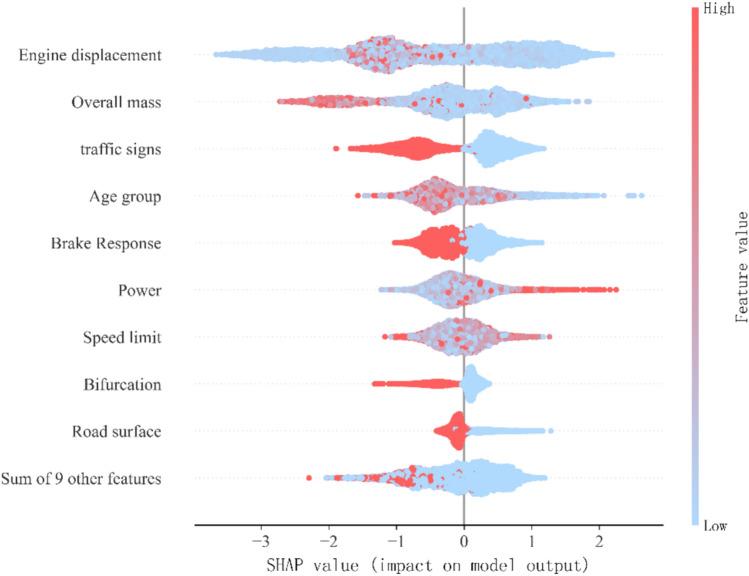
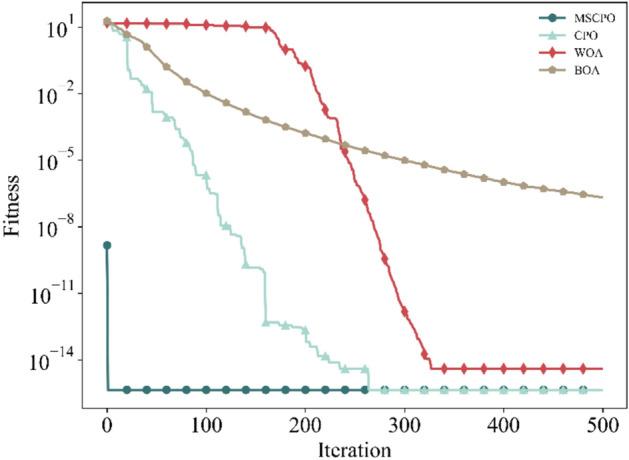
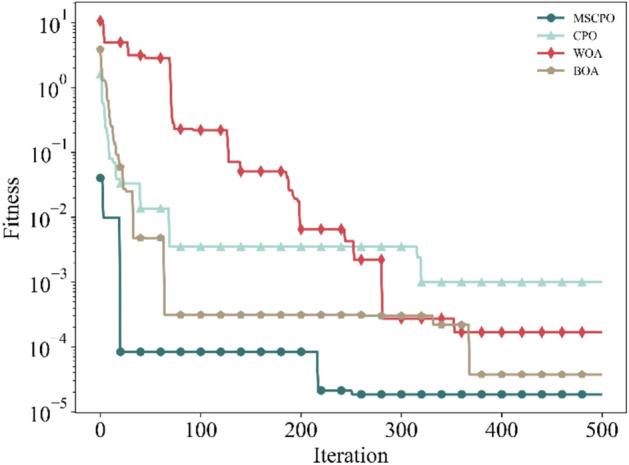
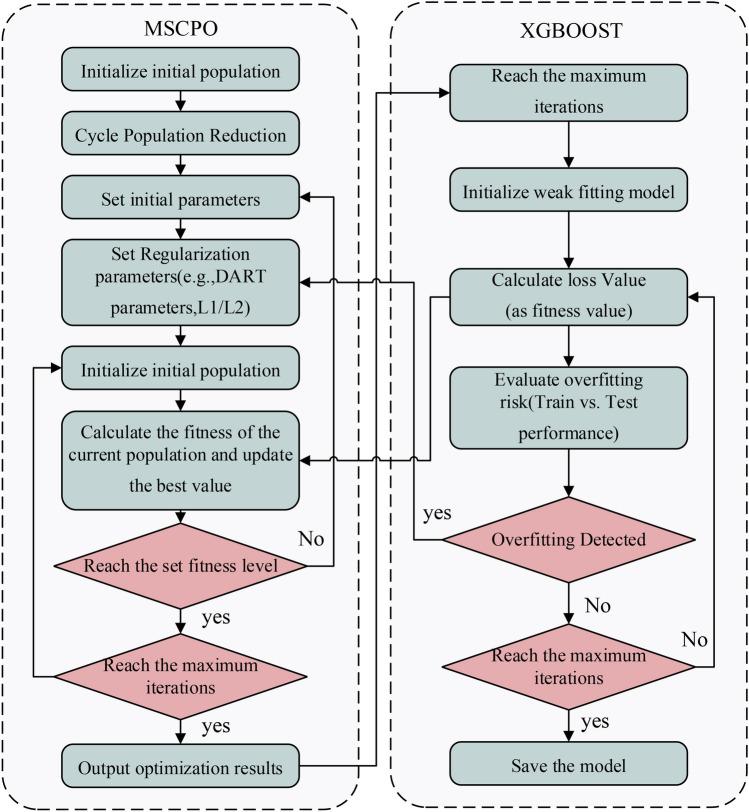
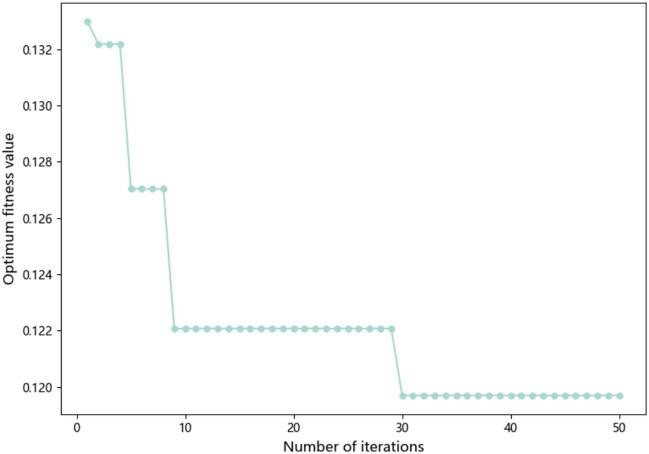
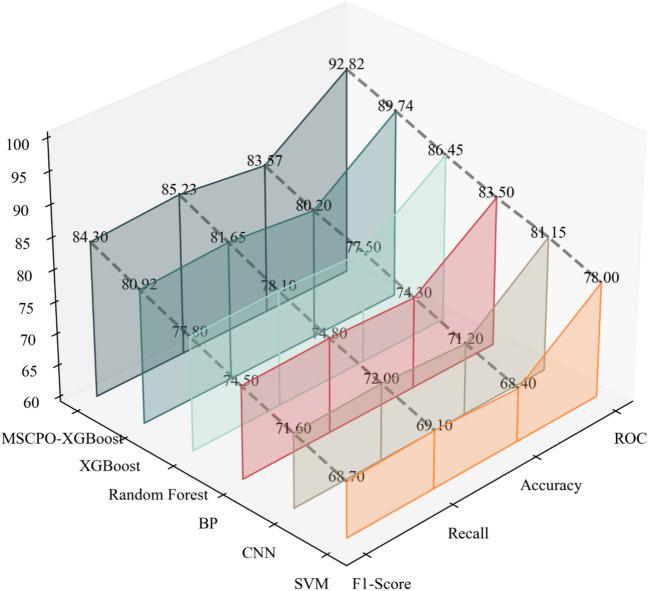
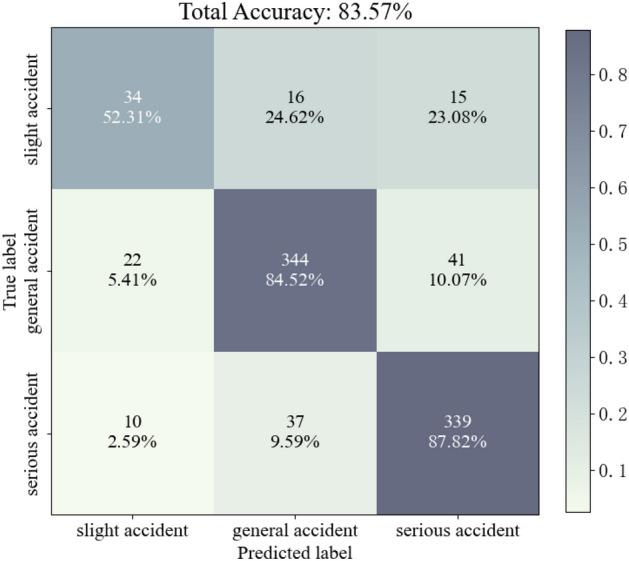
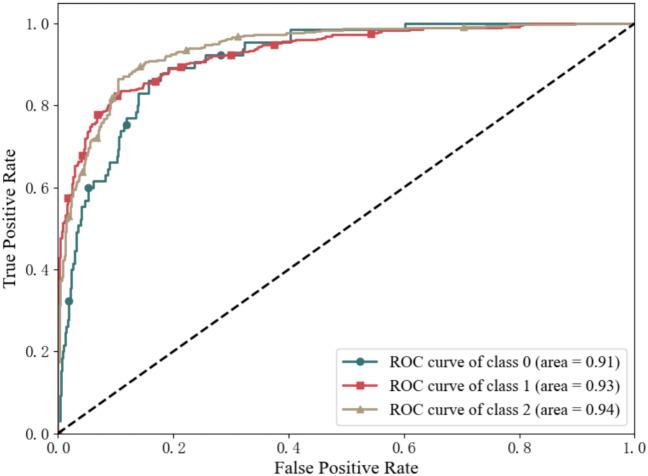
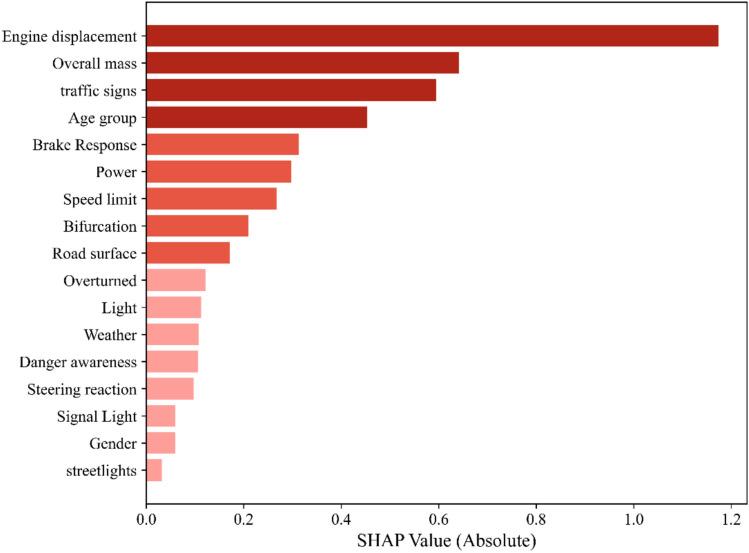
Road traffic accidents pose a significant threat to public safety in China. This study proposes a novel severity prediction framework based on a Modified Stochastic Crested Porcupine Optimizer (MSCPO) combined with the XGBoost algorithm. The model was trained on 4287 accident cases from China's National Automobile Accident In-depth Investigation System (NAIS), collected between 2018 and 2023. The dataset was first divided into training and testing sets, and the Synthetic Minority Oversampling Technique (SMOTE) was applied only to the training set to address class imbalance. The MSCPO algorithm was then employed to optimize XGBoost hyperparameters. Comparative experiments demonstrate that the MSCPO-XGBoost model outperforms baseline algorithms including SVM, Random Forest, BP Neural Network, and CNN, achieving an accuracy of 83.57%, a recall of 85.23%, an F1-score of 84.30%, and an AUC of 92.82%. To enhance interpretability, SHAP analysis was used to identify key predictors such as engine displacement, vehicle mass, traffic signals, and driver age. The findings offer valuable guidance for traffic safety policymaking and demonstrate the potential of integrating real-time severity prediction into intelligent traffic management systems.
道路交通事故对中国的公共安全构成了重大威胁。本研究提出了一种基于改进的随机带刺豪猪优化器(MSCPO)与XGBoost算法相结合的新型严重程度预测框架。该模型使用了2018年至2023年期间从中国国家汽车事故深度调查系统(NAIS)收集的4287起事故案例进行训练。数据集首先被分为训练集和测试集,合成少数过采样技术(SMOTE)仅应用于训练集以解决类别不平衡问题。然后采用MSCPO算法优化XGBoost的超参数。对比实验表明,MSCPO-XGBoost模型优于包括支持向量机、随机森林、BP神经网络和卷积神经网络在内的基线算法,准确率达到83.57%,召回率为85.23%,F1分数为84.30%,AUC为92.82%。为了提高可解释性,使用SHAP分析来识别关键预测因素,如发动机排量、车辆质量、交通信号和驾驶员年龄。这些发现为交通安全政策制定提供了有价值的指导,并展示了将实时严重程度预测集成到智能交通管理系统中的潜力。


 Zotero 插件