
1990 - 2021年全球、区域和国家压疮负担:2021年全球疾病负担研究的现状分析、多维度分析及趋势预测
Global, regional, and national burden of decubitus ulcers, 1990-2021: analysis of the current situation, multidimensional analysis, and trend forecasting for the global burden of disease study 2021.
作者信息
Jing Zhaoyi, Song Qingyu, Wang Bingbing, Ding Xiao, Yan Wei, Qi Xianghua
机构信息
The First School of Clinical Medicine, Shandong University of Traditional Chinese Medicine, Jinan, China.
The Seventh Clinical College, Shanghai University of Traditional Chinese Medicine, Shanghai, China.
出版信息
Front Med (Lausanne). 2025 Jul 2;12:1588032. doi: 10.3389/fmed.2025.1588032. eCollection 2025.
BACKGROUND
This study aimed to deepen the understanding and assessment of the global burden of decubitus ulcers to provide evidence for policy making and resource allocation.
METHODS
Using the standardized methodology of the 2021 Global Burden of Disease study, the disease burden of decubitus ulcers was analyzed at the global, regional, and national levels, with a focus on age and gender factors. The study also included health inequality analysis, decomposition analysis, and frontier analysis. The disease burden of decubitus ulcers for the year 2035 was projected.
RESULTS
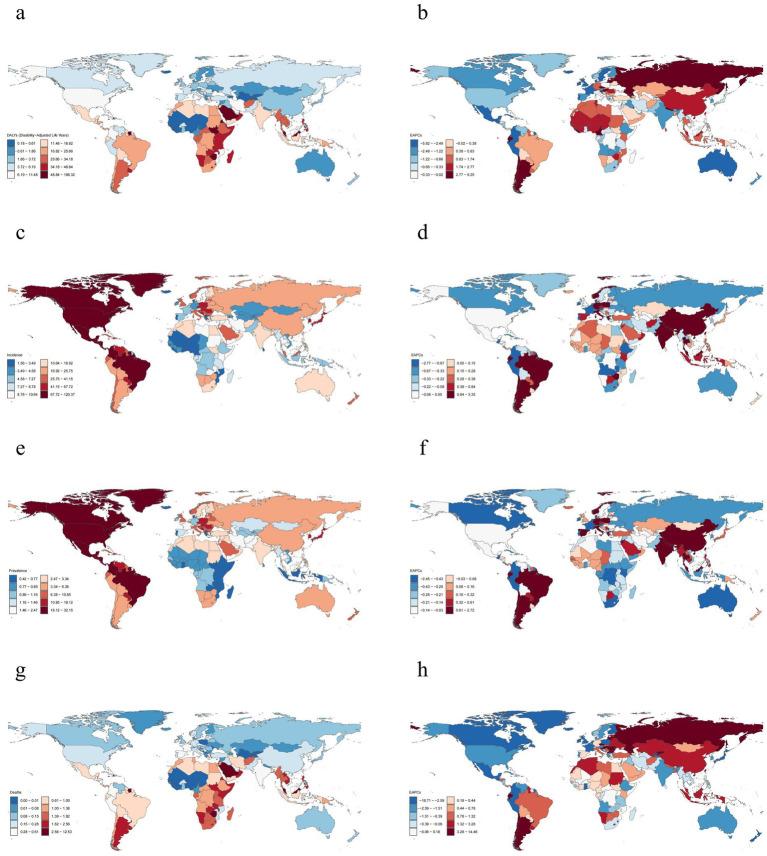
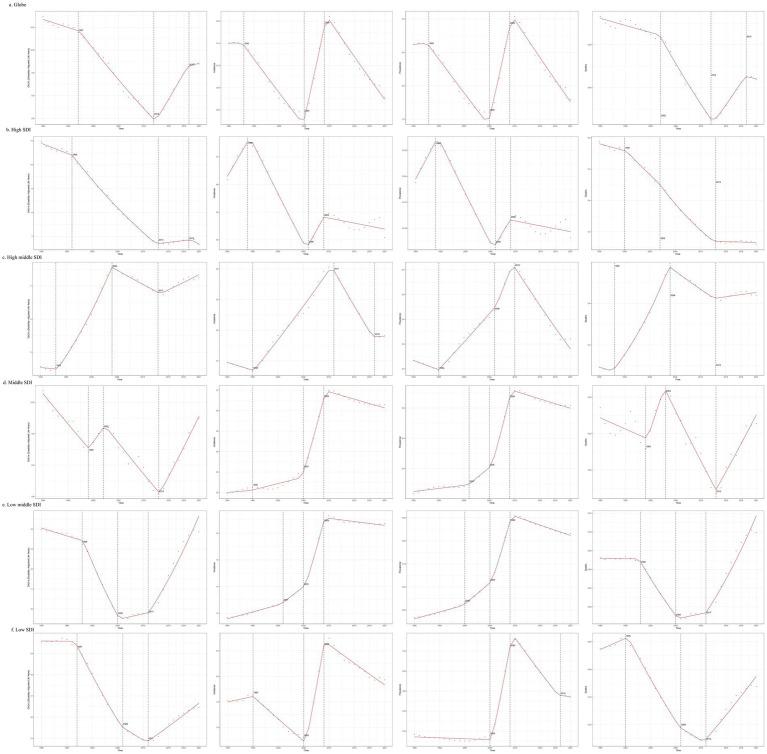
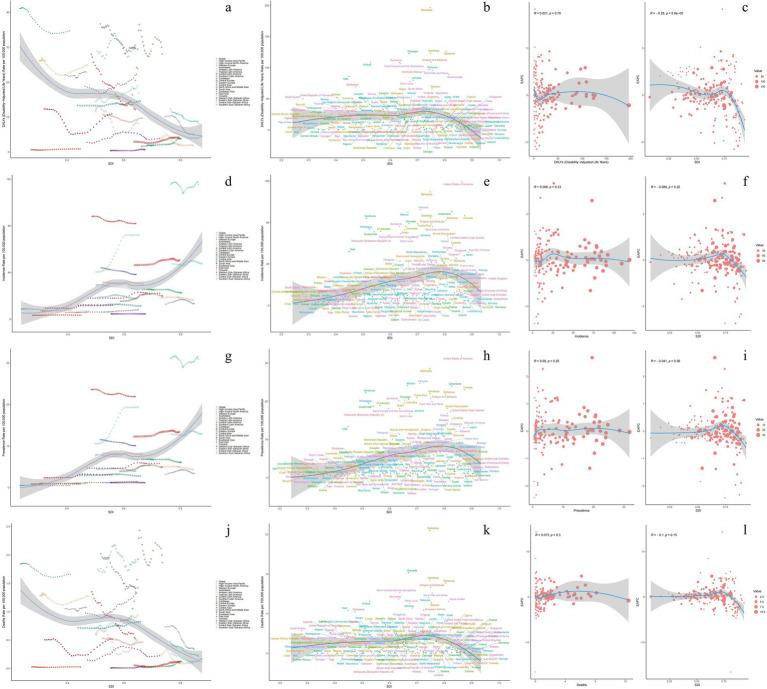
From 1900 to 2021, the incidence, prevalence, and mortality of decubitus ulcers increased continuously. When analyzed by Socio-demographic Index (SDI), incidence decreased slightly in high-SDI regions but increased in all other regions. India was found to bear the heaviest burden of mortality and disability-adjusted life-years (DALYs), while the United States had the highest incidence and prevalence. Health inequality persisted, with the level of inequality in DALYs showing a greater increase compared to 1990. Decomposition analysis indicated that population aging and population growth remained the primary drivers of the increased burden of decubitus ulcers, with some regional variations. Frontier analysis revealed that countries positioned on the disease burden frontier were primarily located in middle-high and high SDI regions.
CONCLUSION
The burden of decubitus ulcers remains substantial globally, with marked disparities across regions and nations. A disproportionately high share of this burden affects older adult populations. Implementation of targeted health policies is warranted to mitigate the global burden of decubitus ulcers.
背景
本研究旨在加深对压疮全球负担的理解和评估,为政策制定和资源分配提供依据。
方法
采用2021年全球疾病负担研究的标准化方法,在全球、区域和国家层面分析压疮的疾病负担,重点关注年龄和性别因素。该研究还包括健康不平等分析、分解分析和前沿分析。对2035年压疮的疾病负担进行了预测。
结果
1900年至2021年,压疮的发病率、患病率和死亡率持续上升。按社会人口指数(SDI)分析,高SDI地区的发病率略有下降,但其他所有地区均有所上升。印度的死亡率和伤残调整生命年(DALY)负担最重,而美国的发病率和患病率最高。健康不平等持续存在,与1990年相比,DALY的不平等程度增幅更大。分解分析表明,人口老龄化和人口增长仍然是压疮负担增加的主要驱动因素,存在一些区域差异。前沿分析显示,处于疾病负担前沿的国家主要位于中高和高SDI地区。
结论
压疮的全球负担仍然很大,各地区和国家之间存在显著差异。这一负担中,老年人口所占比例过高。有必要实施有针对性的卫生政策,以减轻压疮的全球负担。



 Zotero 插件