
环境微塑料的新威胁:肝代谢失调和肝细胞损伤的综合分析(综述)
Emerging threat of environmental microplastics: A comprehensive analysis of hepatic metabolic dysregulation and hepatocellular damage (Review).
作者信息
Yue Siqing, Chen Siyu, Zhang Yu, Chen Bangjie, Xu Tao
机构信息
Inflammation and Immune Mediated Diseases Laboratory of Anhui Province, Anhui Institute of Innovative Drugs, School of Pharmaceutical Sciences, Anhui Medical University, Hefei, Anhui 230032, P.R. China.
Second Clinical College, Anhui Medical University, Hefei, Anhui 230032, P.R. China.
出版信息
Int J Mol Med. 2025 Oct;56(4). doi: 10.3892/ijmm.2025.5584. Epub 2025 Jul 19.
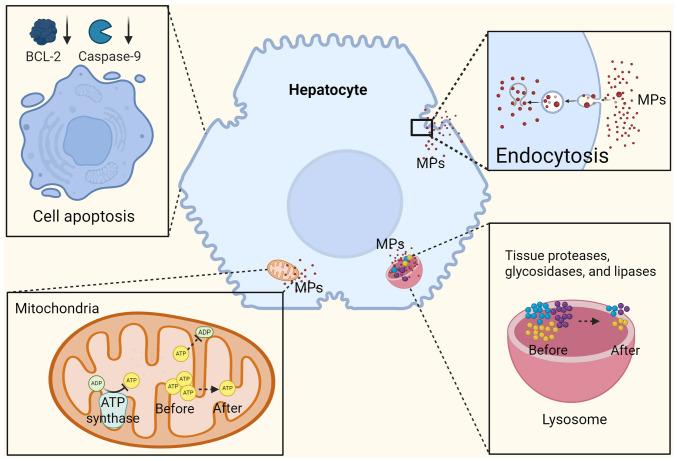
The substantial rise in global plastic production has led to the widespread accumulation of microplastics (MPs) in the soil, water and atmosphere. Inevitably, animals and humans have ingested these MPs through environmental contact, resulting in their accumulation within the liver. The elucidation of the hepatotoxic effects of MPs in animals, and in particular on human liver pathophysiology, is now a central topic of investigation in the study of environmental particulate toxicology. The present review summarised existing studies on how MPs damage the liver, and in particular, highlighted the mechanisms of action and the key influencing factors. There is evidence that indicates that MPs can damage the liver tissue structure, induce liver cell death and disrupt lipid metabolism, and that particle size and exposure time are important factors influencing the adverse effects of MPs on the liver. However, further research is required to comprehensively elucidate the mechanisms by which MPs induce liver injury and the long‑term health risks they pose.
全球塑料产量的大幅增长导致微塑料(MPs)在土壤、水和大气中广泛积累。不可避免地,动物和人类通过环境接触摄入了这些微塑料,导致它们在肝脏中积累。阐明微塑料对动物的肝毒性作用,尤其是对人类肝脏病理生理学的影响,现在是环境颗粒毒理学研究的核心课题。本综述总结了关于微塑料如何损害肝脏的现有研究,特别强调了作用机制和关键影响因素。有证据表明,微塑料会破坏肝脏组织结构,诱导肝细胞死亡并扰乱脂质代谢,并且颗粒大小和暴露时间是影响微塑料对肝脏产生不利影响的重要因素。然而,需要进一步研究以全面阐明微塑料诱导肝损伤的机制及其带来的长期健康风险。
 Zotero 插件