
三级淋巴结构驱动的免疫浸润模式及其与神经母细胞瘤生存的关联。
Tertiary lymphoid structures-driven immune infiltration patterns and their association with survival in neuroblastoma.
作者信息
Liu Xuelian, Deng Jian, Yu Bingqing, Tan Jiaxiong, Lu Xiaoliang, Zhang Minmin
机构信息
Department of Gastroenterology, The First Affiliated Hospital of Jinan University, Guangzhou, China.
Department of Hematology, The First Affiliated Hospital of Jinan University, Guangzhou, China.
出版信息
PeerJ. 2025 Jul 22;13:e19767. doi: 10.7717/peerj.19767. eCollection 2025.
BACKGROUND
Neuroblastoma (NB), a diverse childhood cancer, needs better prognostic markers for personalized treatment. The current clinical risk stratification system does not fully explain the high heterogeneity of tumor patients. Tertiary lymphoid structures (TLS), key in tumor immunity, may serve as new biomarkers, but their impact on NB prognosis is unclear.
METHODS
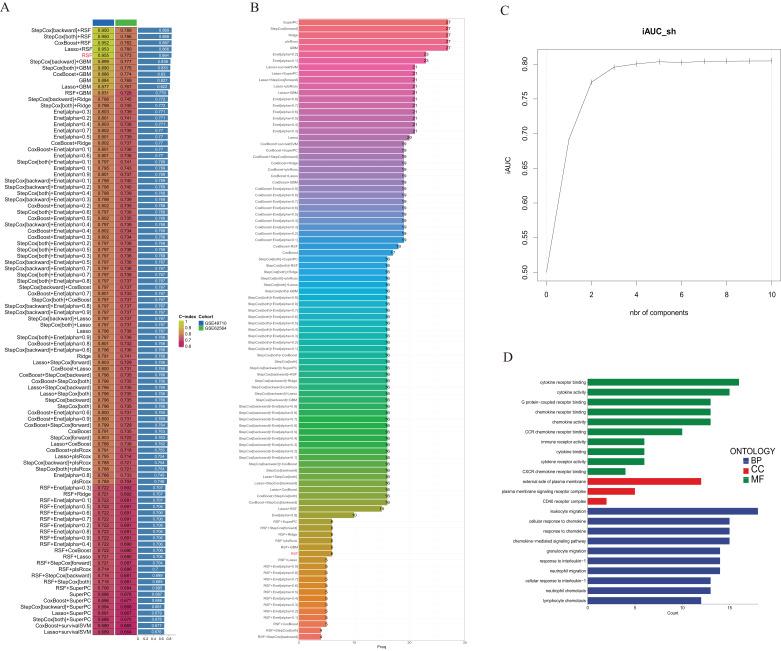
We combined transcriptome data from NB cohorts GSE49710 and GSE62564, analyzing 37 TLS-related genes. A prognostic signature (CMLS) was created using machine learning and validated with Kaplan-Meier and receiver operating characteristic (ROC) curves. We also studied immune infiltration and gene expression patterns in NB tissues using single-cell sequencing and quantitative real-time polymerase chain reaction (qRT-PCR).
RESULTS
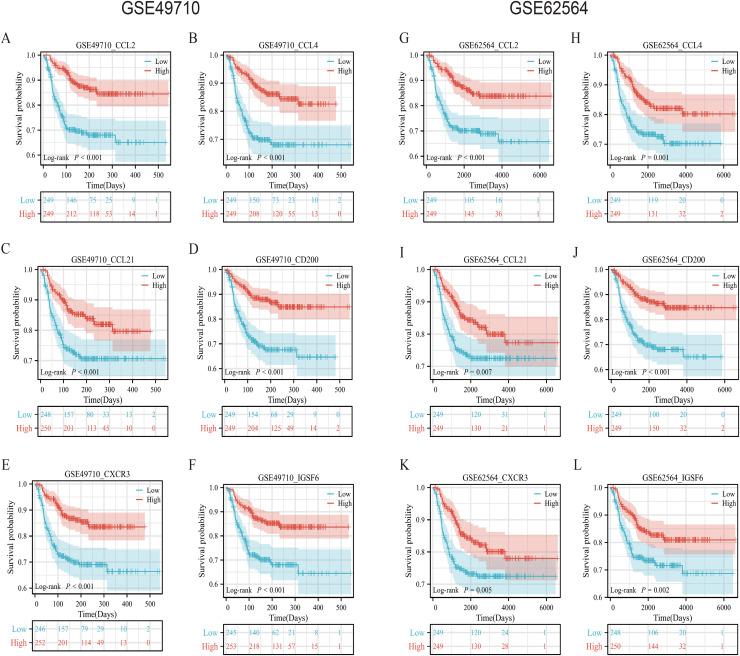
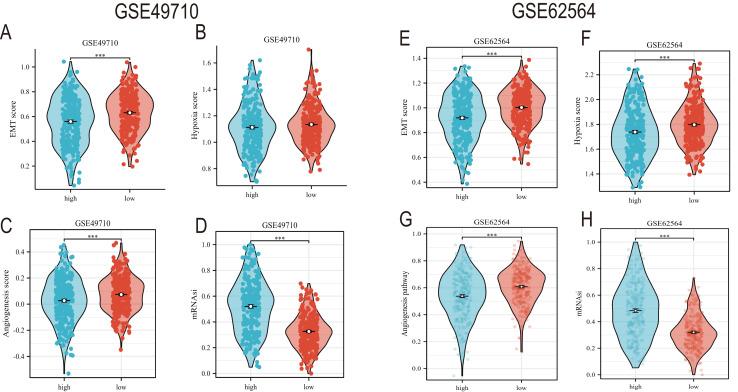
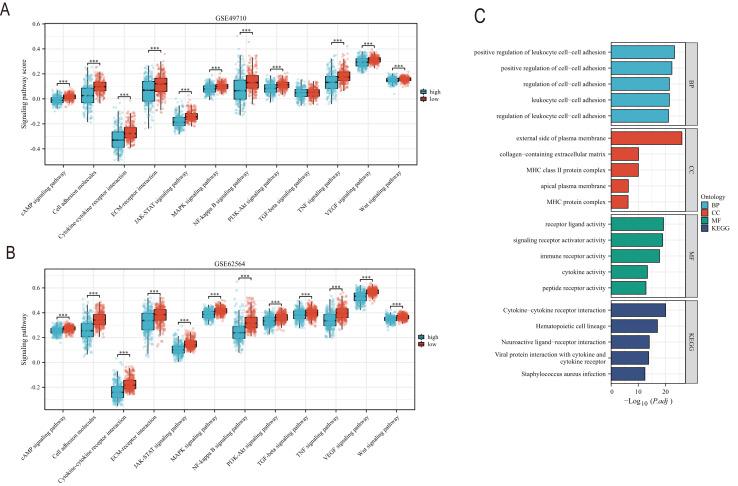
A 6-gene TLS signature predicted better survival in NB patients. High levels of CCL2, CCL4, CCL21, CD200, CXCR3, and IGSF6 correlated with improved survival. The low-TLS risk group showed better event-free and overall survival. Immune analysis indicated a higher immune cell presence, especially cytotoxic T cells, in this group. Single-cell sequencing revealed lower TLS gene expression in refractory recurrence samples. CD200 downregulation reduced NB cell invasiveness and migration.
CONCLUSION
Our study demonstrates that TLS-related genes play a crucial role in NB prognosis, with a 6-gene TLS signature (CCL2, CCL4, CCL21, CD200, CXCR3, and IGSF6) serving as a promising prognostic biomarker for NB. CD200 may be a potential target for inhibiting the biological behavior of NB cells.
背景
神经母细胞瘤(NB)是一种多样化的儿童癌症,需要更好的预后标志物来进行个性化治疗。当前的临床风险分层系统不能完全解释肿瘤患者的高度异质性。三级淋巴结构(TLS)是肿瘤免疫的关键因素,可能作为新的生物标志物,但其对NB预后的影响尚不清楚。
方法
我们整合了NB队列GSE49710和GSE62564的转录组数据,分析了37个与TLS相关的基因。使用机器学习创建了一个预后特征(CMLS),并通过Kaplan-Meier曲线和受试者工作特征(ROC)曲线进行验证。我们还使用单细胞测序和定量实时聚合酶链反应(qRT-PCR)研究了NB组织中的免疫浸润和基因表达模式。
结果
一个6基因的TLS特征预测NB患者有更好的生存率。CCL2、CCL4、CCL21、CD200、CXCR3和IGSF6的高水平与生存率提高相关。低TLS风险组显示出更好的无事件生存率和总生存率。免疫分析表明该组中免疫细胞的存在更多,尤其是细胞毒性T细胞。单细胞测序显示难治性复发样本中TLS基因表达较低。CD200下调降低了NB细胞的侵袭性和迁移能力。
结论
我们的研究表明,与TLS相关的基因在NB预后中起关键作用,一个6基因的TLS特征(CCL2、CCL4、CCL21、CD200、CXCR3和IGSF6)是NB有前景的预后生物标志物。CD200可能是抑制NB细胞生物学行为的潜在靶点。




 Zotero 插件