
4-苯基丁酸的药理干预通过促进巨噬细胞凋亡减轻TiAl6V4纳米颗粒诱导的炎性骨溶解。
Pharmacological Intervention with 4-Phenylbutyrate Ameliorates TiAl6V4 Nanoparticles-Induced Inflammatory Osteolysis by Promoting Macrophage Apoptosis.
作者信息
Liu Guoyin, Gong Haiyang, Bai Tianting, Fu Yahui, Li Xin, Lu Junhao, Zhao Jianning, Chen Jianmin
机构信息
Department of Orthopedics, Jinling Hospital, Affiliated Hospital of Medical School, Nanjing University, Nanjing 210093, China.
Department of Orthopedics, Jinling Clinical Medical College, Nanjing University of Chinese Medicine, Nanjing 210002, China.
出版信息
Bioengineering (Basel). 2025 Jun 27;12(7):701. doi: 10.3390/bioengineering12070701.
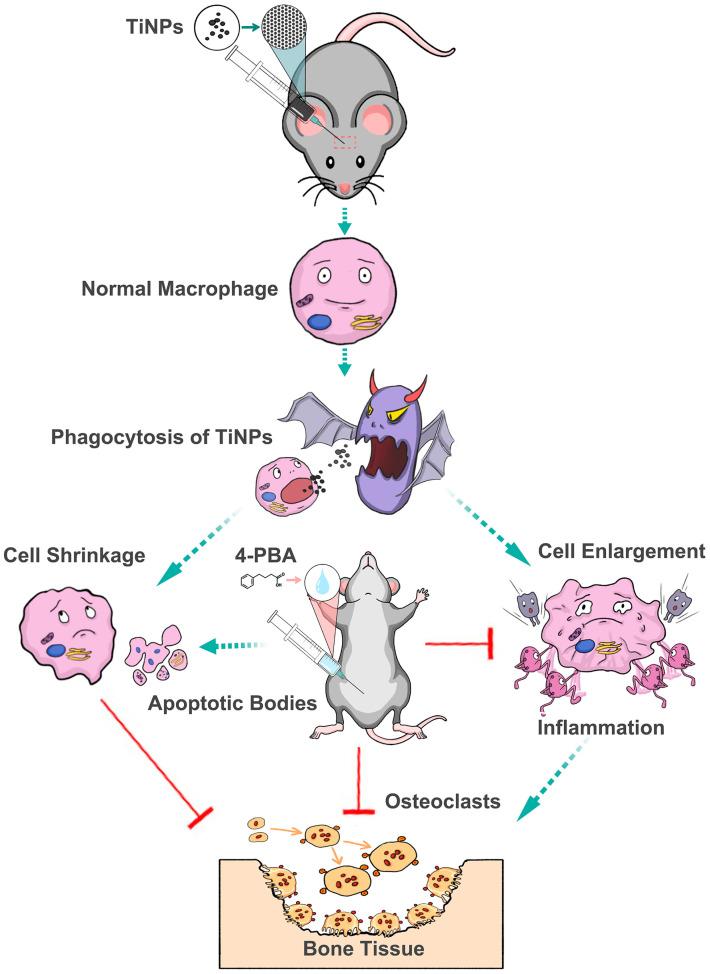
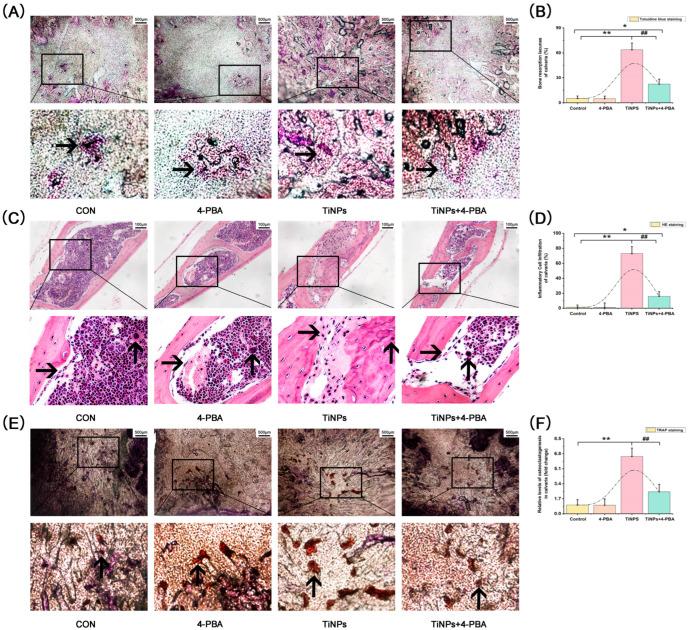
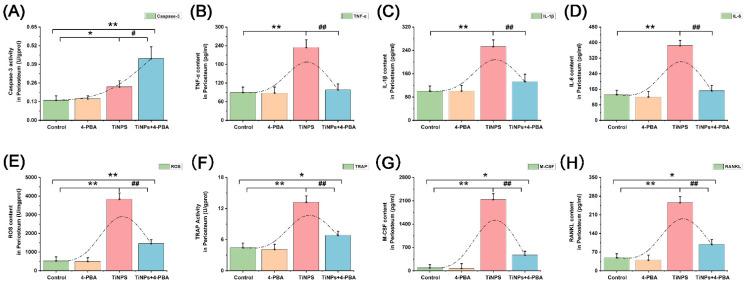
Macrophage apoptosis, along with inflammation in the interface membrane, has been demonstrated to be significant in the pathogenesis and development of particle-induced periprosthetic osteolysis and aseptic loosening. Additionally, the apoptosis of macrophages is considered an indicator of the resolution phase of inflammation and the transition to normal tissue healing. Therefore, targeting macrophages presents a promising strategy for both the prevention and therapeutic management of periprosthetic osteolysis. In this study, we explored the therapeutic potential of chemical chaperone 4-phenylbutyrate (4-PBA) as a pharmacological intervention aimed at modulating macrophage behaviors, particularly focusing on the processes of apoptosis, inflammation, and osteoclastogenesis in a murine model of TiAl6V4 nanoparticle (TiNP)-induced osteolysis. The results derived from in vivo studies conducted on the murine model provide compelling evidence that TiNPs could trigger osteolysis, activate inflammatory cell infiltration, and promote the differentiation of osteoclasts, accompanied by a notable rise in apoptosis at the osteolytic interface periosteum. The severity of TiNP-induced osteolysis, chaotic bone morphology, extensive bone erosion and destruction, occurrence of infiltrating inflammatory cells, and quantity of osteoclasts were attenuated following co-intervention with 4-PBA. Furthermore, the levels of apoptosis, in conjunction with apoptosis-regulated proteins Bcl-2 and Bax, were accentuated following 4-PBA co-intervention, indicating that the TiNP-induced osteolytic interface periosteum environment exhibited a greater propensity for apoptosis due to the pharmacological intervention of 4-PBA. Notably, the use of 4-PBA as a standalone treatment demonstrated comparatively low levels of toxicity and was deemed to be experimentally safe in mice. These findings indicated that 4-PBA may ameliorate the severity of particle-induced osteolysis by inhibiting the inflammatory response and promoting macrophage apoptosis in a manner that may be beneficial for therapeutic strategies. Thus, pharmacological intervention with 4-PBA appears to be a viable option for addressing osteolysis and aseptic loosening resulting from exposure to wear particles, combining efficacy in promoting apoptosis with a favorable safety profile.
巨噬细胞凋亡以及界面膜中的炎症,已被证明在颗粒诱导的假体周围骨溶解和无菌性松动的发病机制及发展过程中具有重要意义。此外,巨噬细胞凋亡被认为是炎症消退阶段和向正常组织愈合转变的一个指标。因此,针对巨噬细胞是假体周围骨溶解预防和治疗管理的一个有前景的策略。在本研究中,我们探索了化学伴侣4-苯基丁酸(4-PBA)作为一种药理学干预手段的治疗潜力,旨在调节巨噬细胞行为,特别关注在TiAl6V4纳米颗粒(TiNP)诱导的骨溶解小鼠模型中的凋亡、炎症和破骨细胞生成过程。在小鼠模型上进行的体内研究结果提供了令人信服的证据,表明TiNPs可引发骨溶解、激活炎性细胞浸润并促进破骨细胞分化,同时在溶骨界面骨膜处凋亡显著增加。在与4-PBA联合干预后,TiNP诱导的骨溶解严重程度、混乱的骨形态、广泛的骨侵蚀和破坏、浸润炎性细胞的出现以及破骨细胞数量均有所减轻。此外,在4-PBA联合干预后,凋亡水平以及凋亡调节蛋白Bcl-2和Bax均升高,表明由于4-PBA的药理学干预,TiNP诱导的溶骨界面骨膜环境表现出更大的凋亡倾向。值得注意的是,单独使用4-PBA治疗显示出相对较低的毒性水平,并且在小鼠实验中被认为是安全的。这些发现表明,4-PBA可能通过抑制炎症反应和促进巨噬细胞凋亡来减轻颗粒诱导的骨溶解严重程度,这可能对治疗策略有益。因此,用4-PBA进行药理学干预似乎是解决因接触磨损颗粒导致的骨溶解和无菌性松动的一个可行选择,它兼具促进凋亡的功效和良好的安全性。


 Zotero 插件