
二氧化硅纳米颗粒对斑马鱼的神经行为和氧化应激影响以及N-乙酰半胱氨酸的保护作用
Neurobehavioral and Oxidative Stress Effects of SiO Nanoparticles in Zebrafish and the Protective Role of N-Acetylcysteine.
作者信息
Rarinca Viorica, Gurzu Irina-Luciana, Nicoara Mircea Nicusor, Ciobica Alin, Visternicu Malina, Ionescu Catalina, Balmus Ioana Miruna, Plavan Gabriel-Ionut, Todirascu-Ciornea Elena, Gurzu Bogdan
机构信息
Doctoral School of Geosciences, Faculty of Geography and Geology, Alexandru Ioan Cuza University of Iași, Carol I Avenue, No 20A, 700505 Iasi, Romania.
Doctoral School of Biology, Faculty of Biology, Alexandru Ioan Cuza University of Iași, Carol I Avenue, 20A, 700505 Iasi, Romania.
出版信息
Biomedicines. 2025 Jul 18;13(7):1762. doi: 10.3390/biomedicines13071762.
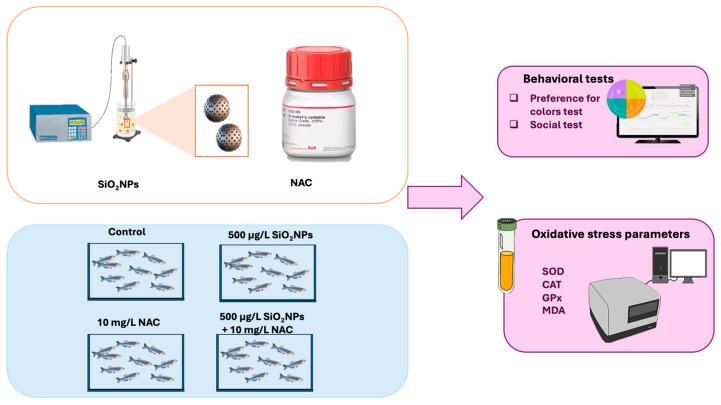
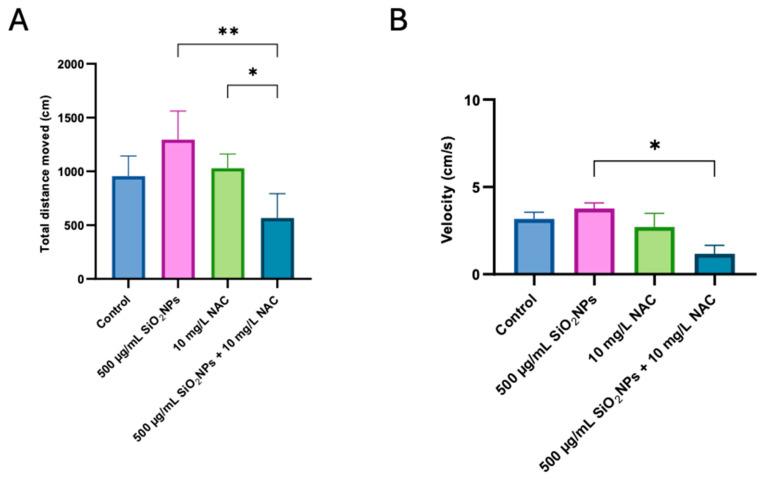
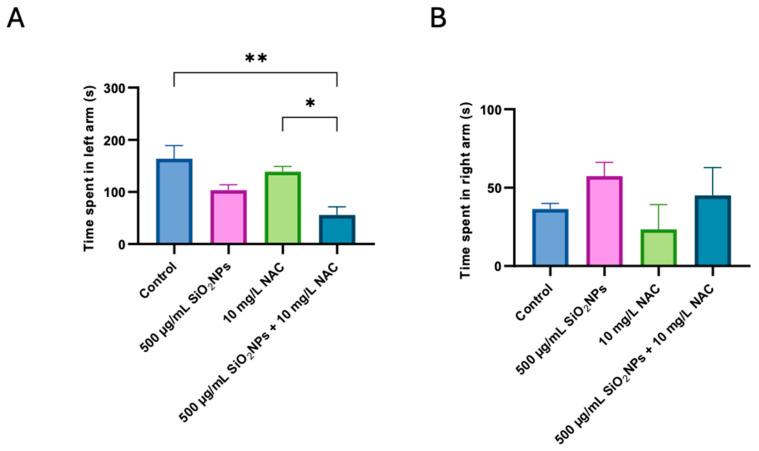
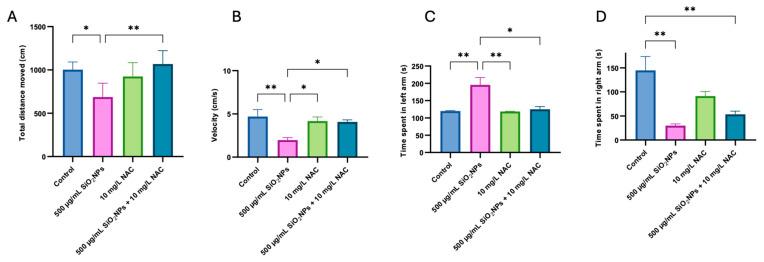
Silicon dioxide nanoparticles (SiONPs) do not exist in isolation in the environment but can interact with other substances, thus influencing their toxic effects on aquatic organisms. We assessed the combined impact of SiONPs and N-acetylcysteine (NAC), an antioxidant with the potential to counteract nanoparticle-induced oxidative stress (OS). : Behavioral assessments, including the social interaction test and color preference test, were performed to evaluate neurobehavioral changes. OS biomarkers, including malondialdehyde (MDA) levels for lipid peroxidation and the activity of key antioxidant enzymes such as glutathione peroxidase (GPx), catalase (CAT), and superoxide dismutase (SOD), were assessed to evaluate the extent of cellular damage. : The results indicate that prolonged exposure to SiONPs induces significant behavioral disruptions, including reduced exploratory behavior and increased anxiety-like responses. Furthermore, biochemical analysis revealed increased OS, suggesting nanoparticle-induced cellular toxicity. NAC co-treatment partially reversed these effects, particularly improving locomotor outcomes and antioxidant response, but was less effective on social behavior. These findings highlight the ecological and health risks posed by SiONPs and point toward the need for further toxicological studies on their long-term biological effects.
二氧化硅纳米颗粒(SiONPs)在环境中并非孤立存在,而是会与其他物质相互作用,从而影响其对水生生物的毒性作用。我们评估了SiONPs与N-乙酰半胱氨酸(NAC)的联合影响,NAC是一种抗氧化剂,有潜力抵消纳米颗粒诱导的氧化应激(OS)。进行了包括社交互动测试和颜色偏好测试在内的行为评估,以评估神经行为变化。评估了OS生物标志物,包括脂质过氧化的丙二醛(MDA)水平以及关键抗氧化酶如谷胱甘肽过氧化物酶(GPx)、过氧化氢酶(CAT)和超氧化物歧化酶(SOD)的活性,以评估细胞损伤程度。结果表明,长期暴露于SiONPs会导致显著的行为干扰,包括探索行为减少和焦虑样反应增加。此外,生化分析显示OS增加,表明纳米颗粒诱导细胞毒性。NAC联合处理部分逆转了这些影响,特别是改善了运动结果和抗氧化反应,但对社交行为的效果较差。这些发现突出了SiONPs带来的生态和健康风险,并指出有必要对其长期生物学效应进行进一步的毒理学研究。

 Zotero 插件