
推进荧光成像:增强菁染料掺杂二氧化硅纳米粒子的控制。
Advancing fluorescence imaging: enhanced control of cyanine dye-doped silica nanoparticles.
机构信息
Biopharmaceutical Research Center, Ochang Institute of Biological and Environmental Science, Korea Basic Science Institute (KBSI), Cheongju, 28119, Republic of Korea.
Graduate School of Analytical Science and Technology (GRAST), Chungnam National University, Daejeon, 34134, Republic of Korea.
出版信息
J Nanobiotechnology. 2024 Jun 19;22(1):347. doi: 10.1186/s12951-024-02638-7.
BACKGROUND
Silica nanoparticles (SNPs) have immense potential in biomedical research, particularly in drug delivery and imaging applications, owing to their stability and minimal interactions with biological entities such as tissues or cells.
RESULTS
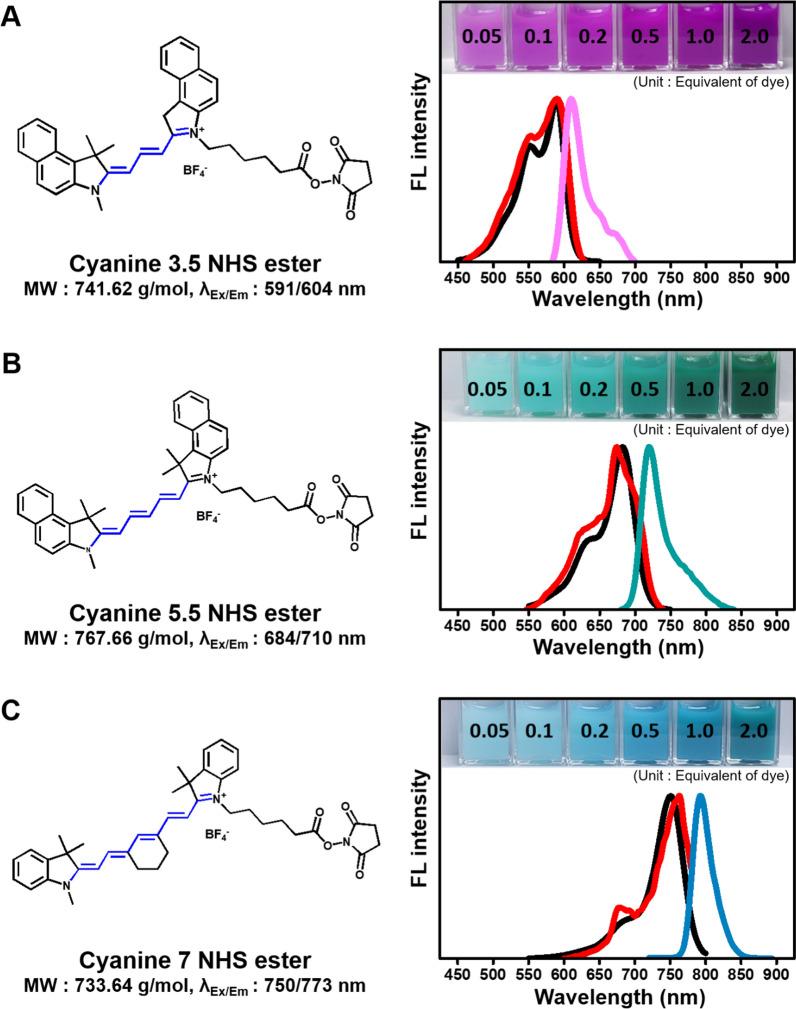
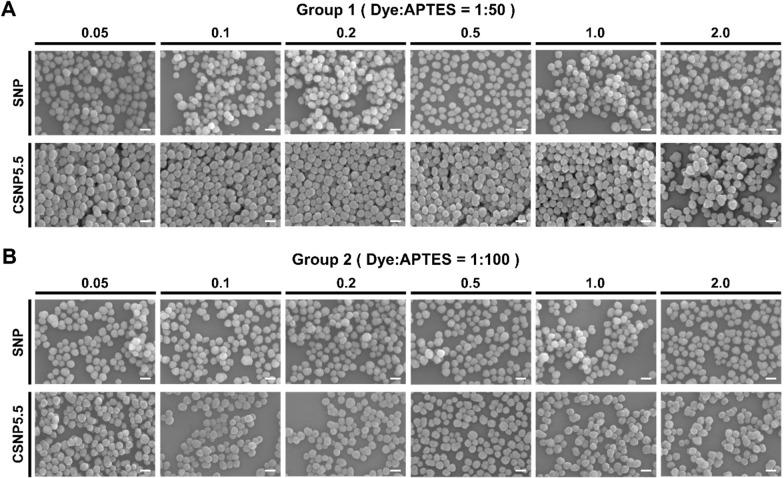
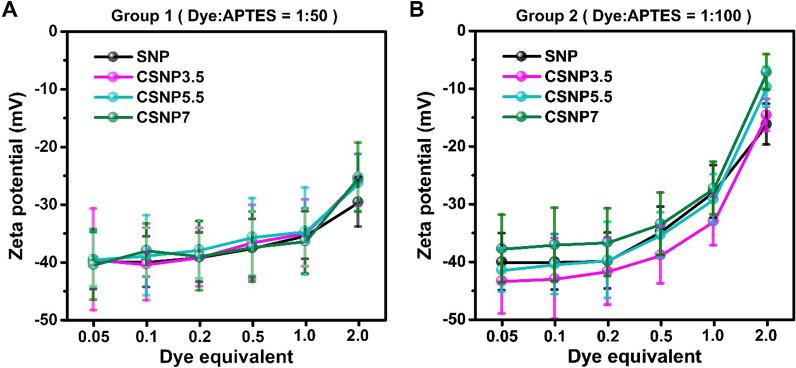
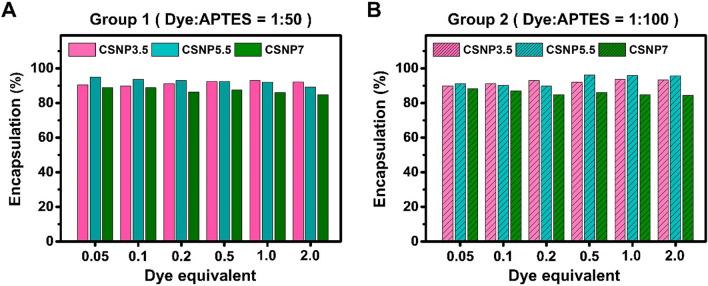
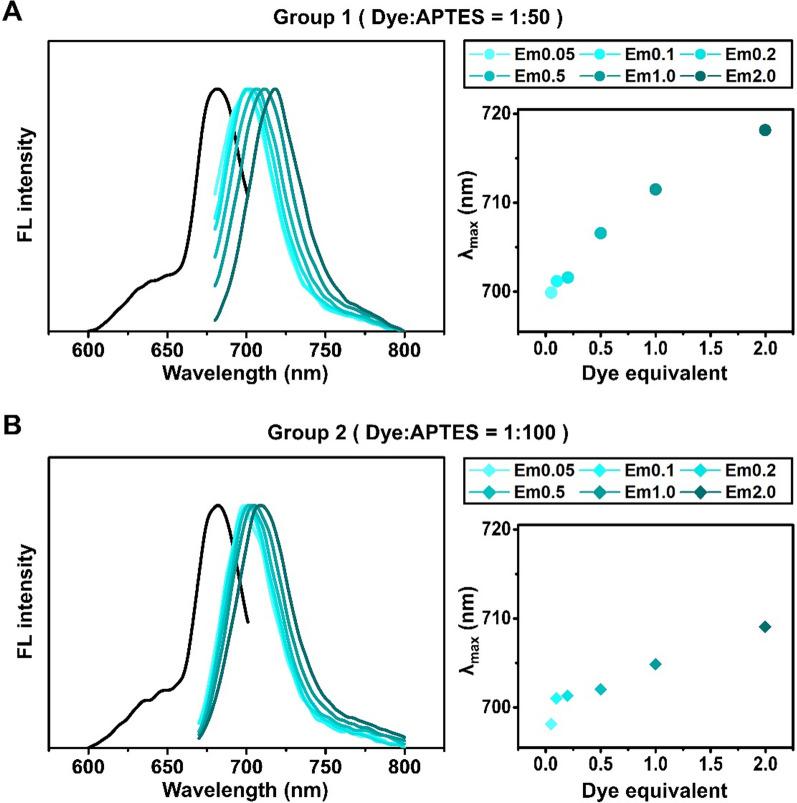
With synthesized and characterized cyanine-dye-doped fluorescent SNPs (CSNPs) using cyanine 3.5, 5.5, and 7 (Cy3.5, Cy5.5, and Cy7). Through systematic analysis, we discerned variations in the surface charge and fluorescence properties of the nanoparticles contingent on the encapsulated dye-(3-aminopropyl)triethoxysilane conjugate, while their size and shape remained constant. The fluorescence emission spectra exhibited a redshift correlated with increasing dye concentration, which was attributed to cascade energy transfer and self-quenching effects. Additionally, the fluorescence signal intensity showed a linear relationship with the particle concentration, particularly at lower dye equivalents, indicating a robust performance suitable for imaging applications. In vitro assessments revealed negligible cytotoxicity and efficient cellular uptake of the nanoparticles, enabling long-term tracking and imaging. Validation through in vivo imaging in mice underscored the versatility and efficacy of CSNPs, showing single-switching imaging capabilities and linear signal enhancement within subcutaneous tissue environment.
CONCLUSIONS
This study provides valuable insights for designing fluorescence imaging and optimizing nanoparticle-based applications in biomedical research, with potential implications for targeted drug delivery and in vivo imaging of tissue structures and organs.
背景
由于其稳定性和与组织或细胞等生物实体的最小相互作用,硅纳米颗粒(SNPs)在生物医学研究中具有巨大的潜力,特别是在药物输送和成像应用中。
结果
使用 Cy3.5、Cy5.5 和 Cy7 合成并表征了菁染料掺杂的荧光 SNPs(CSNPs)。通过系统分析,我们发现纳米粒子的表面电荷和荧光性质因包封的染料-(3-氨丙基)三乙氧基硅烷偶联物而异,而其大小和形状保持不变。荧光发射光谱显示出与染料浓度增加相关的红移,这归因于级联能量转移和自猝灭效应。此外,荧光信号强度与颗粒浓度呈线性关系,尤其是在较低的染料当量下,表明其性能稳健,适用于成像应用。体外评估显示纳米粒子具有可忽略的细胞毒性和高效的细胞摄取能力,能够进行长期跟踪和成像。通过在小鼠体内进行成像验证,突显了 CSNPs 的多功能性和有效性,显示出单切换成像能力和皮下组织环境中线性信号增强。
结论
本研究为设计荧光成像和优化基于纳米粒子的生物医学研究应用提供了有价值的见解,可能对靶向药物输送和组织结构和器官的体内成像具有重要意义。




 Zotero 插件