
时间至关重要:吸入甲烷可减轻晚期实验性脓毒症中的线粒体和器官功能障碍。
Time Matters: Methane Inhalation Mitigates Mitochondrial and Organ Dysfunction in Advanced Experimental Sepsis.
作者信息
Gulácsi Levente Frigyes, Rutai Attila, Juhász László, Czakó Bálint László, Szabó Andrea, Boros Mihály, Kaszaki József, Poles Marietta Zita, Tallósy Szabolcs Péter
机构信息
Institute of Surgical Research, Albert Szent-Györgyi Medical School, University of Szeged, 6720 Szeged, Hungary.
出版信息
Antioxidants (Basel). 2025 Jul 1;14(7):814. doi: 10.3390/antiox14070814.
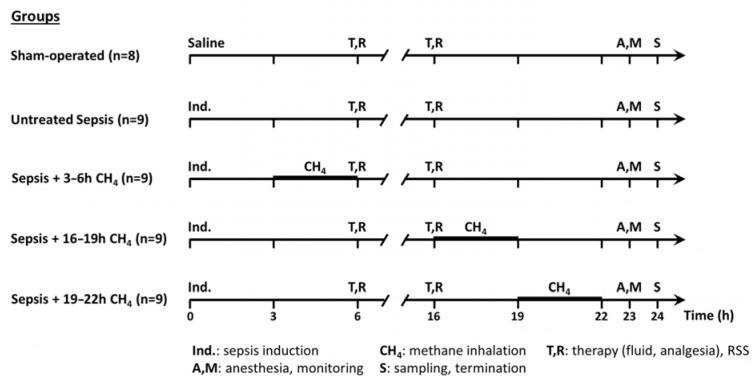
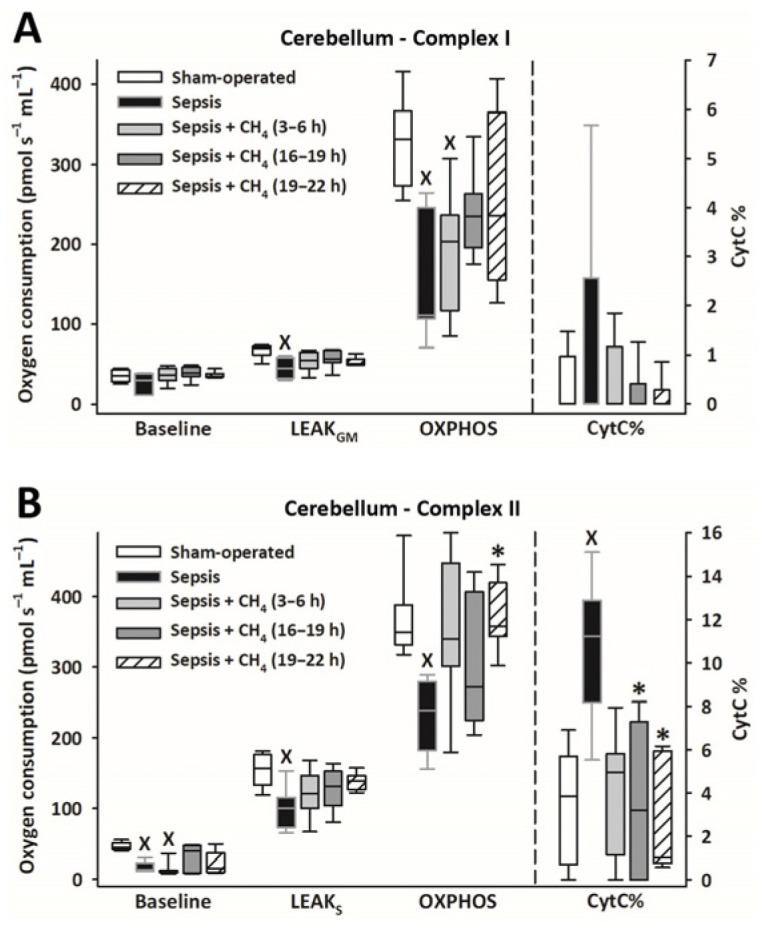
This study aimed to characterize the time-dependent effects of methane (CH) inhalation, initiated at defined intervals following sepsis onset, on organ function, systemic oxygen utilization, and mitochondrial respiration in a rodent model. Adult rats were subjected to abdominal sepsis or sham operation. Septic animals were assigned to groups receiving 2.2% CH in normoxic air at specific post-insult phases (early: 3-6 h; intermediate: 16-19 h; late: 19-22 h), while a control group remained untreated. At 24 h, organ function was evaluated using a Rat-Specific Organ Failure Assessment (ROFA) score, along with measurements of plasma myeloperoxidase (MPO) activity, Complex I-II-linked oxidative phosphorylation in renal and cerebellar tissues, systemic oxygen extraction, and global tissue perfusion (pCO-gap). Sepsis induced significant organ dysfunction, impaired hemodynamics, reduced oxygen utilization, and decreased mitochondrial respiration. CH inhalation improved survival when administered early, restored cerebellar mitochondrial respiration during the intermediate phase, and in the late phase reduced ROFA scores and MPO levels, while attenuating mitochondrial dysfunction in renal and cerebellar tissues. All CH-treated groups demonstrated improved renal function and enhanced tissue oxygenation. Targeted CH inhalation during sepsis confers protective effects by preserving mitochondrial function, reducing inflammation, and improving oxygen dynamics, suggesting promising therapeutic potential.
本研究旨在确定在啮齿动物模型中,败血症发作后以特定间隔开始吸入甲烷(CH)对器官功能、全身氧利用和线粒体呼吸的时间依赖性影响。成年大鼠接受腹部败血症手术或假手术。败血症动物被分配到在特定损伤后阶段(早期:3 - 6小时;中期:16 - 19小时;晚期:19 - 22小时)接受常氧空气中2.2% CH的组,而对照组不接受治疗。在24小时时,使用大鼠特异性器官衰竭评估(ROFA)评分评估器官功能,同时测量血浆髓过氧化物酶(MPO)活性、肾和小脑组织中复合体I - II相关的氧化磷酸化、全身氧摄取和整体组织灌注(pCO - 间隙)。败血症导致显著的器官功能障碍、血流动力学受损、氧利用减少和线粒体呼吸降低。早期吸入CH可提高生存率,在中期恢复小脑线粒体呼吸,在晚期降低ROFA评分和MPO水平,同时减轻肾和小脑组织中的线粒体功能障碍。所有CH治疗组均表现出肾功能改善和组织氧合增强。败血症期间靶向吸入CH通过保留线粒体功能、减轻炎症和改善氧动力学发挥保护作用,提示其具有广阔的治疗潜力。




 Zotero 插件