
没食子酸通过调节炎症和氧化应激信号蛋白减轻对乙酰氨基酚诱导的急性肝损伤。
Gallic Acid Alleviates Acetaminophen-Induced Acute Liver Injury by Regulating Inflammatory and Oxidative Stress Signaling Proteins.
作者信息
Zhao Jing, Zhao Yuan, Song Shuzhe, Zhang Sai, Yang Guodong, Qiu Yan, Tian Weishun
机构信息
College of Animal Science and Technology, Henan University of Science and Technology, Luoyang 471000, China.
Institute of Traditional Chinese Veterinary Medicine, College of Veterinary Medicine, Nanjing Agricultural University, Nanjing 210095, China.
出版信息
Antioxidants (Basel). 2025 Jul 14;14(7):860. doi: 10.3390/antiox14070860.
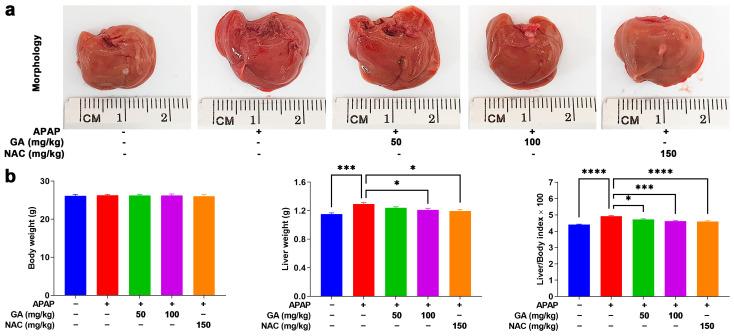
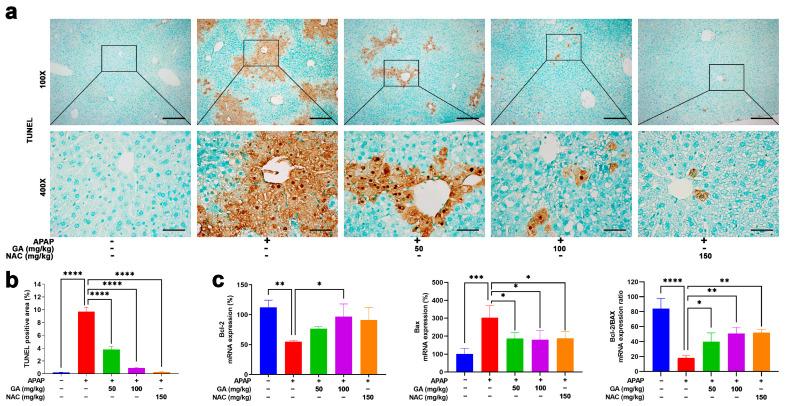
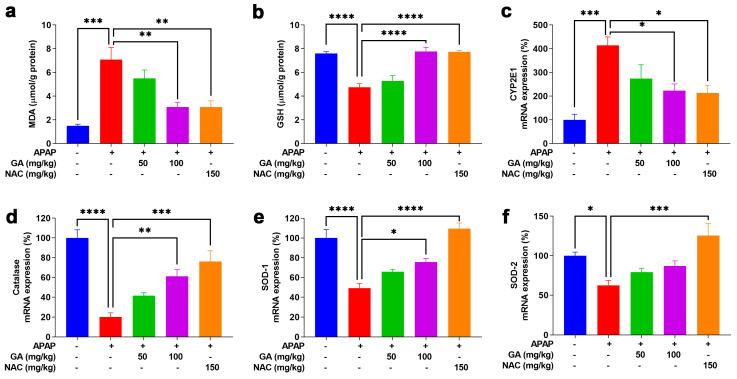
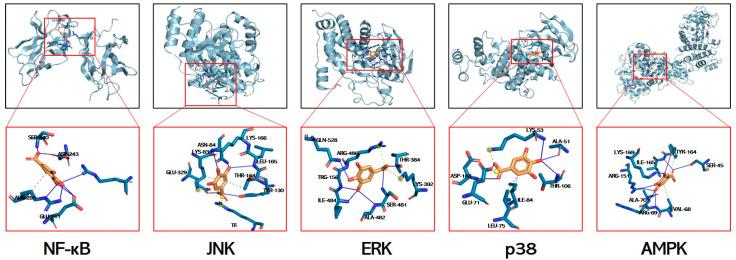
Acetaminophen (APAP) overdose is a major cause of drug-induced liver injury (DILI) globally, which necessitates effective therapies. Gallic acid (GA), a naturally abundant polyphenol, possesses potent antioxidant and anti-inflammatory properties that may overcome the limitations of N-acetylcysteine (NAC), such as its narrow therapeutic window. This study systematically investigated the hepatoprotective effects and underlying molecular mechanisms of GA against APAP-induced acute liver injury (ALI). Mice received an intraperitoneal injection of APAP (300 mg/kg), followed by an oral administration of GA (50 or 100 mg/kg) or NAC (150 mg/kg) 1 h post-intoxication. Both GA and NAC significantly ameliorated hypertrophy and histopathological damage, as evidenced by reduced serum ALT/AST levels and inflammatory cytokines. TUNEL staining revealed a marked suppression of apoptotic and necrotic cell death, further supported by the downregulation of pro-apoptotic Bax and the upregulation of anti-apoptotic Bcl-2 mRNA expression. GA and NAC treatment restored hepatic glutathione (GSH) content, enhanced antioxidant enzyme gene expression, and reduced malondialdehyde (MDA) accumulation. Mechanistically, GA and NAC inhibited MAPK phosphorylation while activating AMPK signaling. Taken together, these findings demonstrate that GA mitigates APAP-induced ALI by modulating oxidative stress and inflammation through the regulation of MAPK/AMPK signaling proteins.
对乙酰氨基酚(APAP)过量是全球药物性肝损伤(DILI)的主要原因,这就需要有效的治疗方法。没食子酸(GA)是一种天然丰富的多酚,具有强大的抗氧化和抗炎特性,可能克服N-乙酰半胱氨酸(NAC)的局限性,比如其治疗窗狭窄。本研究系统地研究了GA对APAP诱导的急性肝损伤(ALI)的肝保护作用及其潜在分子机制。小鼠腹腔注射APAP(300 mg/kg),中毒1小时后口服GA(50或100 mg/kg)或NAC(150 mg/kg)。GA和NAC均显著改善了肝脏肥大和组织病理学损伤,血清ALT/AST水平和炎性细胞因子降低证明了这一点。TUNEL染色显示凋亡和坏死性细胞死亡明显受到抑制,促凋亡蛋白Bax的下调和抗凋亡蛋白Bcl-2 mRNA表达的上调进一步支持了这一结果。GA和NAC治疗恢复了肝脏谷胱甘肽(GSH)含量,增强了抗氧化酶基因表达,并减少了丙二醛(MDA)积累。机制上,GA和NAC抑制MAPK磷酸化,同时激活AMPK信号通路。综上所述,这些发现表明GA通过调节MAPK/AMPK信号蛋白来减轻氧化应激和炎症,从而减轻APAP诱导的ALI。





 Zotero 插件