
隐形的耐药引擎:全球不平等如何导致抗菌药物失效
Invisible Engines of Resistance: How Global Inequities Drive Antimicrobial Failure.
作者信息
Eke Selim Mehmet, Cua Arnold
机构信息
Interlake High School, Bellevue, WA 98008, USA.
MultiCare Health System Inc., MultiCare Infectious Disease Specialists, Auburn, WA 98001, USA.
出版信息
Antibiotics (Basel). 2025 Jun 30;14(7):659. doi: 10.3390/antibiotics14070659.
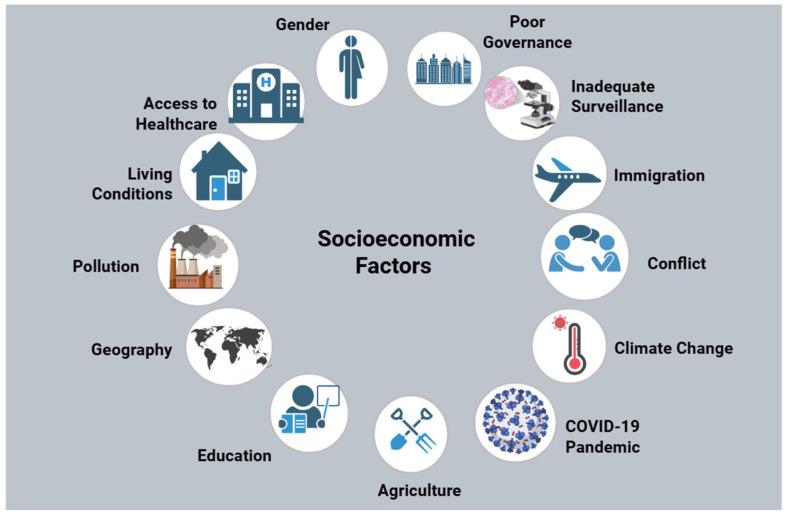
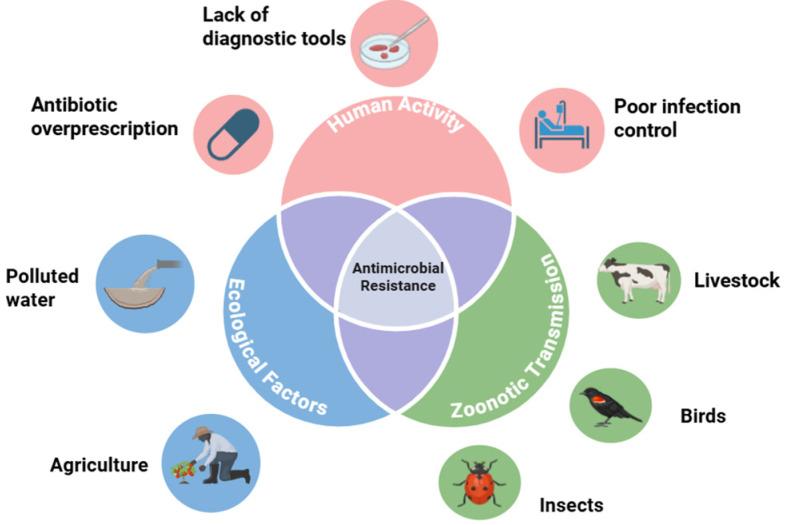
Antimicrobial resistance (AMR) is considered a global healthcare emergency in the 21st century. Although the evolution of microorganisms through Darwinian mechanisms and antibiotic misuse are established drivers, the structural socioeconomic factors of AMR remain insufficiently explored. This review takes on an analytical perspective, drawing upon a wide spectrum of evidence to examine the extent to which socioeconomic factors contribute to the global proliferation of AMR, with an emphasis on low- and middle-income countries (LMICs). The analytical review at hand was carried out through a search for relevant articles and reviews on PubMed, Google Scholar, the Centers for Disease Control and Prevention, and the World Health Organization database using combinations of the keywords "antimicrobial resistance," "socioeconomic factors," "low- and middle-income countries," "surveillance," "healthcare access," and "agriculture." Preference was given to systematic reviews, high-impact primary studies, and policy documents published in peer-reviewed journals or by reputable global health organizations. Our analysis identifies a complex interplay of systemic vulnerabilities that accelerate AMR in resource-limited settings. A lack of regulatory frameworks regarding non-prescription antibiotic use enables the proliferation of multi-drug-resistant microorganisms. Low sewer connectivity facilitates the environmental dissemination of resistance genes. Proper antibiotic selection is hindered by subpar healthcare systems and limited diagnostic capabilities to deliver appropriate treatment. Additionally, gender disparities, forced migration, and climate-driven zoonotic transmission compound the burden. During the COVID-19 pandemic, antimicrobial misuse surged, further amplifying resistance trends. AMR is not solely a biological phenomenon, but a manifestation of global inequity. Mitigation requires a transformation of policy directed toward a "One Health" strategy that incorporates socioeconomic, environmental, and health system reforms. Strengthening surveillance, investing in infrastructure, regulating pharmaceutical practices, and promoting health equity are essential to curb the rising tide of resistance.
抗菌药物耐药性(AMR)被视为21世纪的全球医疗紧急情况。尽管通过达尔文机制的微生物进化和抗生素滥用是既定的驱动因素,但AMR的结构性社会经济因素仍未得到充分探索。本综述采用分析视角,利用广泛的证据来研究社会经济因素在多大程度上导致了AMR在全球的扩散,重点关注低收入和中等收入国家(LMICs)。通过在PubMed、谷歌学术、疾病控制与预防中心以及世界卫生组织数据库中搜索相关文章和综述,使用“抗菌药物耐药性”、“社会经济因素”、“低收入和中等收入国家”、“监测”、“医疗保健可及性”和“农业”等关键词组合进行了手头的分析性综述。优先选择系统综述、高影响力的原发性研究以及在同行评审期刊或由知名全球卫生组织发表的政策文件。我们的分析确定了在资源有限的环境中加速AMR的系统性脆弱性的复杂相互作用。缺乏关于非处方抗生素使用的监管框架使得多重耐药微生物得以扩散。下水道连接率低促进了耐药基因在环境中的传播。次优的医疗保健系统和有限的诊断能力阻碍了正确的抗生素选择,无法提供适当的治疗。此外,性别差异、被迫迁移和气候驱动的人畜共患病传播加重了负担。在COVID-19大流行期间,抗菌药物的滥用激增,进一步加剧了耐药趋势。AMR不仅是一种生物学现象,而且是全球不平等的一种表现。缓解需要将政策转变为一种“同一健康”战略,该战略纳入社会经济、环境和卫生系统改革。加强监测、投资基础设施、规范制药实践以及促进卫生公平对于遏制耐药性的上升趋势至关重要。
 Zotero 插件